
Category: Fall 2015-2016
Smith College's Moodle
Search results: 785
As people around the world flee ecological, political, and economic disasters in growing numbers, it has become a basic truism to say that we are living in an age of “migration crisis.” The United Nations High Commissioner for Refugees estimated recently that over 84 million people around the world are living in conditions of forced displacement, which is the highest number on record since World War II. These numbers look much larger if we include labor migrants: between 1970 and 2012, the number of transnational migrants worldwide doubled to 232 million.
But what exactly does it mean to be displaced? Who counts as a refugee, and what makes them different from labor migrants? How have certain forms of migration come to be labeled “illegal”? Why are some forms of migration deemed “voluntary” in contrast to others? Where do these distinctions come from and how do they matter in everyday life? This course sets out to address such questions, among many others, by introducing students to the anthropological study of displacement, migration, and transnationalism. Through a close engagement with scholarly texts and visual media, we will pursue two interrelated tracks of inquiry that extend across the arc of this course.
One track is historical: we will continuously revisit the historical legacies of the 20th-century transnational migration regime, the postcolonial formation and partition of nation-states, the emergence of an uneven and globalized division of labor across the world, and how these fraught histories continue to shape the politics of transnational human mobility until today.
Our second line of inquiry is primarily ethnographic: it concerns the paradoxical conditions of displacement in everyday human experiences, such as waiting in transit, being-in-place while being displaced, making a home in exile, pursuing the “good life” in conditions of alienation, and the striking capacity of borders to seem invisible or real to the point of being deadly, depending on who or what crosses them, and how.
The course is organized into six thematic units, guided by questions such as: What kinds of social relationships and conflicts are formed through migration? How are borders governed and contested? How are classed, gendered, and racialized notions of labor, the self, and the family reconfigured by human migrations and immobilities across borders? How are the legacies of colonialism and capitalist extraction embedded in contemporary population movements and states’ efforts to manage them? And how do such histories shape the possibilities and limits of transnational solidarity today?
By the end of the semester, students will be able to:
Identify major debates, aims, and methods in the anthropological study of displacement, migration, and transnationalism
Gain new analytical tools for understanding the historical, cultural, and political significance of human migratory processes in the 20th- and 21st-century
Understand the politics of representing displacement through analysis of visual media and material culture, particularly ethnographic films
Develop empirically-grounded and theoretically rigorous critiques of many taken-for-granted assumptions about displacement, particularly the conventional dichotomy between migrants and refugees
Gain comparative knowledge of specific practices and ideas related to human migration and displacement in a range of global and regional contexts. These include, among others, the partition of the Indian subcontinent, the making of British colonial subjects into “immigrants,” women electronic factory workers in China’s Special Economic Zones, Mexican farmworkers in the United States, Palestinian refugees in Lebanon and the making of the modern humanitarian refugee regime, struggles over Central Asia’s post-Soviet borders, the politics of displacement in austerity Europe, North American indigenous politics across borders, and Black feminist practices of transnationalism
- Instructor: China Sajadian
Category: 2023 Spring Semester
What is the archaeology of food?
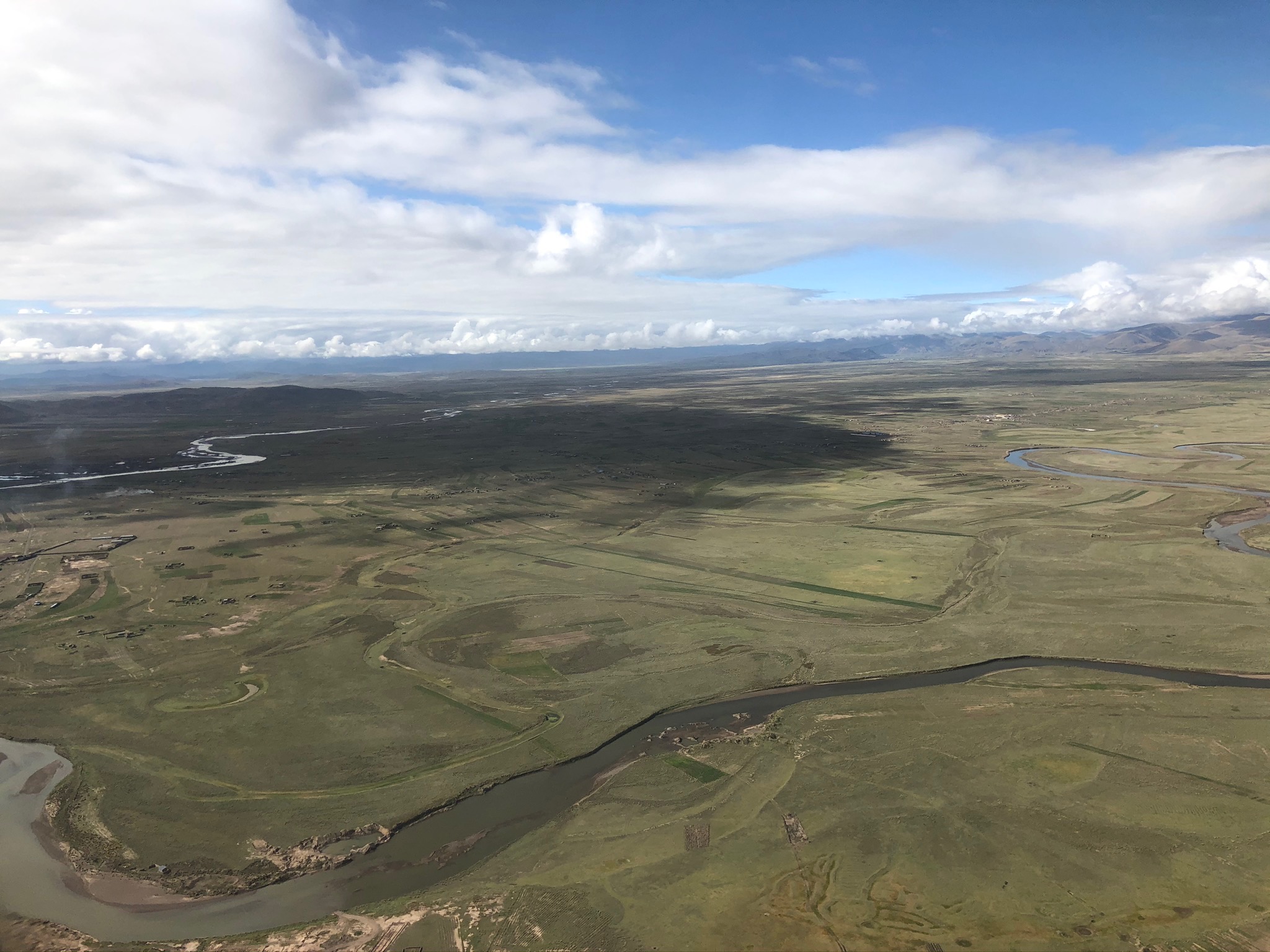
This course explores how archaeologists study past foodways—from adaptive and social perspectives—and also asks students to consider the complex relationships between past, present and future food systems. This is a highly interdisciplinary field of study that integrates data sets from environmental science, botany, zoology, human anatomy, and geochemistry, among others. It is also a field that addresses a diversity of economic, political, and social issues from an explicitly anthropological perspective. In other words, what can we understand about past human behavior and lifeways by analyzing charred plant remains, abandoned cooking areas, old pottery, and ancient trash dumps? To address these questions, the course is divided into three units: (1) an overview of the archaeology of food, focusing on both methods and theory; (2) a case study on maize, examining its domestication and spread; and (3) a collaborative exploration of global plant histories, highlighting the Smith College collections.
- Instructor: Elizabeth Klarich
Category: 2022 Spring Semester
This course is an archaeological and ethnographic introduction to the history and cultures of indigenous South America, from the earliest settlements to contemporary communities. We will discuss the initial peopling of the continent, Pre-Columbian socio-political organization, native cosmologies, ecological adaptations, challenges to cultural survival, and modern indigenous mobilizations. Both continuity and dynamism of ancient and modern lifeways will be explored through readings, lectures, and films throughout the semester.
- Instructor: Elizabeth Klarich
Category: Spring 2018-2019
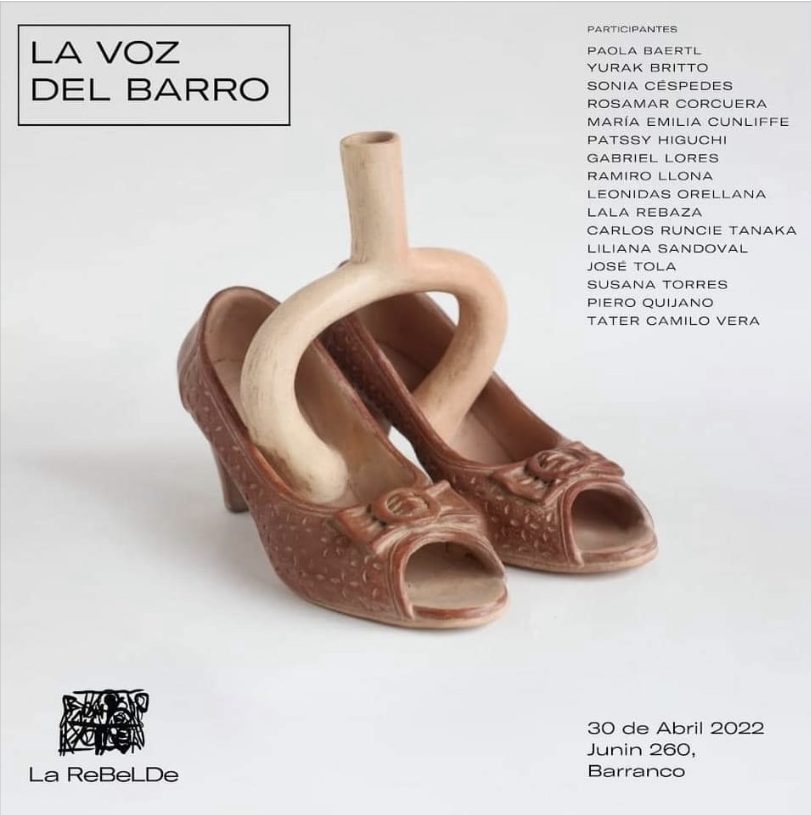
Topic: Pondering Pottery. Pottery-- both fragments and whole vessels-- is ubiquitous in the archaeological record and provides insights into technological choices, shifting styles, food-related practices, economic relationships, and many other aspects of past lifeways. In this course we will focus on how archaeologists collect, analyze, interpret, and present information about pottery from diverse contexts across the globe. Students will have the opportunity to conduct independent research on fragmentary and complete pottery vessels and we will also utilize ethnographic and historical studies of potters to expand our understanding of these practices today.
- Instructor: Elizabeth Klarich
Category: 2023 Spring Semester
- Instructor: Dana Leibsohn
Category: 2024 Spring Semester
- Instructor: Dana Leibsohn
Category: 2024 Spring Semester
This course is designed to introduce you to the field of art history, that is, to what art historians of any specialty do when we study works of art. It broaches several topics within the history of art such as site-specific installation, the readymade, the history of commemorative sculpture, and the convergence of photography and performance art. It is not a survey but instead features a series of seminar-like explorations into particular works of art. Divided into four units, it will facilitate consideration of the ways in which artists reference and converse with-- sometimes intentionally, sometimes not-- previous art historical periods and genres, as well as cultural and visual traditions more broadly. Each unit in the course begins with and hinges on a close examination of a contemporary art piece. Subsequent weeks in each unit dive into the various topics integral to the study of those particular works. When we focus on Mickalene Thomas’s A Little Taste Outside of Love (2007), for instance, we will address the reclining female nude, the concept of the gaze, the collage aesthetic, the legacy of Orientalism and “othering,” and finally the visual rhetorics of Blackness and post-Blackness in the history of art. By the end of the course, you should have an intimate sense of some critical art historical tropes, as well as the deep investigative work of art history that incorporates related fields of social, political, and cultural history, as well as material and popular culture.
- Instructor: Clara Barnhart
Category: 2022 Spring Semester
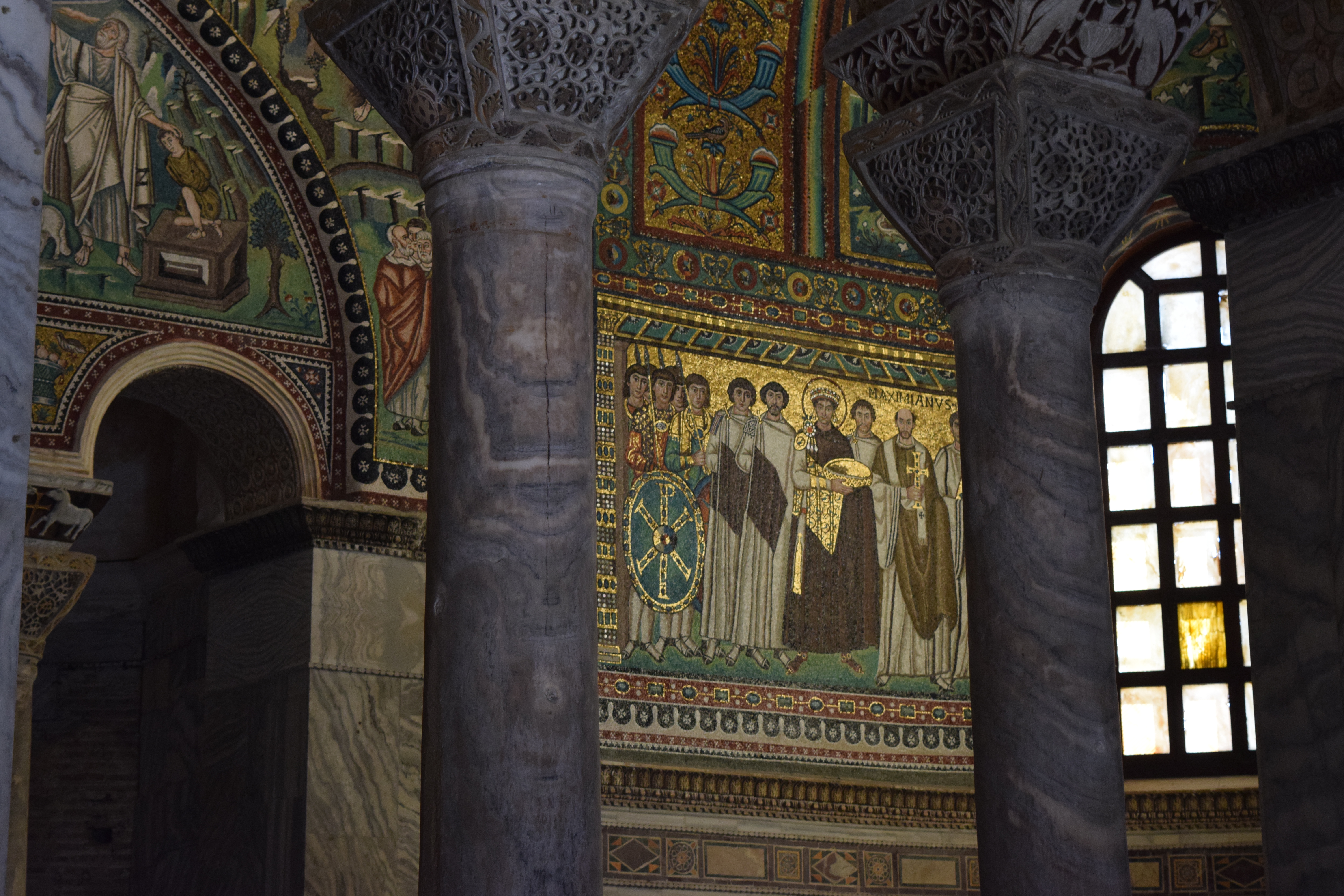
To step inside a medieval cathedral is still a profound experience. Nowadays, their majestic heights and elegant forms are objects of quiet contemplation. Yet medieval buildings were seldom still or silent, and their audiences were rarely disinterested observers. This course surveys the architecture of Europe and the Mediterranean between the fourth and the fifteenth centuries. Together, we will explore the development of the distinctive forms of medieval architecture in both the East and the West—from churches and monasteries to mosques, synagogues, cities, and palaces—and how these spaces were activated in contexts of ritual, liturgy, and performance.
- Instructor: Samuel Barber
Category: 2026 Spring Semester
- Instructor: Emma Silverman
Category: Fall 2018-2019

This course (which
is, I think, unique in a liberal arts college curriculum) is a survey of the
genre of artist’s books from its beginnings in the political and artistic
avant-garde movements of Europe at the turn of the 20th century through
contemporary American conceptual bookworks. In particular, the course will
examine the varieties of form and expression used by book artists and the
relationships between these artists and the socio-cultural, literary, and
graphic environments from which they emerged. Along the way we will also
explore the relationship of the artists book to other genres of artistic
expression, including sculpture, architecture, conceptual art, and performance
art. In so doing I hope to help you to develop critical skills – that is, how
to look at, describe, and talk about complex works of art – and to interact
with them on several levels.
- Instructor: Martin Antonetti
- Instructor: Anna Helgeson
Category: 2024 Spring Semester
- Instructor: Dana Leibsohn
Category: 2025 Spring Semester
- Instructor: Matthew Durand
- Instructor: Claire Farago
Category: 2021 Fall Semester
- Instructor: Barbara Kellum
Category: Spring 2016-2017
- Instructor: Yanlong Guo
Category: 2024 Fall Semester
This course will focus on understanding socio-ecological relationships and how that might inform different ways in making artwork. Students will learn to use research as a tool for developing projects and how research can strengthen one’s studio practice. We will focus on various themes such as waste, land, water, food, plants, trees, and biodiversity, engaging with the contemporary art practices in these themes. How are today’s artists responding to the environmental transformation?
We will discuss readings on these topics and how colonialism past and present impacts the environment and a whole ecosystems. Students will engage in critique and will be encouraged to experiment in studio making to create independent projects. These projects will be exhibited at the end of the seminar.
This course will be a combination of lectures, discussions, studio making, and critiques.
- Instructor: Naoe Suzuki
Category: 2024 Fall Semester
- Instructor: Lindsey Clark-Ryan
Category: Spring 2020-2021