
Category: Fall 2015-2016
Smith College's Moodle
Search results: 785
In this seminar, we look at films that make a deliberate and often caricatural use of stereotypes and anti-stereotypes in order to make a statement, whether it is to provoke, examine, question, or simply illustrate some aspects of French culture or national consciousness. Among the stereotypes and anti-stereotypes we consider are: tradition versus modernity, ‘Frenchness’ and 'Parisianism', gender roles, racial identity. In doing so, we pay particular attention to the way these stereotypes and anti-stereotypes are staged, what their modes of inquiry are, and what conversations, if any, they promote. Films by Renoir, Tati, Buñuel, Jeunet, Ozon, and Sciamma among others. Weekly or bi-weekly film viewings. Readings in film criticism and relevant fields. In French.{A}{F}
Credits : 4
Martine Gantrel-Ford
Offered online Fall 2020
Thursdays 1:40 - 4:30 p.m.
Credits : 4
Martine Gantrel-Ford
Offered online Fall 2020
Thursdays 1:40 - 4:30 p.m.
- Instructor: Dawn Fulton
- Instructor: Martine Gantrel-Ford
Category: Fall 2020-2021
- Instructor: Sarah Hines
Category: Fall 2016-2017
- Instructor: Michael Gorra
Category: Fall 2020-2021
Gender, Sex, and Sexuality in Russian Culture
Ruth Averbach
Pierce Hall, Room 104
Course Description
In June 2013, President Vladimir Putin signed into law a ban on ‘propaganda’ that advocates for non-traditional sexual relationships, homosexuality, and transgenderism. Despite this, Russia has at times in its history been a bastion of gender and sexual diversity. Nevertheless, Russia’s queer and trans heritage is often neglected in scholarly and popular conceptions of the country. Students in this course examine Russia’s queer and trans history through literature, visual arts, and music. Topics include the history of “homosexuality” and “heterosexuality,” the medical history of transsexuality, gay and lesbian subjectivities, trans autobiography and fiction, and the ethics of queer scholarship.
Course Objectives
This seminar is designed to achieve several goals. First, this course develops students’ critical thinking and writing skills. Students will learn how to outline, draft, and revise papers, effectively summarize literary texts, analyze specific themes in a work, contextualize artistic works in a proper cultural and historical context, understand and respond to critical works, and construct a short research paper with a coherent thesis and clear line of argumentation. Second, students will gain a broad overview of Queer and Trans Russian history and culture and engage with understudied source materials, perspectives and experiences concerning gender, sex, and sexuality.
Course Requirements
Assignments
Weekly reading responses (appx. 250 words)
First Paper: Summary of a Literary Text (3 pages)
Second Paper: Thematic Analysis (5 pages)
Third Paper: Research and Argumentation (7 pages)
Draft paper due one week before final version
Students will read and respond to a classmate’s paper within a week of turning in final drafts
Revisions will be turned in a week after receiving their peer review and instructor feedback
Due dates for all assignments are listed in the reading schedule
Grading Rubric
Attendance and Participation – 20%
Reading Responses – 20%
First Paper – 15%
Second Paper – 15%
Third Paper Presentation – 10%
Third Paper – 20%
Course Expectations
It is essential for students to complete assigned readings, attend course meetings, and contribute to class discussions. Feel welcome to use electronic devices, but do not let them distract others or yourself from the lesson. Please let Ruth know as soon as possible if you are ill or must miss class for any reason.
Academic Integrity
Students are expected to uphold all Smith College policies on academic integrity. AI is only acceptable for proofreading for grammar, punctuation, and spelling. All outside sources used in written assignments must be cited properly.
Accommodations
If you need any accommodations to participate in and complete the course, please contact the Accessibility Resource Center (College Hall 104; arc@smith.edu; 413-585-2071) and let Ruth know how she can best serve your needs.
COURSE READING SCHEDULE
Week II: Sexuality and Russian Civilization
M: (De)legalize Gay
Igor Kon, The Sexual Revolution in Russia (11-38)
Foucault, “The Birth of Homosexuality” from The History of Sexuality, vol. II
Olearius, The Travels of Olearius in 17th Century Russia
W: Is Gender, Sex, and Sexuality Universal?
Xenia the Servant of God, or Andrei Fyodorovich the Holy Fool
Benjamin, excerpts from The Transsexual Phenomenon
Mayhew, “Holy Foolishness and Gender Transgression in Russian Hagiography” (optional)
Week III: Is Homosexuality a Psychological Complex?
M: The Endless Anxieties of Nikolai Gogol
Gogol, “The Nose”
Gogol, “Ivan Fyodorovich Shponka and His Aunt”
Freud, excerpts of “Certain Neurotic Mechanisms in Jealousy, Paranoia, and Homosexuality”
Freud, letter to father of a homosexual boy
W: H-o-t t-o Gogol: Gay Iconography
Gogol, The Overcoat
Gogol, “Nevsky Prospect”
Gogol, “Woman”
First Paper Draft Due Sunday
Week IV: Aleksandr Aleksandrov: Russia’s First Transsexual Writer
M: Conceptualizing Transsexual Autobiography
Aleksandrov, The Cavalry Maiden, Chapters I-VI
Zirin, “Introduction” to English translation of The Cavalry Maiden
W: The Unmaking of a Man
Aleksandrov, The Cavalry Maiden, Chapters VII-XIII
First Paper Due Sunday
Week V: Aleksandrov’s Fiction
M: Trans Men and Misogyny
Aleksandrov, Nurmeka
Zazanis, “On Hating Men (and Becoming One Anyway)”
W: Colonialism and the Transsexual Empire
Aleksandrov, Nurmeka
Puar, excerpts from Terrorist Assemblages (optional, Ruth will summarize)
First Paper Peer Review Notes Due
Week VI: Between Sex and Sexuality
M: Compulsory Heterosexuality
Gan, “The Ideal”
Rich, “Compulsory Heterosexuality and Lesbian Existence”
W: Compulsory Homosexuality
Pomialovsky, Seminary Sketches
First Paper Revisions Due Sunday
Week VII: Becoming ‘Gay’
M: Homosexual or Gay?
Kuzmin, selected poems
Kuzmin, Wings
Somov, selected paintings
W: Is Sexuality an Identity or a Behavior?
Kuzmin, Wings (finish)
Rozanov, excerpts from “People of the Moonlight”
Week VIII: Becoming ‘Gay’ (Cont’d); Lesbianism and Gender Expression
M: Lesbian Gender and Sexuality
Zinovieva-Annibal, The Tragic Menagerie
W: Lesbian Gender and Sexuality (cont’d)
Zinovieva-Annibal, The Tragic Menagerie (continue)
Second Paper Draft Due
Week IX: Lesbianism and Gender Expression (Cont’d)
M: What is the Difference Between Lesbians and (Trans) Men?
Zinovieva-Annibal, The Tragic Menagerie (finish)
Shrier, excerpts from Irreversible Damage
Wittig, excerpts from The Straight Mind (optional, Ruth will summarize)
W: Sapphic Verse
Gippius, selected poems
Parnok, selected poems
Tsvetaeva, selected poems
Sappho, selected poems
Second Paper Due
Week X: Pre-Revolutionary and Revolutionary Sexuality
M: Is Male Heterosexuality Gay?
Gorky, “26 Men and a Girl”
Mulvey, excerpts from Visual Pleasure
W: Is Homosexuality Communist?
Trifonov, selected poems
Kharitonov, “One Boy’s Story” and “Alyosha-Serezha”
Harry Whyte, letter to Stalin
Second Paper Peer Review Notes Due
Week XI: Transsexuality, Soviet Style
M: Transsexuality and Medicine
Gill-Peterson, excerpts from Histories of the Transgender Child
Benjamin, The Transsexual Phenomenon
Blanchard, excerpts from articles on transsexual etiology
Kalnberz, excerpts from My Time
W: Is Gender a Social Duty?
Hammer & Sickle (1994)
Bogdan Popa, Decentering Queer Theory
Second Paper Revisions Due
Week XII: Late and Post-Soviet Sexuality
M: Late Soviet Sexuality
Past, “No Offense in Love”
Rybikov, “The Lay of the Gay Slavs”
Fiks, selected poems and photographs
W: Post-Soviet Tolerance and Intolerance in Popular Culture
t.A.t.U, 200km/h in the Wrong Lane
Strykalo, “vse resheno”
2013 Anti-Gay Propaganda bill
Selections of recent American anti-gay and trans bills
Third Paper Outlines Due
Week XIII: Trans Art in an Age of Reaction
M: Between Homosexuality and Transsexuality
Outlaw (2019)
W: Being Trans When Being Trans is Illegal
Letter, A City Flower
Selections, What Is a Woman?
Dugin, selections from The Fourth Political Theory and interview with Tucker Carlson
Third Paper Drafts Due Sunday
Week XIV: Conclusion and Presentations
M: Student Presentations
Students will present their final projects in progress in a conference format
W: Conclusion
Student presentations will continue
Concluding lecture
Third Papers Due (one week after final date)
- Instructor: Ruth Averbach
Category: 2025 Fall Semester
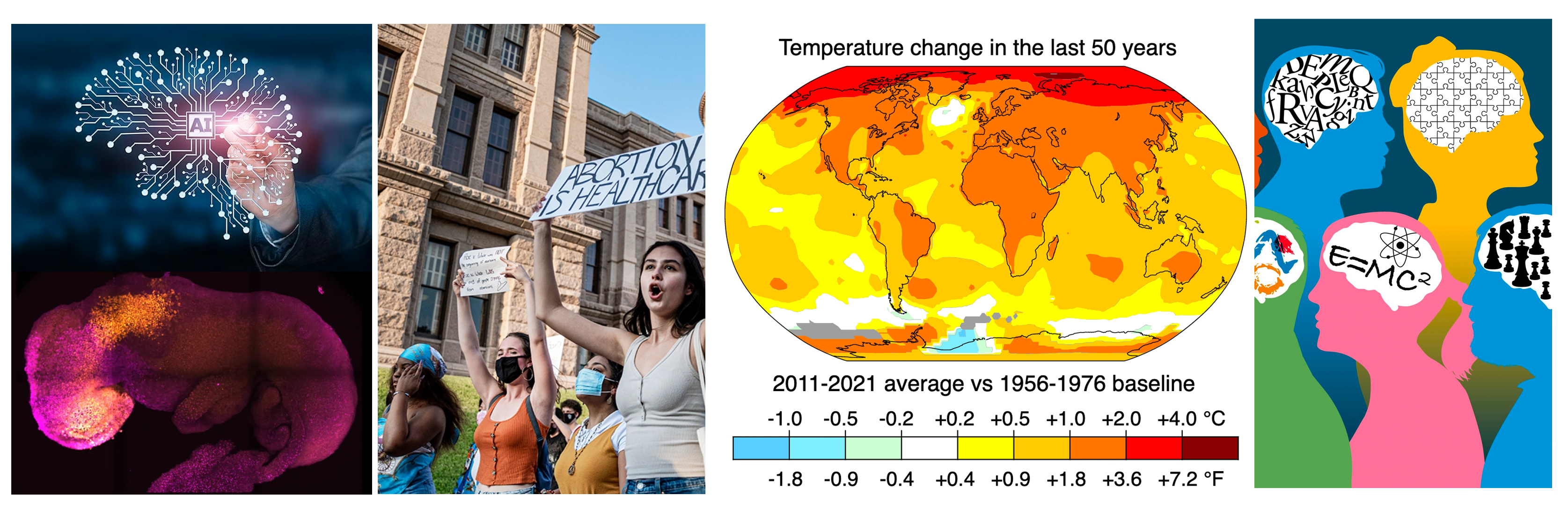
The recent pandemic
has done many things to our society, one of which was to place science on the
doorstep of every human on this planet. The relevance and importance science
plays in the health of human life and of this planet has never been more urgent than
today. In fact, whether its artificial intelligence or embryos derived from
isolated stem cells, science is literally making “life!” It is this question of
when life begins that is at the center of the legal battles over abortion. Unfortunately,
the complex language of science has made its presumed accuracy a weapon against
those less accustomed to interpreting scientific truths. In this first-year seminar, we will explore
four main areas where science and society meet and investigate what the current
data is and how society has interpreted it for better or worse. Students will read, analyze, and write about 1)
the artificial nature of created intelligence and created embryos, 2)
the science surrounding abortion policies, 3) the science of climate
change, and 4) the science of the neural diversity. In this first year seminar, we will not hide from
the hard science underling these topics nor ignore some of the difficult
societal tensions around our bodies, religion, and politics. Students should be
prepared to discuss these topics openly and respectfully in this course.
Students will maintain a personal journal, generate several written pieces of
diverse styles targeting different audiences, and use and analyze quantitative
information.
- Instructor: Michael Barresi
Category: 2023 Fall Semester
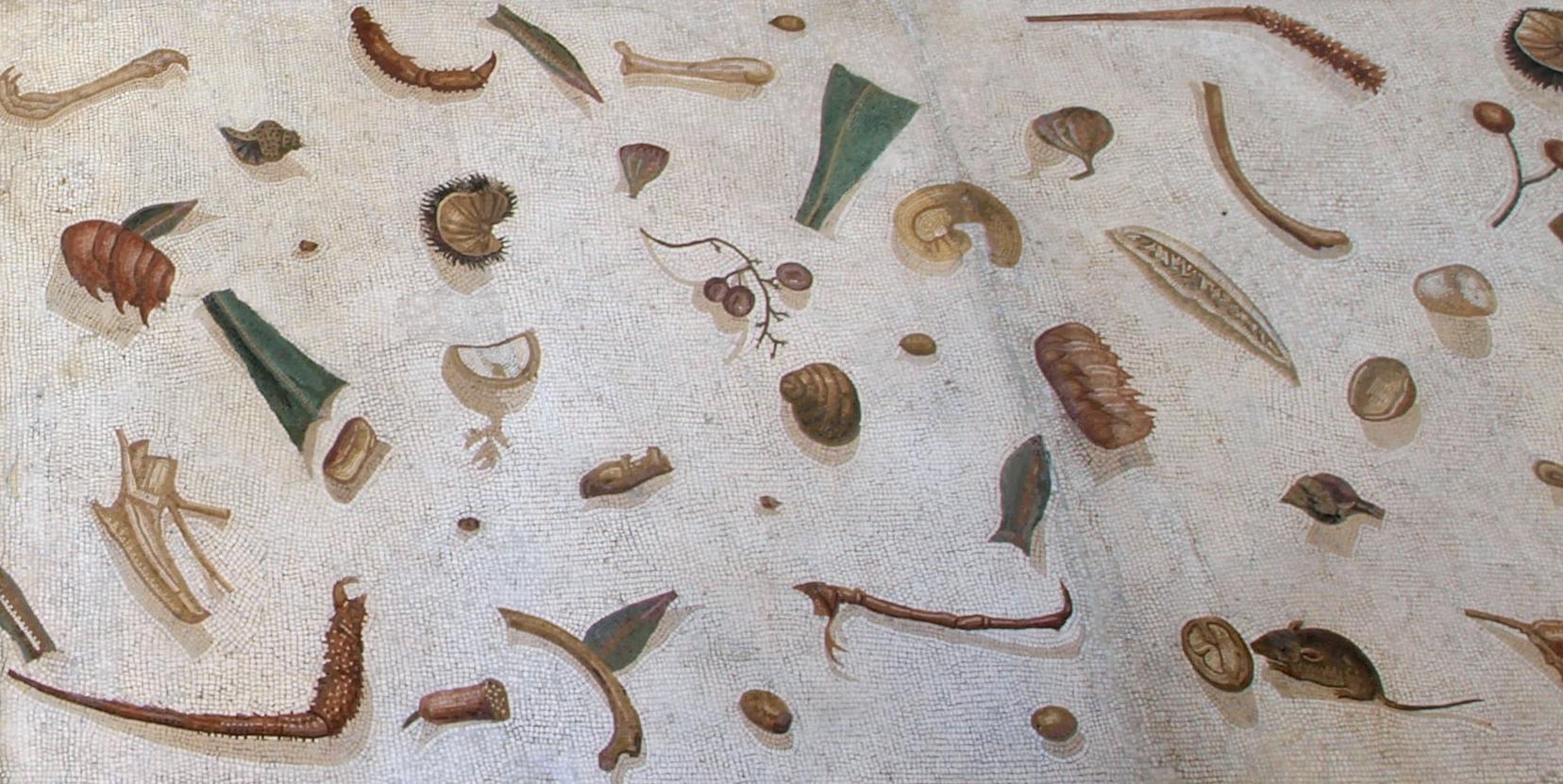
Food and dining have formed some of the most
fundamental expressions of cultural identity throughout history—in a very real
sense, we are what we eat, and how we eat. This cross-cultural examination of
the topic will begin by exploring the various roles that feasting played in the
world of the ancient Mediterranean, particularly the cultures of Greece and
Rome. We will also move through time to examine comparative material from
contemporary societies. How has food defined us, and how does it create
relationships with others, whether individuals or entire cultures? How are food
and dining used to express and maintain power? During this semester, we
will focus especially on how food spaces—like dining and storage areas, as
well as kitchens—are designed and experienced. Though these are the main
questions for the course, diverse topics related to cultural practices around
food will be tackled using primary literature, anthropological studies, and
archaeological material, along with hands-on approaches. In addition to
achieving an understanding of the complexities and nuances of foodways, we will
explore the mechanics and principles of writing for academic and popular
audiences.
- Instructor: Rebecca Worsham
Category: 2023 Fall Semester
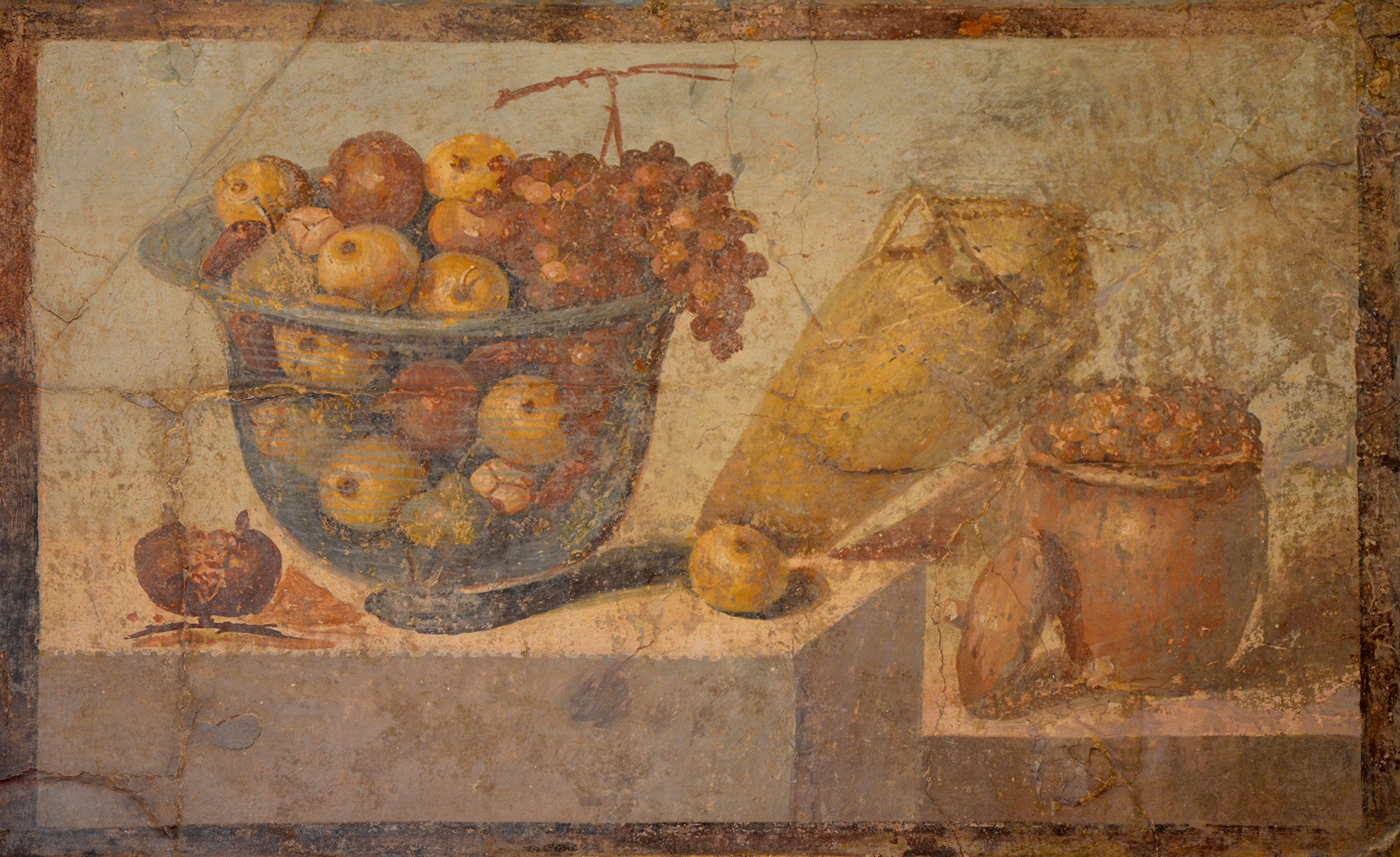
Food and dining have formed some of the most fundamental expressions of cultural identity throughout history—in a very real sense, we are what we eat, and how we eat. This cross-cultural examination of the topic will begin by exploring the various roles that feasting played in the world of the ancient Mediterranean, particularly the cultures of Greece and Rome. We will also move through time to examine comparative material from contemporary societies. How has food defined us, and how does it create relationships with others, whether individuals or entire cultures? How is food used to express and maintain power? Though these are the main questions for the course, diverse topics related to food and dining will be tackled using primary literature, anthropological studies, and archaeological material, along with hands-on approaches. In addition to achieving an understanding of the complexities and nuances of foodways, we will explore the mechanics and principles of writing for academic and popular audiences.
- Instructor: Rebecca Worsham
Category: 2021 Fall Semester
Welcome to FYS 150: Writing and Power in China! In this course, you will learn about the ways writing has been used throughout the ages in China to gain, maintain, and overturn power--from Zhou propaganda about the conquest of the Shang dynasty circa 1000 B.C.E., to the aesthetic and social power of Tang poetry, to Internet activism and censorship today. You will also gain expertise as an academic writer, learning to engage deeply with the ideas of others and respond with clear and powerful arguments of your own.
- Instructor: Jessica Moyer
Category: Fall 2020-2021
- Instructor: Lily Gurton-Wachter
Category: Fall 2017-2018
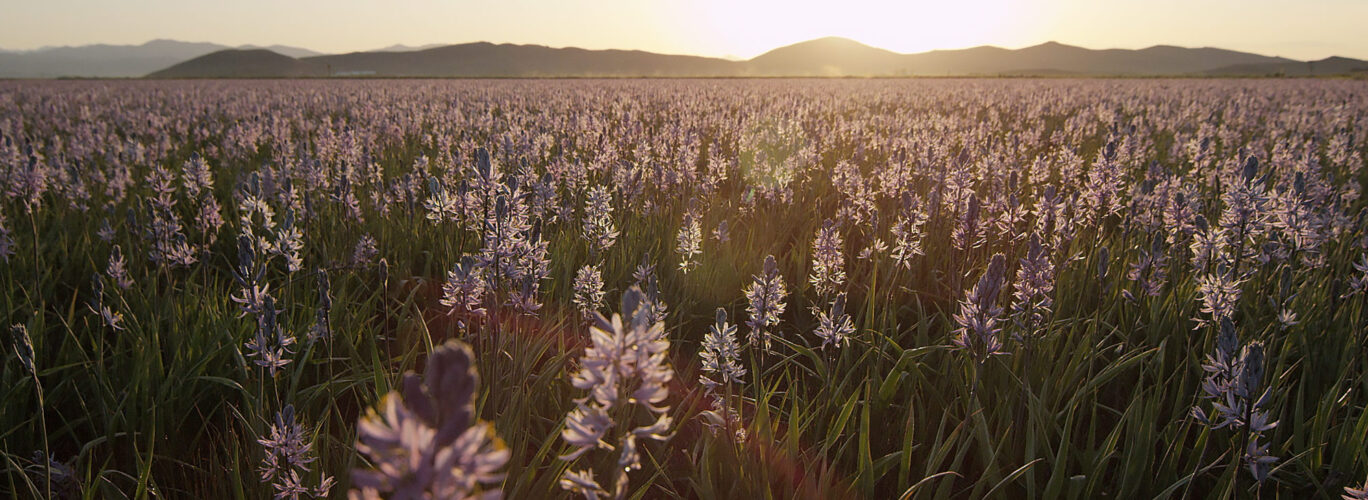
This course examines the stereotype of the “ecological Indian”—a racial trope that has perpetuated the idea that Native North Americans are naturally closer to nature or are natural conservationists. The class looks at how this stereotype has shaped non-Native ideas about Indigenous peoples in what is now the United States and has affected Indigenous sovereignty and self-determination. This course also examines the varied ways Indigenous peoples have thought about ecological relationships and the strategies they developed to live in relation with the environment. The class critically examines the relationship between settler colonialism and the environment and considers contemporary and historical case studies in which Indigenous peoples have fought to protect and care for their lands and waters in the face of the ongoing violence of settler colonialism.
- Instructor: Kaden Jelsing
Category: 2023 Fall Semester

Weekly Office Hours: Monday 4-5:30pm in Sabin Reed 122. (It's in the hallway that connects Sabin Reed and Burton, across from Burton 110.)
- Instructor: Sarah Mazza
Category: 2024 Fall Semester
Category: Spring 2015-2016
Category: Spring 2016-2017