
Category: Spring 2015-2016
Smith College's Moodle
Search results: 785

This is an introductory course to philosophy focusing on inductive and deductive reasoning and argumentation. More specifically, it covers when reasoning fails and why scientific, statistical, categorical, and propositional ways of reasoning are successful. Through such focus, we will work towards being critical reasoners by developing, defending and assessing ways of thinking and reasoning. This will have direct impact on how we reason and make informed decisions in our personal, intellectual, and academic pursuits and lives.
- Instructor: Chris Rahlwes
Category: 2025 Spring Semester

Did you know Indian philosophy has been around for at least two thousand years? In this course, we’ll get introduced to some highlights of its history. We’ll ask questions like: What is reality, and how do we fit into it? Is the world we experience an illusion? Are there other minds, and can I know them? Can I even know my own mind? Is there a divine being or beings? How can we know the answer to these questions? How should our answers to these questions guide our lives?
Given the depth and breadth of what we call “Indian philosophy” (philosophy on the subcontinent that includes modern-day India, as well as Afghanistan, Bangladesh, Bhutan, Nepal, Sri Lanka, and Pakistan), there is no way this course can be comprehensive. Therefore, we will focus on representative texts and topics, leaving an option during the last week for the class to choose a new text to investigate together.
As a textually grounded course in philosophy:
- We focus on texts to understand how to engage with Indian philosophy in translation by careful reading.
- We focus on genre to understand the ways Indian thinkers engage in philosophy: what dialectical methods characterize debates among participants, and what are the norms for different kinds of texts?
- We focus on problems to understand major questions that Indian philosophers take up. Some major questions include: What is the relationship between the world and the self? How can we know things? Is there a divine being or beings? How does language work, in ordinary contexts and poetry? These topics are intertwined, as we will see.
- Instructor: Malcolm Keating
Category: 2024 Spring Semester
Phil 233_01: Aesthetics and the Philosophy of Art
Fall 2025
Instructor: Angela Curran (pronouns: she/her)
Office: Wright 222
Office Hours: In person, in Wright 222, Tuesday and Thursday, 11:30-1 pm and other times by appointment.
email: acurran24@smith.edu
Course Meeting Times: Tu and Th 9:25-10:40 am
Course Room: Hatfield 106
Course Syllabus: Aesthetics and the Philosophy of Art
“The experience of art is a manifestation of human freedom, enabling individuals to express their uniqueness and engage with the world in meaningful ways, ” Hannah Arendt
“The function of art [experience] has always been to break through the crust of conventionalized and routine consciousness.” John Dewey
The central goal of the course is to introduce you to some of the puzzles and problems that philosophers have considered when they think about art. After going through the course, you will have learned a new way to think about art. You will also learn about philosophical thinking and see how examining art can teach us more about the nature of philosophy.
We investigate several central questions in aesthetics and the philosophy of art:
1). The Definition of Art: can art be defined? Could anything, including a pile of bricks, be art?
2) The Experience of Art: What is the nature of our experience of art? Is there something unique or valuable about our experience of art that sets it apart from our experience of everyday experiences?
3) Is intention relevant for interpreting a work of art?
4). How can we feel genuine emotions towards fiction when we know the characters are not real?
4) Are art and morality independent?
We will use many examples of artworks of various kinds (paintings, film, literature, music, and so on) as we discuss the ideas in the readings. You are also encouraged to bring in examples of artworks you would like to discuss about the readings. In addition, we will make use of the Smith College Museum of art throughout the semester.
You do not need to have taken philosophy to enjoy and do well in this class. But you do need to commit to learning the tools of philosophy, which we will introduce the first few weeks of the class, especially logical reasoning and evaluating arguments.
- Instructor: Angela Curran
Category: 2025 Fall Semester
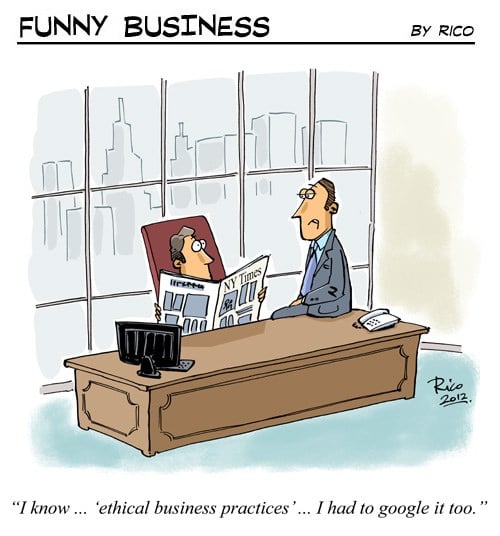
This course is meant to introduce students to a range of ethical considerations which one confronts in the business world. The aim is to carefully consider ethical questions, problems, and dilemmas found in the business world, and to develop the conceptual tools to find solutions to them. This course will examine ethically appropriate business conduct in relation to issues of social and distributive justice, corporate responsibility, employee and human rights, globalization, environmental issues, and government intervention. This course will also explore what it means for a business to have a positive societal impact, and ways to achieve that goal.
- Instructor: Michael Carrick
Category: 2025 Fall Semester
What is language? What does it mean for words to have meaning? What is the meaning of words? These are the fundamentalquestions in the philosophy of language. We start with the question: what kind of meaning do linguistic expressions have? Do thesigns we use to communicate concern thoughts we want to express, as seventeenth-century philosopher John Locke thought? Ordo the words we use to communicate concern things in the world, as philosophers in the nineteenth and twentieth centuries suchas John Mill, Gottlieb Frege, Bertrand Russell, and Saul Kripke maintain? We look at what kinds of meaning specific linguisticexpressions have, such as names and definite descriptions, e.g., “The King of France.” We examine syntax questions: how themeaning of sentences depends on the meaning of their parts.
Second, we turn to the question of linguistic meaning in general. We look at the conception of language and meaning proposed byW.V. O. Quine and developed by Donald Davidson.
We examine Quine and Davidson’s views on what it is to make sense of language. We also look at Quine’s famous attack on theanalytic-synthetic distinction—the issue of whether statements are true or false by meaning alone, e.g., “All bachelors areunmarried,” or in virtue of experience, e.g., “It is raining now.”
The third issue we try to understand more profoundly is the role of language in our lives. We look at J. L. Austin’s speech act theory,according to which the fundamental thing we must understand about any language is how a speaker uses it. Then, we look at H.P.Grice’s attempt to explain what speakers mean by the expressions they use to communicate.
The fourth issue we discuss is the evolution of language. Did language evolve from the primate brain? Do non-human animals havea system of communication we could call language?
The fifth issue we discuss is metaphor. What are metaphors? How do we use metaphors to understand our lives?
The sixth issue we discuss concerns the effect of our words on others. We examine the nature of slurs, racial epithets, and silencing speech, among other topics.
- Instructor: Angela Curran
Category: 2025 Fall Semester
- Instructor: Tashi Tsering
Category: Spring 2017-2018