- Instructor: Mike Howard
- Instructor: Amy Rhodes
- Instructor: Ellen Wall
- Instructor: Julia Celeste Walter
- Instructor: Dano Weisbord
Category: Faculty Projects

Course Description:
Colloquium: Methods of Inquiry in Africana Studies is designed to introduce students to how we do the work of Africana Studies. Through study of a single topic, students will be introduced to and employ methods of inquiry that speak to the interdisciplinary and multidisciplinary nature of the field of Africana Studies.
Focused on Blackness and water (broadly conceived), this course will tend to Tiffany Lethabo King’s claim in The Black Shoals, Offshore Formations of Black and Native Studies that “Water, most often the ocean, has been Black studies’ most faithful metaphor”:
Land is not the traditional element used to analogize Black flux or
think about dynamic, fluid, and ever moving Black diasporic subjectivity.
Rarely does land evoke the kind of flexibility, elusiveness, and trickster-like
qualities that Black diasporic life symbolizes in the Western Hemisphere.
Water, most often the ocean, has been Black studies’ most faithful metaphor.
Across eight framing units, students will read/view/listen to works by Black scholars, writers, and creatives that showcase the ways in which Africana Studies, in praxis, interfaces with water (broadly conceived). Once introduced to a variety of methods in Africana Studies, students will then apply those methods to a selection of corresponding texts/media on Blackness and water (broadly conceived). Framing units include but are not limited to Black Atlantic Oceanics as Archive, African Atlantic Water Cultures, The Liquid of Black Freedoms, and The Oceanic Age of Blackness.
Course Description:
This course will examine the U.S. Black autobiographical tradition from its beginnings in the eighteenth century to its present iterations. Black autobiography will be constituted broadly to include long-form prose, slave narratives, poems, a sketch, essays, a biomythography, and a meditation. The course will privilege the study of the Black autobiographical tradition as a literary tradition. As such, we will consider questions of form, genre, publication history, narrative voice, language, audience and other literary markers critical to understanding the literariness of Black autobiographies. We will also consider the socio-political, historical, and economic milieus that shaped Black autobiographers’ lives and the telling of their stories. As we journey through the Black autobiographical tradition, I invite us to consider how Black autobiographies and autobiographers engaged and continue to engage the central meditation-cum-query found in Carolyn Rodgers’ poem, Breakthrough:
How do I put myself on paper
The way I want to be or am and be
Not like any one else in this
Black world but me (12-15).
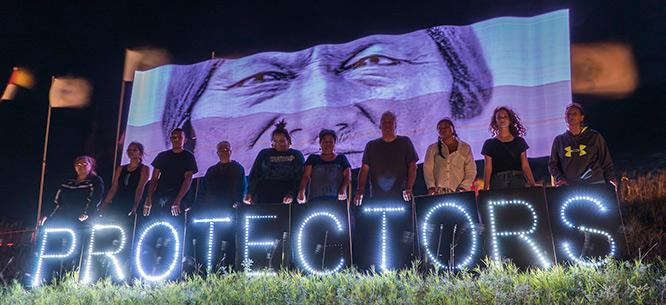
This course is
designed to introduce students to the interdisciplinary field of Native
American and Indigenous Studies. This course looks at the diverse
histories of Indigenous nations across North America, as well as
histories of shared experiences with ongoing colonialism, legacies of
resistance and connections to place. The class focuses on Indigenous
perspectives, intellectual traditions and critical interventions across
time through the work of historians, anthropologists, philosophers,
literary scholars, Indigenous knowledge keepers, poets, writers and
activists. This course is required for a Native American and Indigenous
Studies focus for American Studies majors.
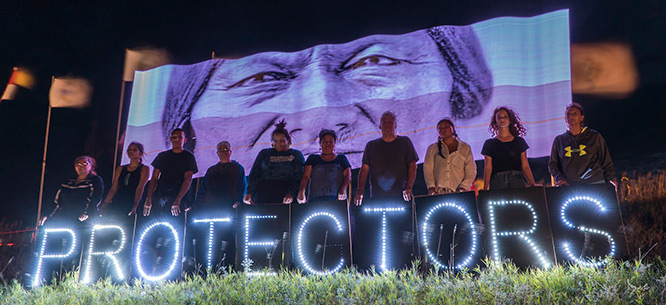
This course is
designed to introduce students to the interdisciplinary field of Native
American and Indigenous Studies. This course looks at the diverse
histories of Indigenous nations across North America, as well as
histories of shared experiences with ongoing colonialism, legacies of
resistance and connections to place. The class focuses on Indigenous
perspectives, intellectual traditions and critical interventions across
time through the work of historians, anthropologists, philosophers,
literary scholars, Indigenous knowledge keepers, poets, writers and
activists. This course is required for a Native American and Indigenous
Studies focus for American Studies majors.
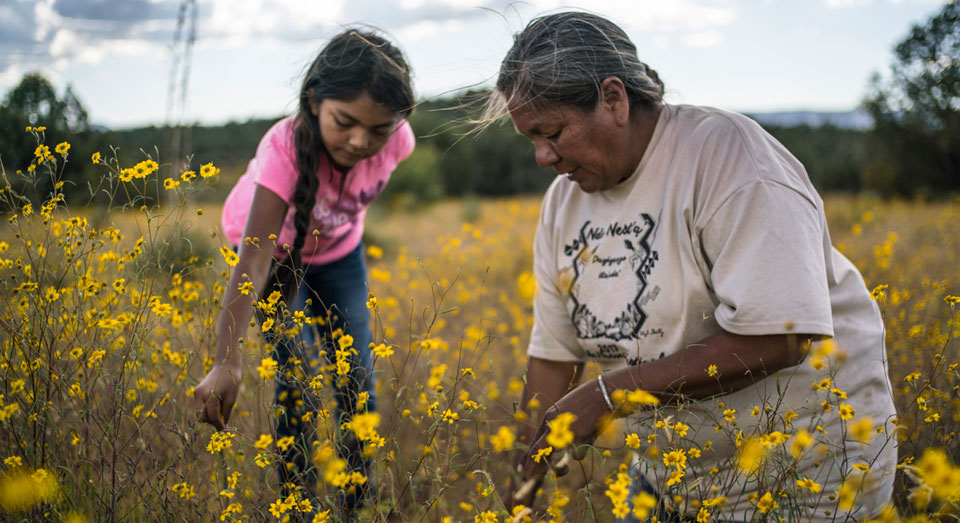
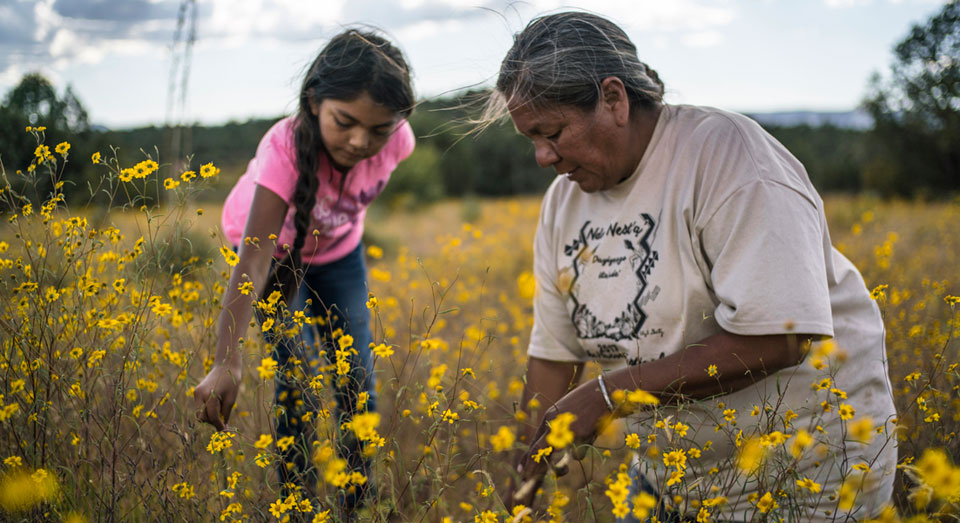
It is often noted
in mainstream news media that Indigenous peoples are “on the front
lines” of the climate crisis, while providing little explanation as to
why this is. Narratives of inherent Indigenous vulnerability obscure the
ways in which Indigenous communities have mobilized to navigate
environmental change, not only in the face of contemporary global
warming, but historically, as settler colonial incursions radically
transformed landscapes and constrained Indigenous knowledge practices
that have provided tools for adaptation for thousands of years. This
course considers how Indigenous climate vulnerability is largely a
product of settler colonialism—not only a process and system, but also a
particular way of understanding and relating to the nonhuman
environment.
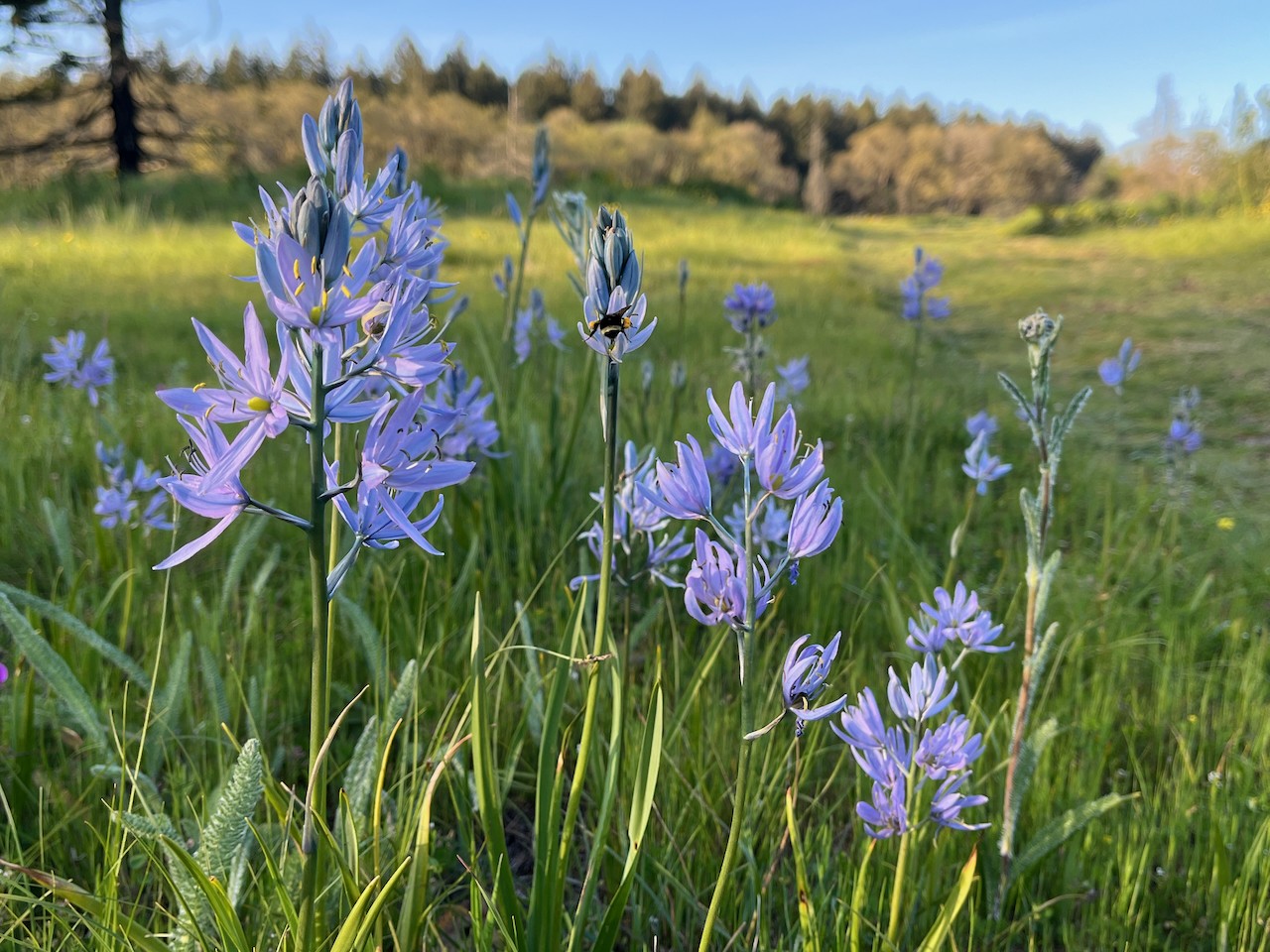
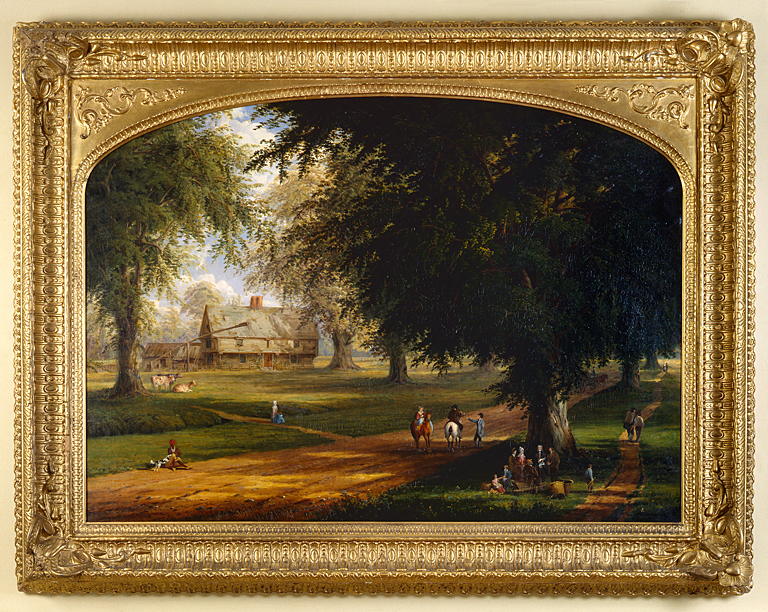
What is the relationship between objects and ideas? How do objects both individually and collectively convey patterns of everyday life? This seminar draws upon the disciplines of history, art and architectural history, landscape studies, anthropology, archaeology, and cultural geography to examine the material culture of New England from the earliest colonial settlements to the Victorian era. It introduces students to the growing body of material culture studies and the ways in which historic landscapes, architecture, archaeology, furniture, textiles, art, metals, ceramics, foodways, and domestic environments can be interpreted as cultural documents and as historical evidence. We will explore objects not only as finished products but also the processes by which they were made and the makers who produced them. NOTE: The class will meet at Historic Deerfield in the Flynt Center of Early New England Life unless otherwise noted.
What is the relationship between objects and ideas? How do objects both individually and collectively convey patterns of everyday life? This seminar draws upon the disciplines of history, art and architectural history, landscape studies, anthropology, archaeology, and cultural geography to examine the material culture of New England from the earliest colonial settlements to the Victorian era. It introduces students to the growing body of material culture studies and the ways in which historic landscapes, architecture, archaeology, furniture, textiles, art, metals, ceramics, foodways, and domestic environments can be interpreted as cultural documents and as historical evidence. We will explore objects not only as finished products but also the processes by which they were made and the makers who produced them. NOTE: The class will meet at Historic Deerfield in the Bartels Seminar Room in the Flynt Center of Early New England Life unless otherwise noted.
This course is an introduction to major themes in social and cultural anthropology. We will examine the concepts, methods, and theories anthropologists employ to understand the unity and diversity of human experiences across different regional contexts, with an emphasis on social, cultural, political, and economic systems of inequality.
Perhaps you are taking this course because you are interested in becoming an anthropology major. Perhaps you are considering pursuing a career in anthropological research. If this is your situation, this course is a great place to start. But for many others – maybe even a majority of you – this might be the first or only anthropology course you will take at Smith – though I hope you will be inspired to take more! By the end of this course, you will learn what it means to “think anthropologically” in ways that I hope can serve you in any career path you choose and in your everyday life, at Smith and beyond.
To “think anthropologically” is much more than a specialized course of study; it is a way of observing and understanding the diverse practices, ideas, and sentiments through which human beings build their daily lives in an ever-changing world. Thinking anthropologically is a mode of asking critical questions about what human beings share in common and what makes us distinct from each other. Thinking anthropologically means learning to pay attention to conditions, perspectives, and structures of inequality that are often taken for granted or invisible. It gives us a conceptual tool-box for analyzing deeply complex topics like culture, race, and gender in more critical and nuanced ways.
The cornerstone of anthropological research is ethnographic fieldwork, which is a qualitative method based on long-term participatory observation among particular groups of people in specific places. Such an immersive, fine-grained approach to research allows anthropologists to analyze how ordinary people experience the pressing challenges of our time, from issues of racism to histories of colonialism, to forced displacement, to climate change, to economic crisis.
Thinking anthropologically also means critically engaging with the discipline’s origins and the fraught histories of colonialism, racism, and inequality in which anthropology — like all modern academic disciplines — is embedded. In the first few weeks of the semester, we will trace anthropology’s intellectual roots in 19th- and early 20th-century debates in Europe and North America about evolution and the “scientific” study of human diversity. We will then consider how anthropological research has critically evolved in relation to this history. Throughout the course, we will ask: What texts and topics are considered the “classics” of anthropology, and what does this exclude? What aspects of the classic anthropological enterprise of documenting cultural differences should be retained, and what should be abandoned or rethought? And what does it mean to “decolonize” anthropology today?
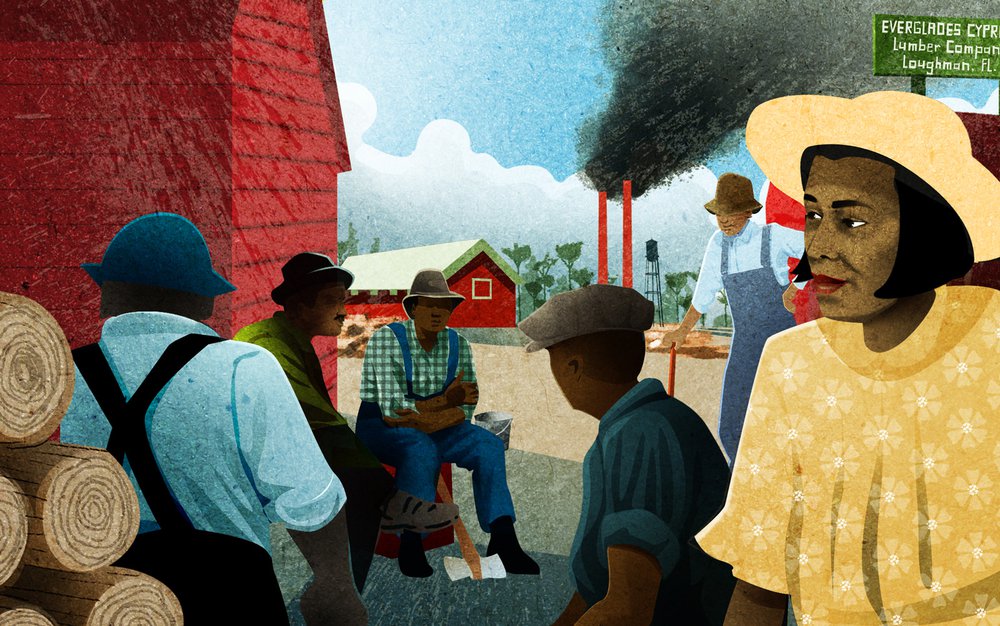
What does it mean to be human? What is culture, and how does it shape the way humans see the world? Why are some forms of cultural difference tolerated, while others are not? As the holistic study of the human experience, cultural anthropology addresses these questions in a world shaped by human migration, climate change, capitalist extraction and global inequality. This course provides an overview of the discipline’s history, its distinctive method of ethnography and the breadth of topics it addresses, including public health, race, the environment, gender, language, nationalism, software design, the body, music, cities, government and more.
Final Research Project Statement
For your Thursday meeting, 9/23, you are to bring a written draft of your research proposal. I will not collect this draft - but it should contain notes, ideas, and questions. You should come prepared to discuss what topic, site, cultural area, etc. you have decided to research and write about. Our meeting time is intended to hone your ideas as you have developed them thus far; please come prepared.
The Research Statement which is due on midnight, Thursday, September 23 on Moodle, should clearly state, in one or two paragraphs (about 250 words) what you propose to research. Avoid generalizations and vague statements, be specific in what you intend to research. Focus on a specific aspect of a given site or culture area, e.g., Çatalhöyük spanned 1,100 years and so it would be important to decide what period you wanted to examine (Early, Middle or Late). Likewise, decide what aspect of life at Çatalhöyük you would you research - health and disease, diet, settlement patterns, ritual and symbolism, gender, domestic plants and/or animals, etc. The field is limitless! I suggest choosing a topic you are interested in learning more about.
I look forward to seeing you on Thursday. Please stay tuned for where our meetings will take place; I am still hoping to meet under the pagoda, with a sweater and a thermos of tea if necessary!
Thank you,
Professor Mangan
As people around the world flee ecological, political, and economic disasters in growing numbers, it has become a basic truism to say that we are living in an age of “migration crisis.” The United Nations High Commissioner for Refugees estimated recently that over 84 million people around the world are living in conditions of forced displacement, which is the highest number on record since World War II. These numbers look much larger if we include labor migrants: between 1970 and 2012, the number of transnational migrants worldwide doubled to 232 million.
But what exactly does it mean to be displaced? Who counts as a refugee, and what makes them different from labor migrants? How have certain forms of migration come to be labeled “illegal”? Why are some forms of migration deemed “voluntary” in contrast to others? Where do these distinctions come from and how do they matter in everyday life? This course sets out to address such questions, among many others, by introducing students to the anthropological study of displacement, migration, and transnationalism. Through a close engagement with scholarly texts and visual media, we will pursue two interrelated tracks of inquiry that extend across the arc of this course.
One track is historical: we will continuously revisit the historical legacies of the 20th-century transnational migration regime, the postcolonial formation and partition of nation-states, the emergence of an uneven and globalized division of labor across the world, and how these fraught histories continue to shape the politics of transnational human mobility until today.
Our second line of inquiry is primarily ethnographic: it concerns the paradoxical conditions of displacement in everyday human experiences, such as waiting in transit, being-in-place while being displaced, making a home in exile, pursuing the “good life” in conditions of alienation, and the striking capacity of borders to seem invisible or real to the point of being deadly, depending on who or what crosses them, and how.
The course is organized into six thematic units, guided by questions such as: What kinds of social relationships and conflicts are formed through migration? How are borders governed and contested? How are classed, gendered, and racialized notions of labor, the self, and the family reconfigured by human migrations and immobilities across borders? How are the legacies of colonialism and capitalist extraction embedded in contemporary population movements and states’ efforts to manage them? And how do such histories shape the possibilities and limits of transnational solidarity today?
By the end of the semester, students will be able to:
Identify major debates, aims, and methods in the anthropological study of displacement, migration, and transnationalism
Gain new analytical tools for understanding the historical, cultural, and political significance of human migratory processes in the 20th- and 21st-century
Understand the politics of representing displacement through analysis of visual media and material culture, particularly ethnographic films
Develop empirically-grounded and theoretically rigorous critiques of many taken-for-granted assumptions about displacement, particularly the conventional dichotomy between migrants and refugees
Gain comparative knowledge of specific practices and ideas related to human migration and displacement in a range of global and regional contexts. These include, among others, the partition of the Indian subcontinent, the making of British colonial subjects into “immigrants,” women electronic factory workers in China’s Special Economic Zones, Mexican farmworkers in the United States, Palestinian refugees in Lebanon and the making of the modern humanitarian refugee regime, struggles over Central Asia’s post-Soviet borders, the politics of displacement in austerity Europe, North American indigenous politics across borders, and Black feminist practices of transnationalism
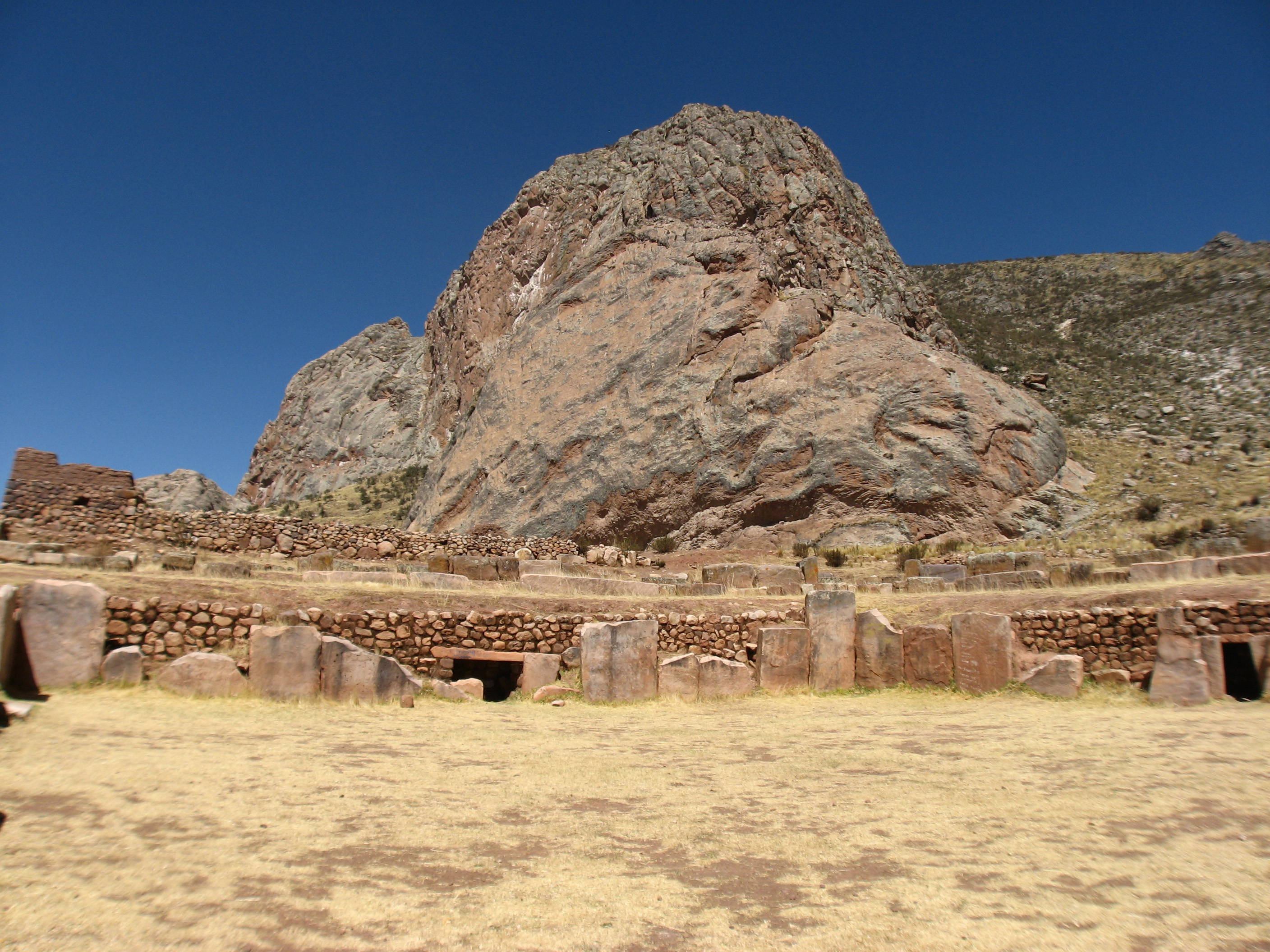
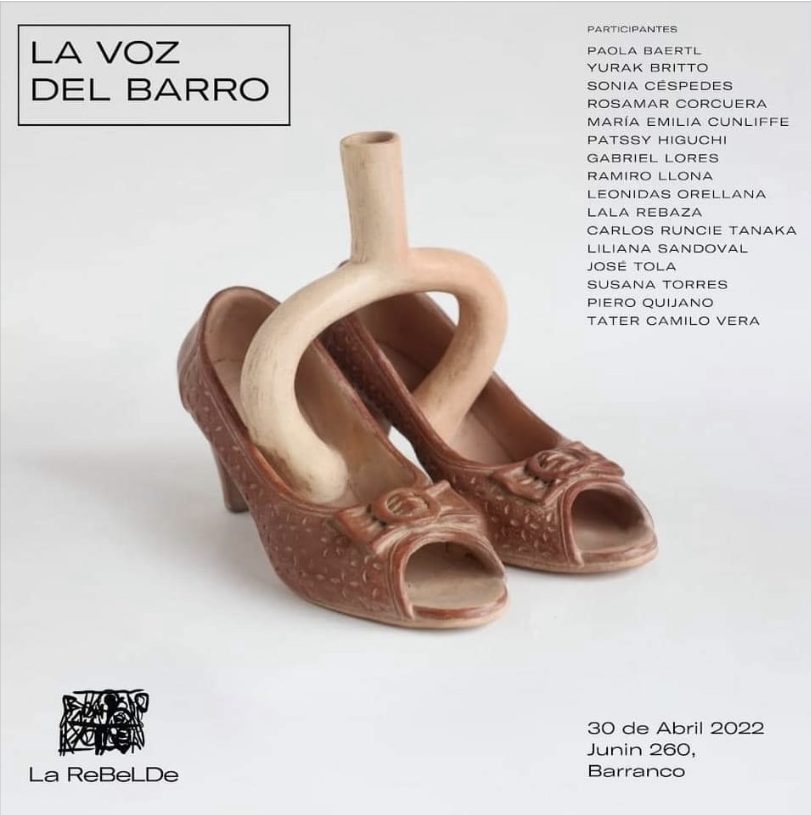
This course is designed to introduce you to the field of art history, that is, to what art historians of any specialty do when we study works of art. It broaches several topics within the history of art such as site-specific installation, the readymade, the history of commemorative sculpture, and the convergence of photography and performance art. It is not a survey but instead features a series of seminar-like explorations into particular works of art. Divided into four units, it will facilitate consideration of the ways in which artists reference and converse with-- sometimes intentionally, sometimes not-- previous art historical periods and genres, as well as cultural and visual traditions more broadly. Each unit in the course begins with and hinges on a close examination of a contemporary art piece. Subsequent weeks in each unit dive into the various topics integral to the study of those particular works. When we focus on Mickalene Thomas’s A Little Taste Outside of Love (2007), for instance, we will address the reclining female nude, the concept of the gaze, the collage aesthetic, the legacy of Orientalism and “othering,” and finally the visual rhetorics of Blackness and post-Blackness in the history of art. By the end of the course, you should have an intimate sense of some critical art historical tropes, as well as the deep investigative work of art history that incorporates related fields of social, political, and cultural history, as well as material and popular culture.


In this course we will examine the art and architecture of Ancient Greece and its historical and social context, from the end of the Neolithic through the domination of Greece by Rome (ca. 3500-168 BCE), concentrating on an array of settlements, cemeteries, and ritual sites. We track the development of the Greek city-state and the increasing power of the Greeks in the Mediterranean, culminating in the major diaspora of Greek culture accompanying the campaigns of Alexander the Great and his followers. Our approach will be broadly chronological, and we will focus on sites that have been selected for the variety of archaeological remains recovered and for their importance in the history of Greece (for example, Athens, Olympia, etc.). The emphasis of the course is on the contextual examination of Greek material culture, and how this changed over the course of the period under consideration. We will also stress the interconnections between the disparate parts of the Greek world and the idea of a unified Greek culture. Ongoing and recent archaeological work in Greece is also integrated into this course.
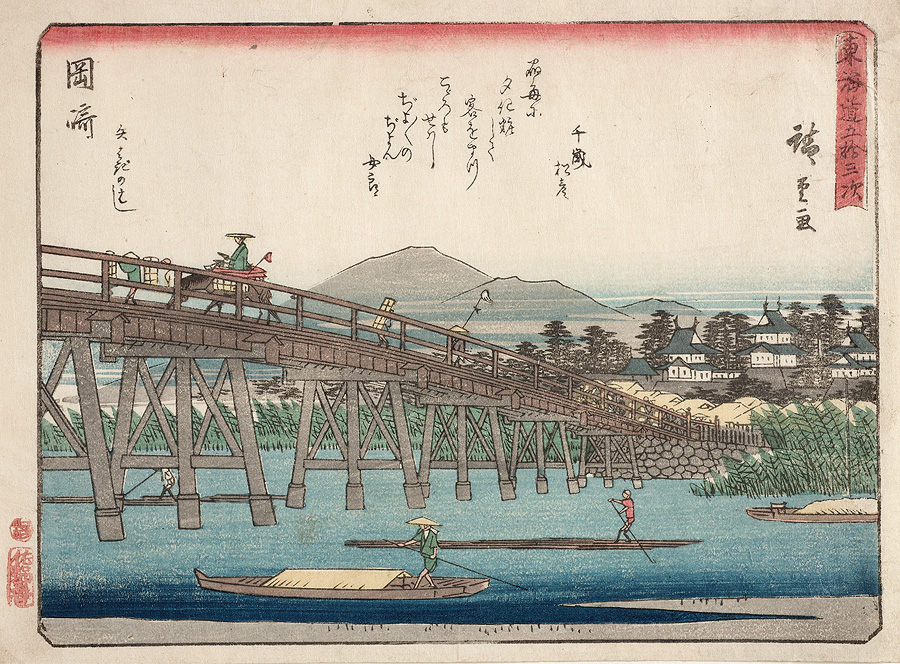
ART 225, Arts of Asia
Fall 2023
Framework
The
multicultural course introduces students to the visual arts of Asia.
In an active learning environment, we will study architecture,
sculpture, painting and other arts from
the earliest times to the present in various Asian countries including India, China and Japan. Illustrated class lectures, group
discussions, and regular writing exercises will allow us to develop
skills in visual analysis and art historical interpretation. We
will explore how the visual arts express the religious beliefs and political
formations in Asian countries and show the interaction of cultures across the world. The arts of Asia challenges us to rethink our definition of Art.
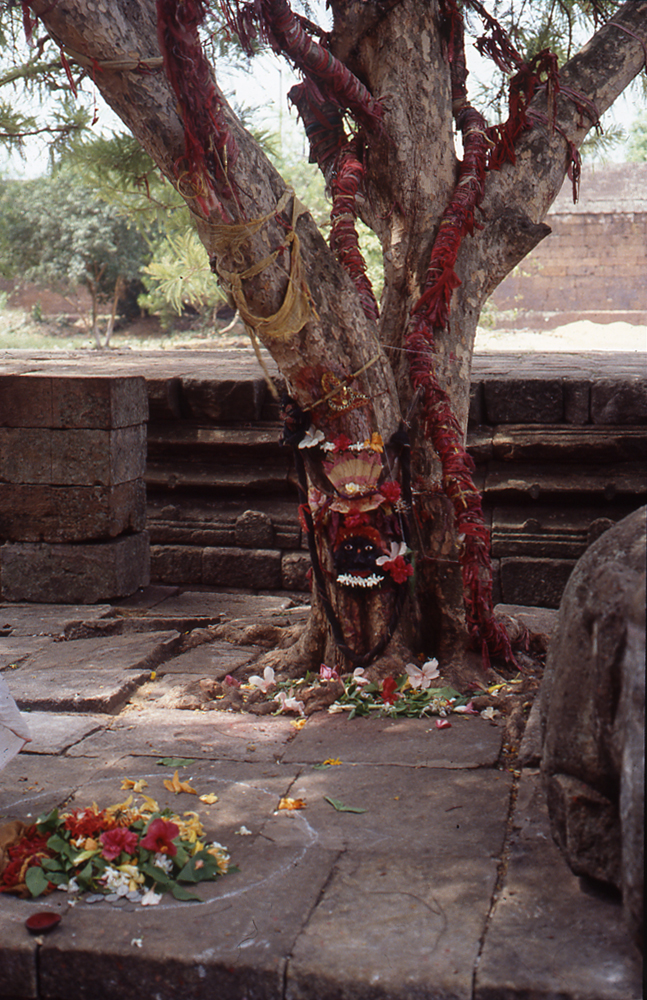
Hmm! How is this art?
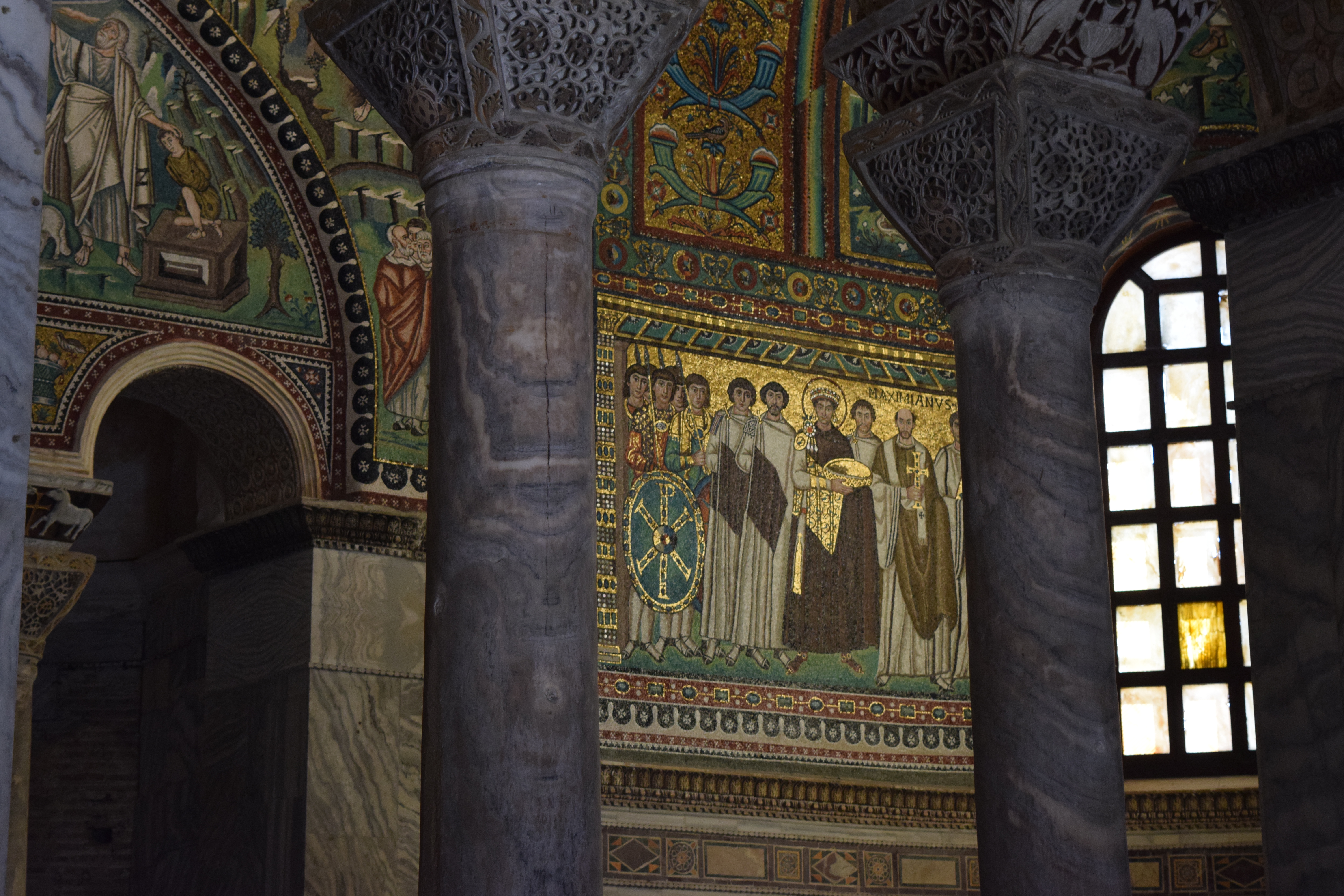
To step inside a medieval cathedral is still a profound experience. Nowadays, their majestic heights and elegant forms are objects of quiet contemplation. Yet medieval buildings were seldom still or silent, and their audiences were rarely disinterested observers. This course surveys the architecture of Europe and the Mediterranean between the fourth and the fifteenth centuries. Together, we will explore the development of the distinctive forms of medieval architecture in both the East and the West—from churches and monasteries to mosques, synagogues, cities, and palaces—and how these spaces were activated in contexts of ritual, liturgy, and performance.

This course (which
is, I think, unique in a liberal arts college curriculum) is a survey of the
genre of artist’s books from its beginnings in the political and artistic
avant-garde movements of Europe at the turn of the 20th century through
contemporary American conceptual bookworks. In particular, the course will
examine the varieties of form and expression used by book artists and the
relationships between these artists and the socio-cultural, literary, and
graphic environments from which they emerged. Along the way we will also
explore the relationship of the artists book to other genres of artistic
expression, including sculpture, architecture, conceptual art, and performance
art. In so doing I hope to help you to develop critical skills – that is, how
to look at, describe, and talk about complex works of art – and to interact
with them on several levels.
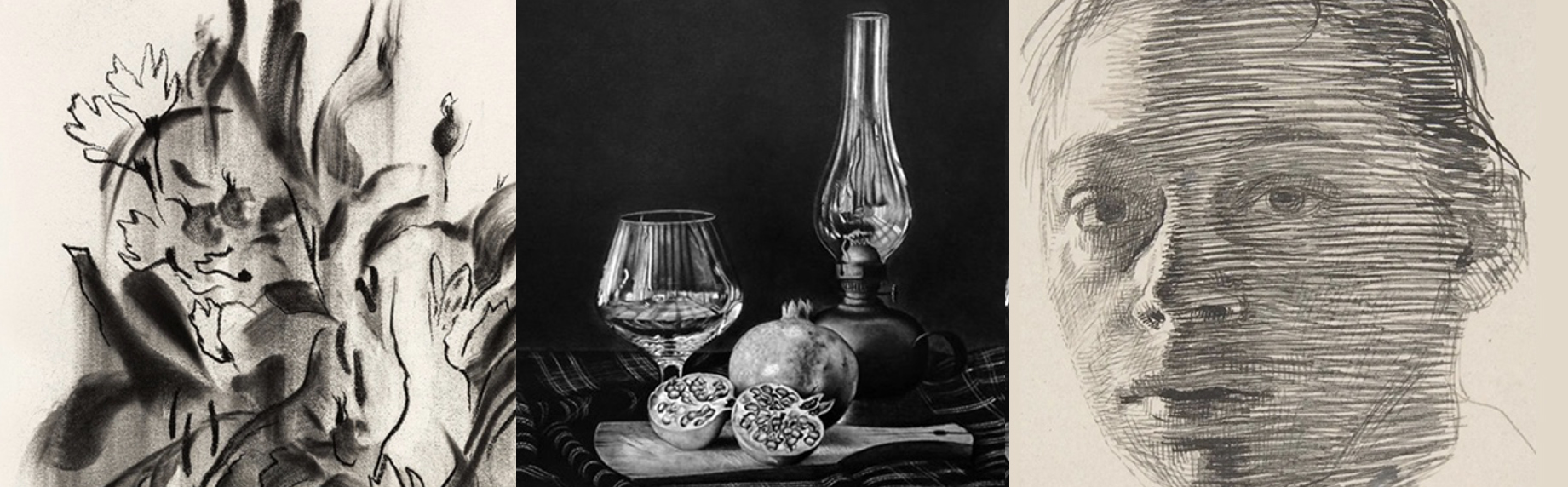
DRAWING I begins with the fundamental skill of “seeing” through drawing, using a range of media to translate the three-dimensional world around you into two dimensions. This course is based in experience and observation, exploring a range of techniques and media to understand the basic formal vocabularies and conceptual issues in drawing; subject matter will include objects, landscape, architecture, and the human figure. You will be assessed through weekly sketchbook assignments and critiques, and portfolio review. Midterm and final projects will encourage creative exploration using the skills introduced in class.
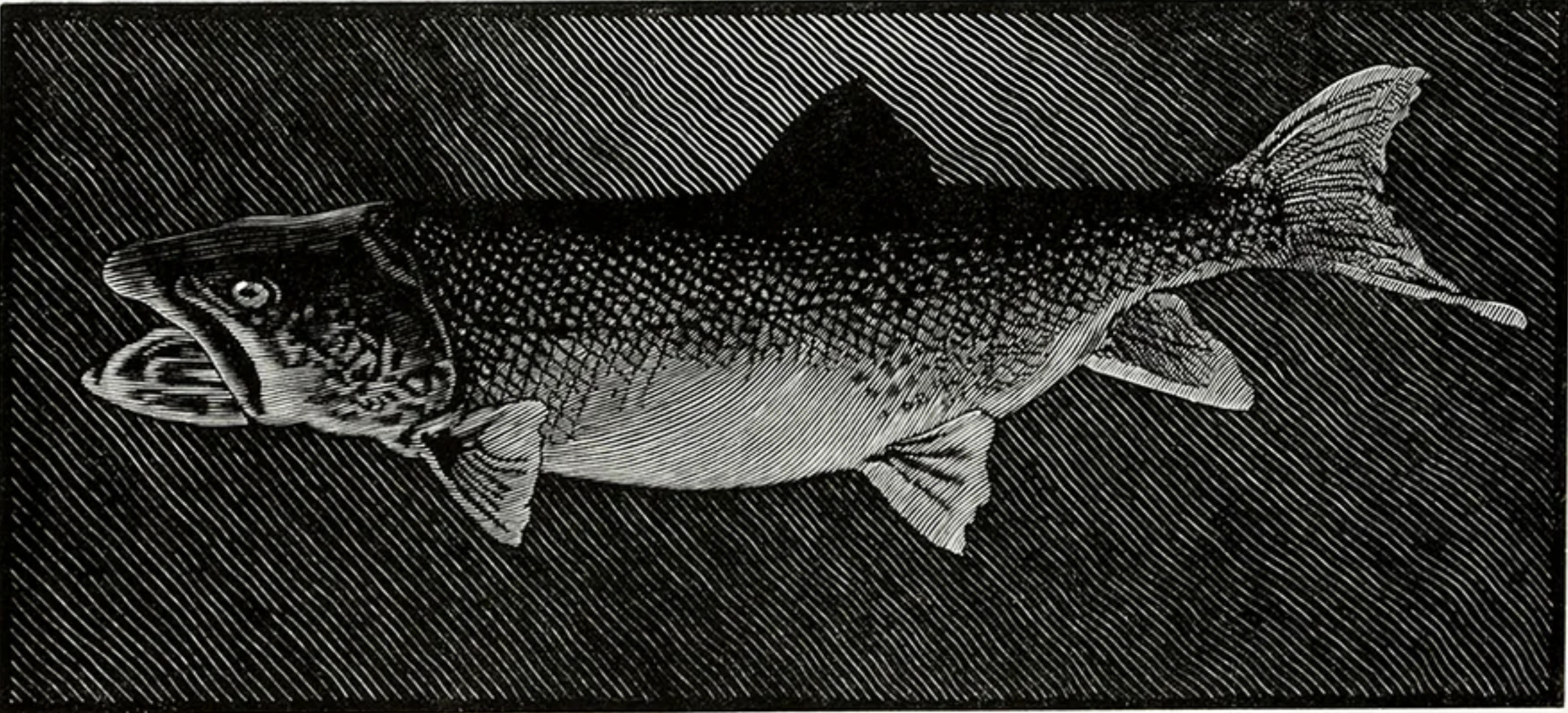
(1) Investigates the structure of the book as a form; (2) provides a brief history of the Latin alphabet and how it is shaped calligraphically and constructed geometrically; (3) studies traditional and non-traditional typography; and (4) practices the composition of metal type by hand and the printing of composed type on the SP-15 printing presses. A voluntary introduction to digital typography is also offered outside class.
This
course will introduce students to several SSC collections of individual papers
and organization records that shed light on the fight for economic justice,
especially for American women, both white and of color. In addition to some short secondary source
readings, students will then choose pre-selected documents from 14 designated
collections and in conversation with each other, both in class and in five
written responses on Moodle, discuss the ways in which a particular individual
or organization has addressed issues of economic injustice, what worked, what
did not, what needs to happen next. (1
credit)

This Moodle course is for the AST100 Survey of the Universe class in Fall 2025 taught by Andrew Couperus.


This Moodle course is for the AST235 Introduction to Stellar Structure class in Fall 2025 taught by Andrew Couperus.

BIO 130 - Biodiversity, Ecology, and Conservation
|
Name |
Nadia Fernandez |
|
Pronouns |
she/her |
|
|
nfernandez29@smith.edu |
|
Contact |
Email or in-person |
|
Student Hours |
Wednesdays - 1:00 - 2:30pm in Sabin-Reed 236 Thursdays - 9:30 - 11:00am in Sabin-Reed 236 Drop-in or book a time slot in the Appointments Calendar |
·

|
Name |
Nadia Fernandez |
|
Pronouns |
she/her |
|
|
nfernandez29@smith.edu |
|
Contact |
Email or in-person |
|
Student Hours |
Drop-in or book a time slot in the Appointments Calendar |
·

BIO 507 Seminar: Navigating a master’s degree in Biological Sciences (2 Credits)
This seminar provides the opportunity to meet and collaborate with the other students in the BIO MS program, gain experience describing and sharing planned thesis research with others, and develop professional skills related to crafting research proposals, reading and critiquing scientific literature, and public presentation. This course is required for graduate students and must be taken both years. Restrictions: BIO graduate students only. Instructor permission required.


Major goals for our work this summer:
Develop communications materials for new and returning students about starting the school year sustainably and the new SmithCycle Thrift
Develop multimedia training materials for new EcoRep skill development program
Draw out key messages from previous Smith student research to track and communicate students’ impacts on Smith’s sustainability
Sort and clean move-out donations (dorm decor, linens, and school supplies) and organize and display items in preparation for SmithCycle Thrift to launch in August
Support the branding and communications of CEEDS’ Sustainable Events Guide
Other sustainability projects which may include greenhouse gas tracking, program development, mapping, communications, data management or programming
Tuesdays & Thursdays 7:00-7:50 pm, Young Library Basement
The goals of this course are:
To develop your quantitative skills, enabling you to confidently approach word problems in chemistry. These problems will entail unit conversions, predicting the amount of products and reactants anticipated in various chemical reactions, and preparation of solutions and mixtures.
To build community with your fellow chemists. My hope is that our in-class group work and collaboration will give you skills to succeed in CHM 111 and future science courses.
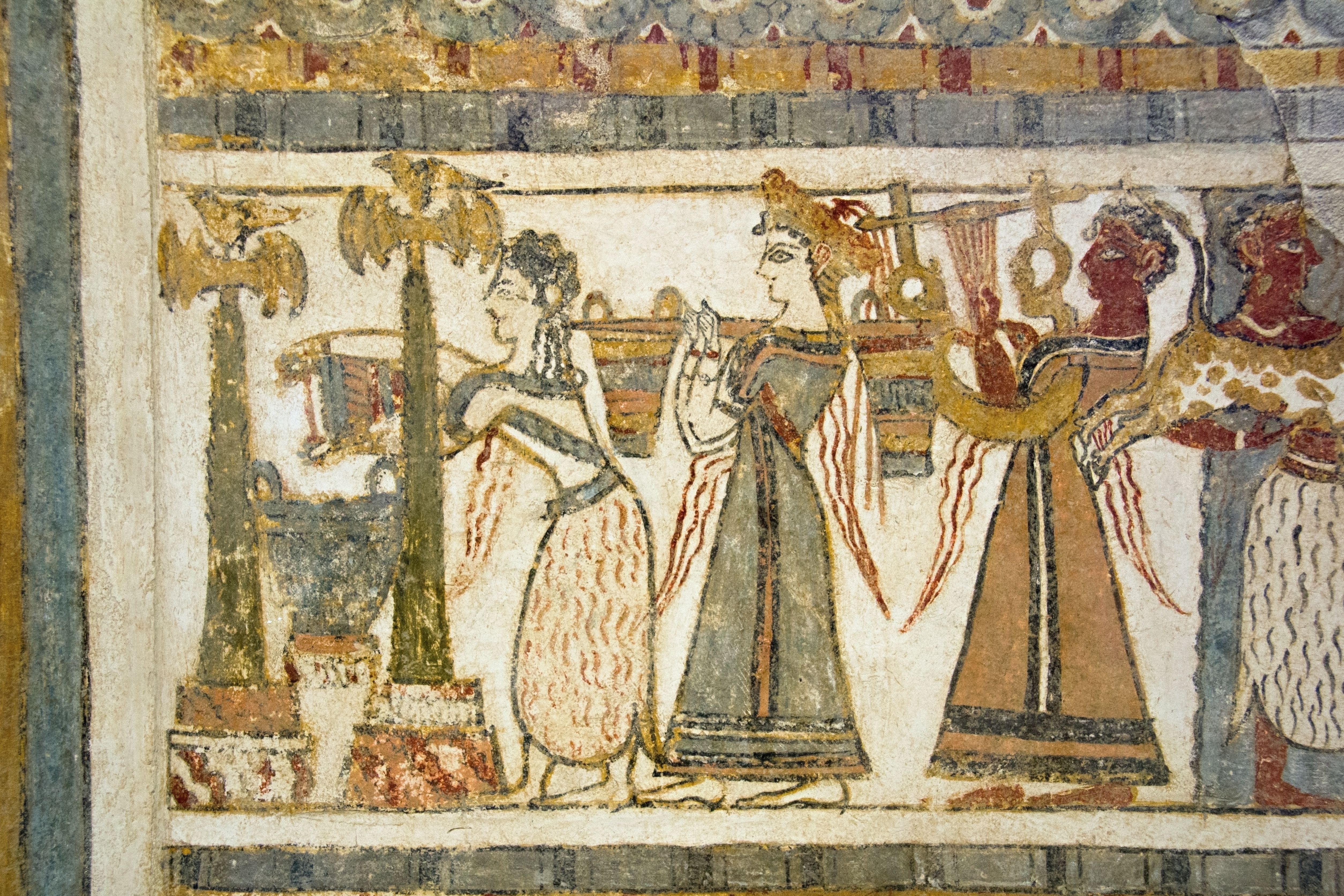

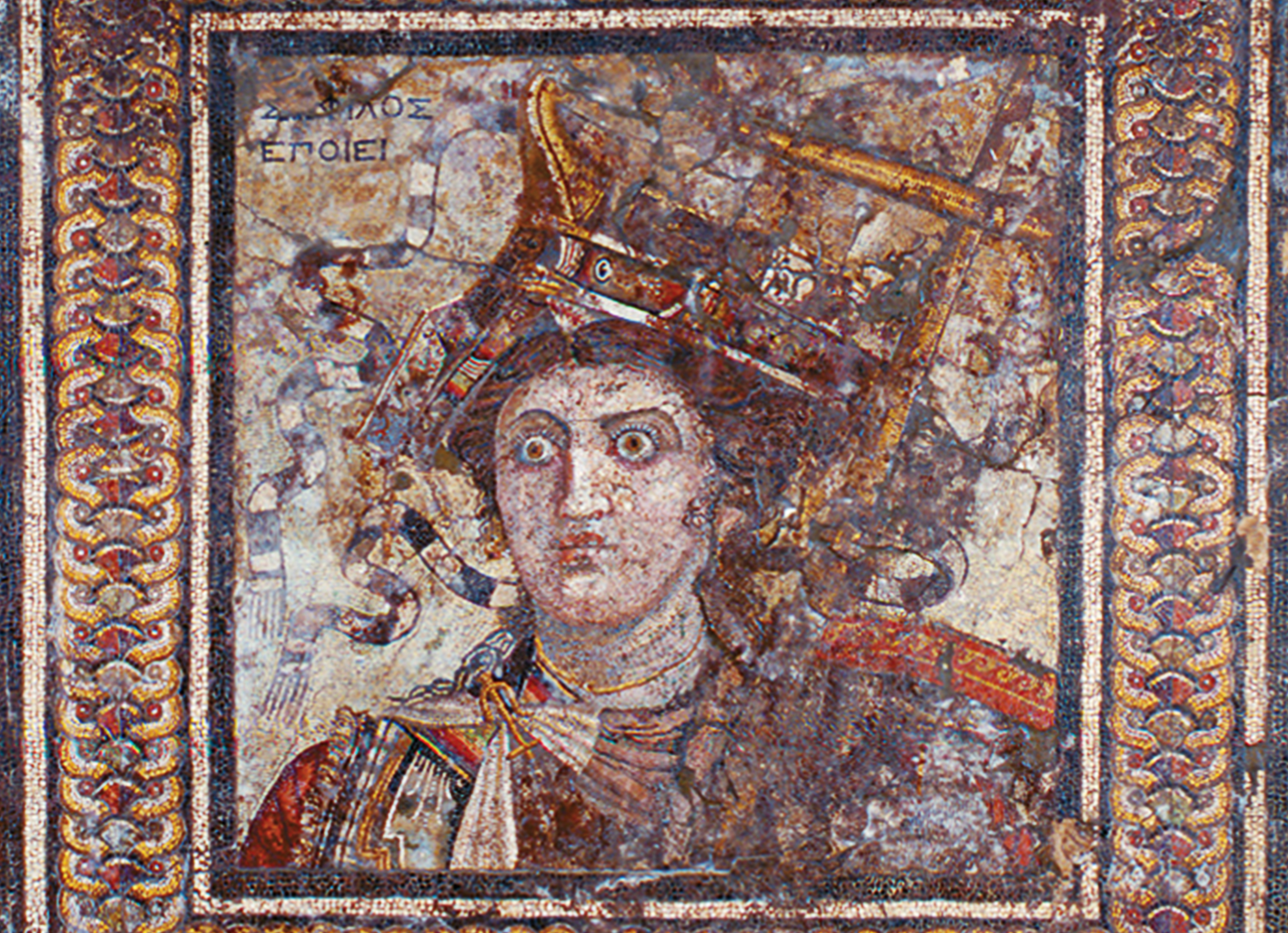
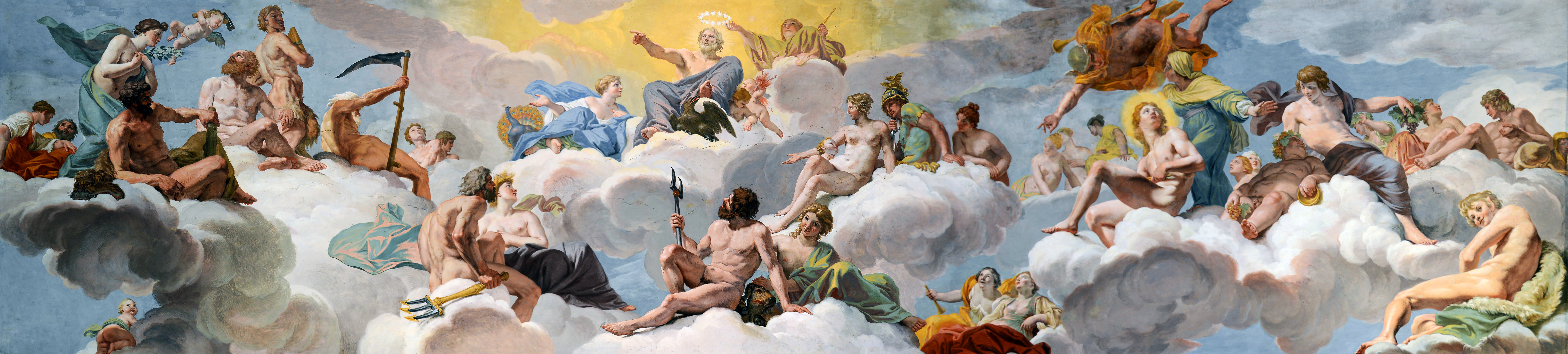
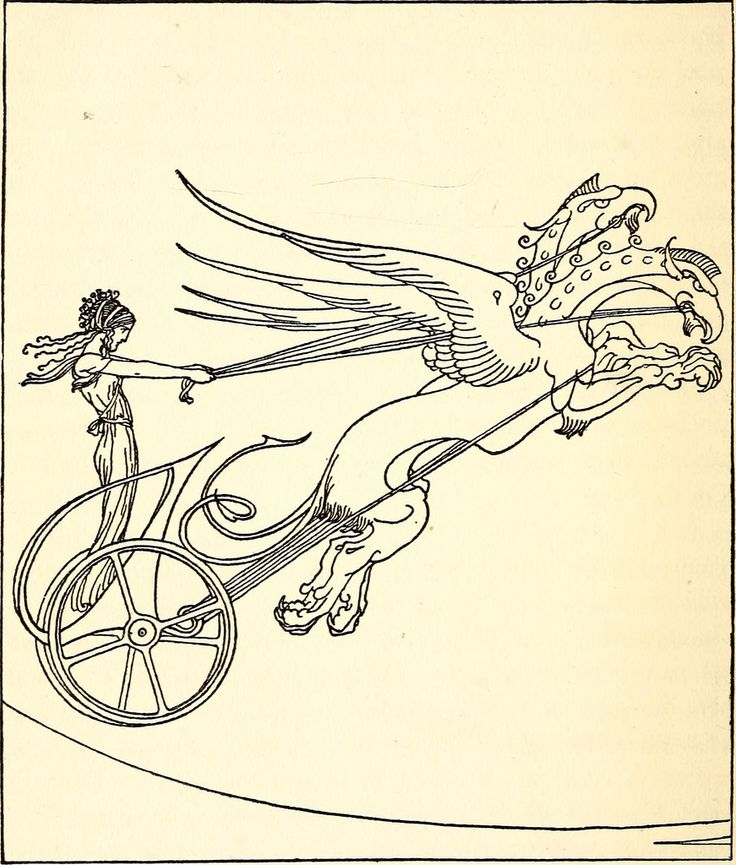
Greek and Roman mythology lies at the core of much of modern culture. For the ancients, myth was a religion, a method for addressing anxieties, a way of adding structure to the world and a means of communicating values from one generation to the next. For centuries, myth has been a favorite subject matter for authors and artists of all types. This course investigates the social, religious and historical contexts of Greco-Roman myths as they appear in ancient sources as well as the theoretical lenses we might use to interpret them. Additionally, much of class will be focused not just on ancient representations of myth, but their reception in popular culture since antiquity.
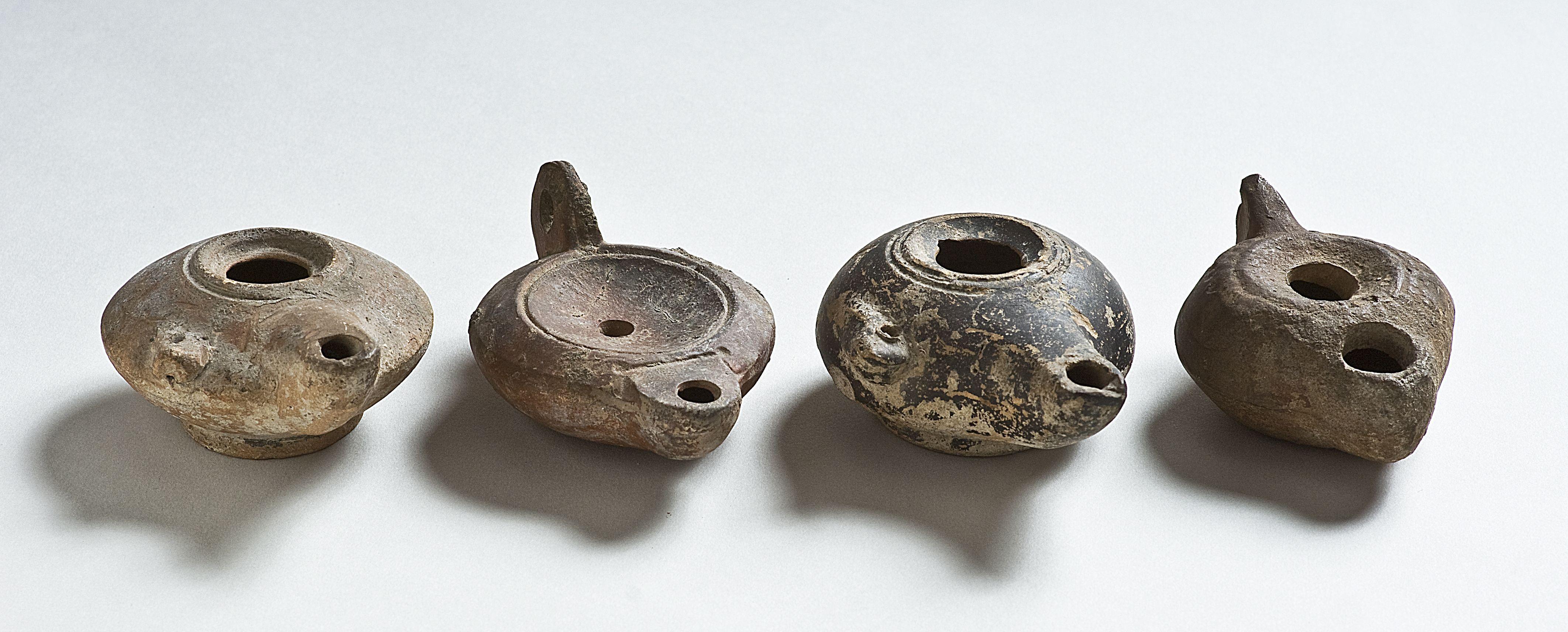
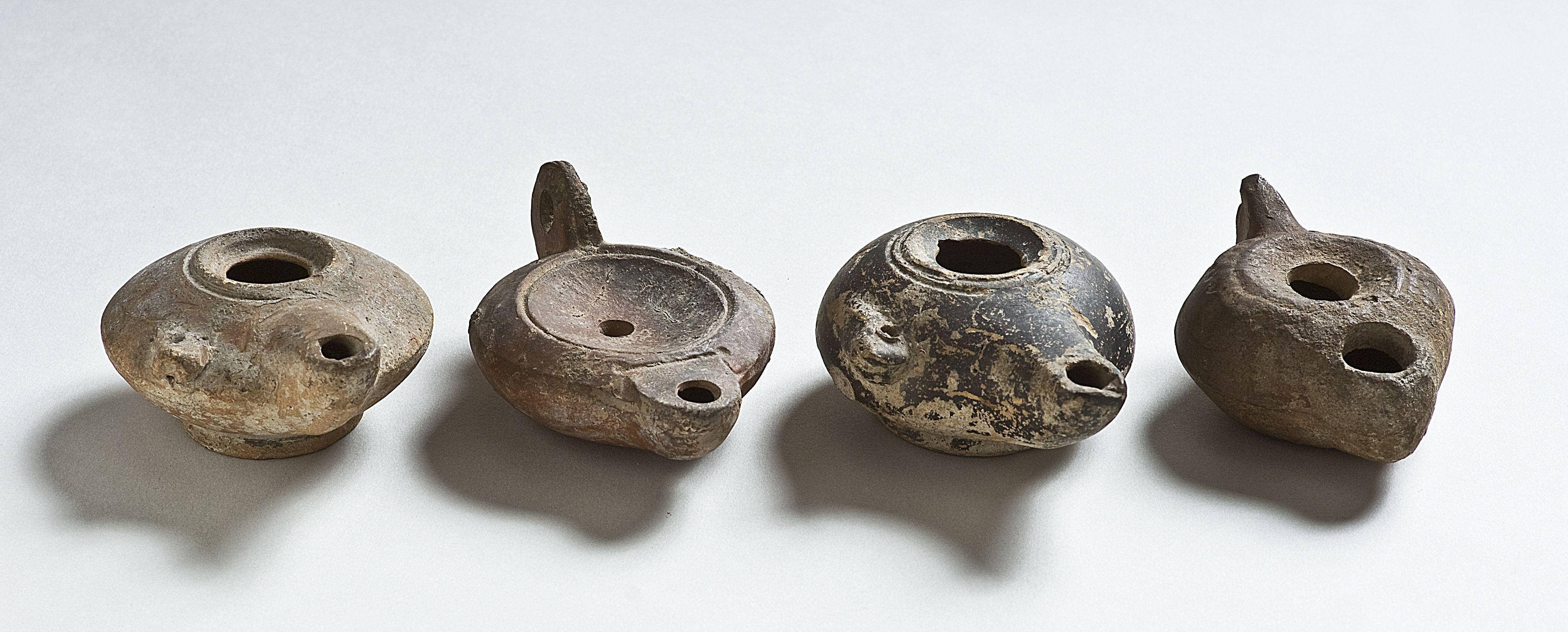
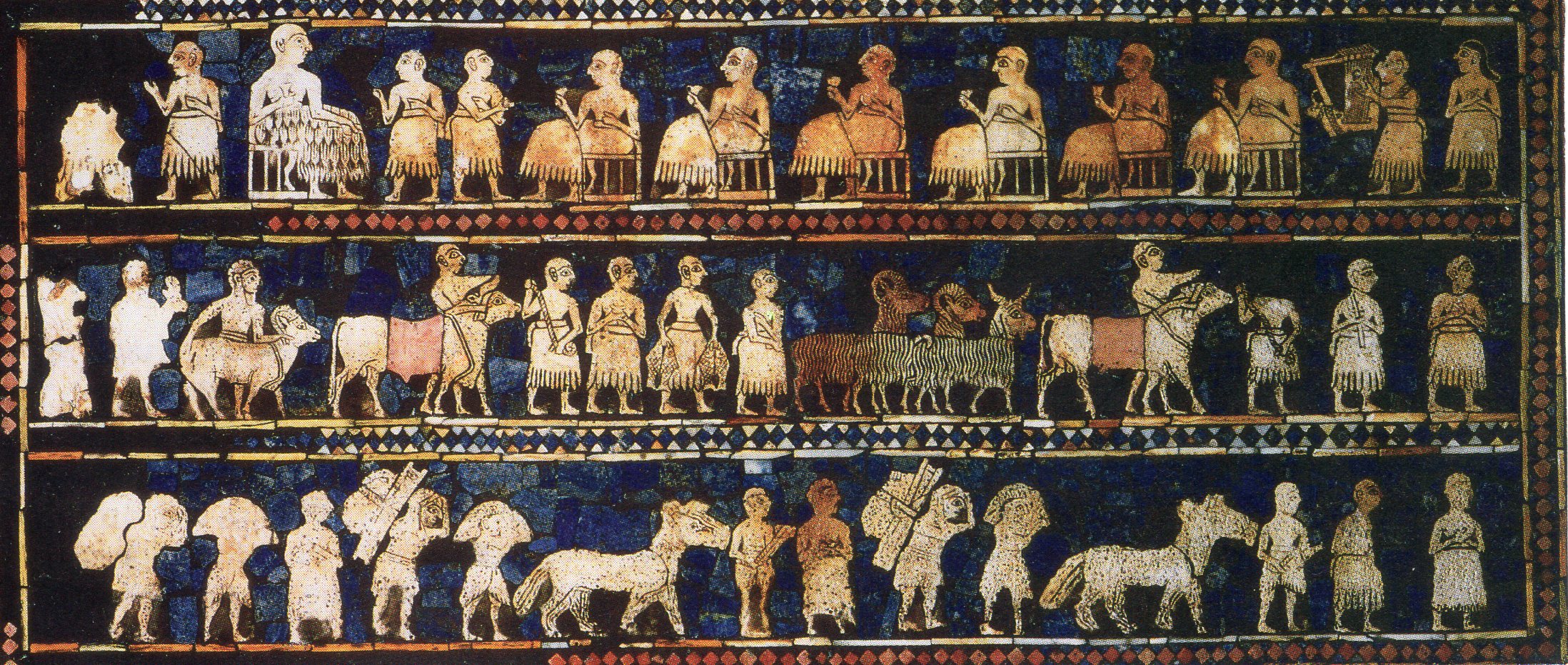
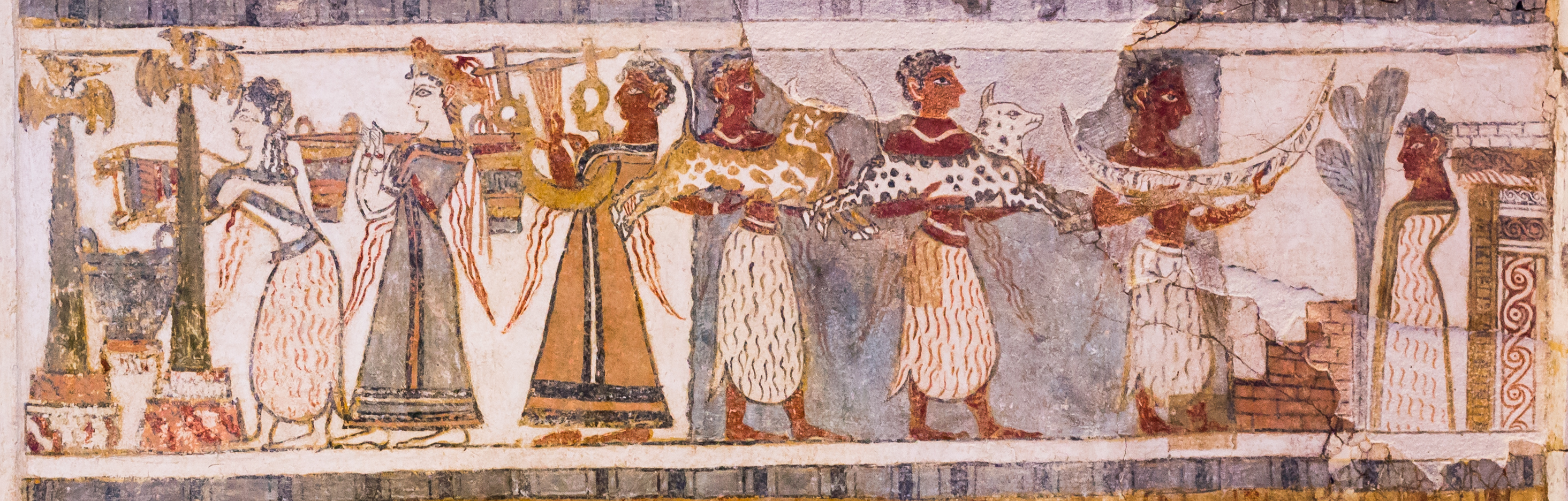
For many of us, the Mediterranean Bronze Age is associated with mythological heroes like Achilles and Hercules, or legendary events like the Trojan War. But how did the people of the Bronze Age actually live? This course surveys the archaeology of the eastern Mediterranean Bronze Age, including Egypt, Mesopotamia, Anatolia, and the Aegean, from about 3000 to 1100 BCE. We will explore not only the well-known pyramids and palaces of the period, but also the evidence for day-to-day living, from crafts production to religious ritual. We will also examine how these cultures interacted, and the Mediterranean networks that both allowed them to flourish and may have led to their downfall. Finally, we will critically consider aspects of modern archaeological work in this area and the romantic interest in the period.
The first portion of the course will cover the development of the various cultures of the eastern Mediterranean during the Early and Middle Bronze Ages (ca. 3000-1600 BCE). We will focus on the prosperous international relationships that led to a floruit in art, architecture, and material wealth for many of these groups. For the last portion of the course, we will turn our attention to the sudden collapse of these cultures at around the same time in the 12th c. BCE. Goals of the course include:
1) To gain familiarity with the art, architecture, and material culture of the eastern Mediterranean Bronze Age, and explore how modern archaeologists have romanticized these cultures.
2) To think critically about the power structures and international relationships of the period, and how these cultures cooperated or worked against each other, drawing parallels with the modern world and particularly thinking about correspondence.
3) To explore ideas about the collapse of civilizations, and the environmental and social factors that may lead to such dramatic changes.
4) To consider how archaeological narratives are constructed for popular consumption.
Online Otrganization Leader Training needs to be completed BEFORE the Fall Student Leader Meeting on Monday, September 11, 2023 at 7 pm in the Carroll Room.
Organizations wishing to enroll other members of their organization should send their request to tbates@smith.edu.
This teaching circle is for teachers interested in incorporating mindfulness practices in their classrooms. We’ve all heard about the beneficial effects of mindfulness meditation on mental and physical health, which include stress reduction, improved focus and concentration, and increased emotional stability and self-confidence. These are desirable states of well-being for student and teacher, alike, but understanding is one thing, and implementation is another. How do we bring mindfulness into the classroom? What kinds of practices are there, and how do we offer them to students in an open, respectful and non-coercive way? In this teaching circle, we’ll look at these questions, practice a little meditation, exchange ideas and techniques, and support each other in this inquiry into what a mindfulness-based contemplative pedagogy might be.
CSC 249 is an introductory course in computer networks. Our primary focus will be on developing intuitions around the basic performance and engineering tradeoffs in the design and implementation of computer networks. Throughout the semester, we will explore the fundamental architecture of computer networks and how they function today, as well as investigate some of the history that explains why they are designed the way they are and how they are likely to evolve. We will also strive to connect concepts in the design of computer networks to more general topics in the design, implementation and operation of distributed computing systems.
We will draw the majority of our examples from perhaps the most ubiquitous computer network today: the Internet. To help make the concepts we are exploring more concrete, this course will include several hands-on programming projects involving the design and implementation of networked systems.
This class will introduce core techniques present under the umbrella of Contemporary Dance. Through elements of jazz, ballet, modern, and postmodern dance, students will build foundational skills that support further exploration. We'll focus on how movement can arise from both internal impulses and external stimuli, while developing kinesthetic (body) awareness and exploring performance as a possibility. The skills learned here will support not just contemporary dance, but a wide range of dance and theater forms.
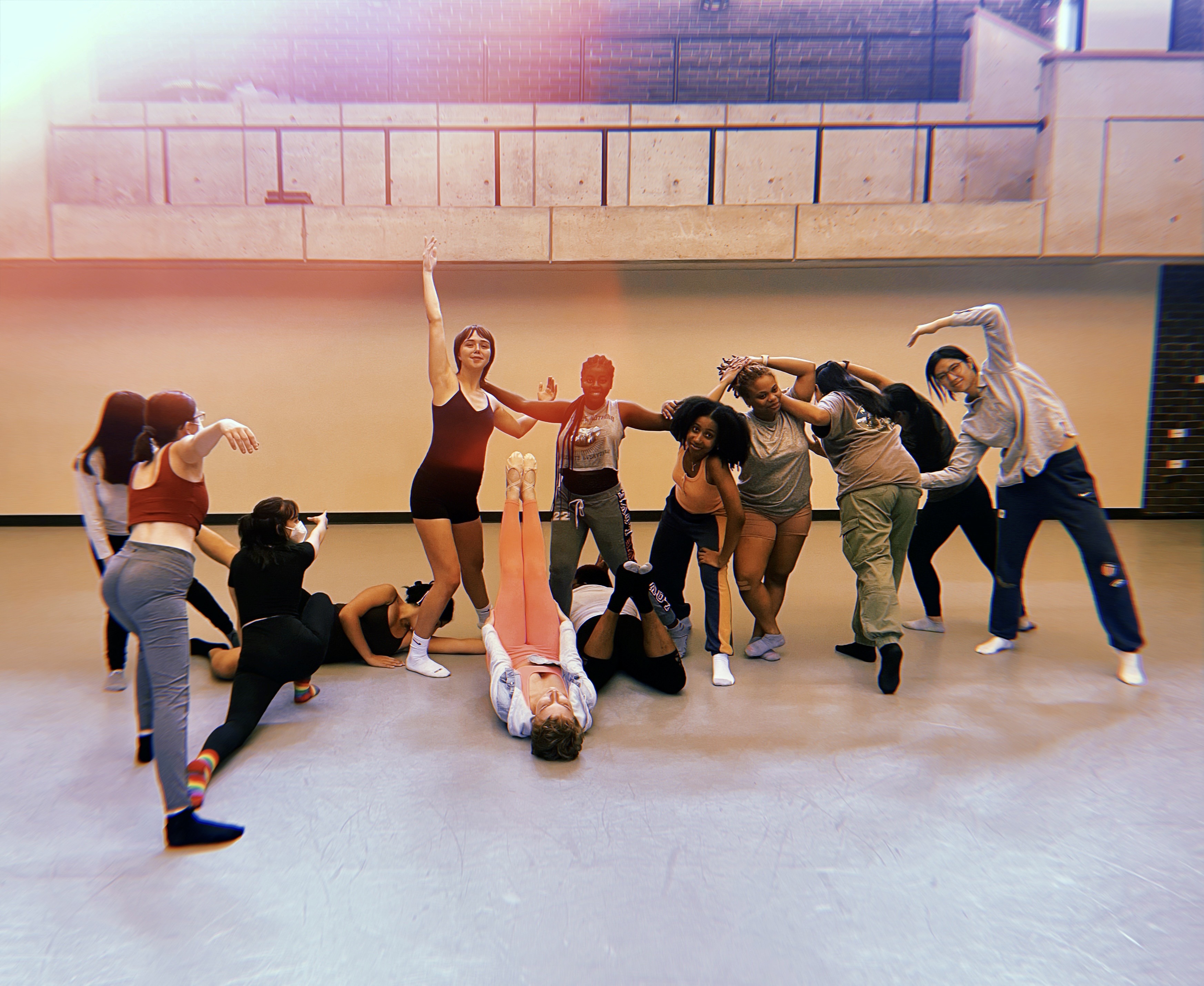
This course is designed to introduce students to varying aspects of Contemporary Dance. We will explore who we are as artists and movers through exercises crafted to enhance our access to self-expression. We will cover a lot of ground, placing value on the exposure to a variety of material. The course includes anatomy and kinesiology through movement, dance improvisation, partnering, and choreographic phrase work, all at the introductory level. At the end of the semester, we will craft our very own duets and/or trios.
This is an intermediate-level contemporary dance course designed to cultivate sensitive, intelligent, powerful dancing. The intention is to expand and refine not only students’ physical capacities but also their perceptual acuity, creativity, and confidence in movement and performance.
This semester, our dancing practice will also be in relationship to Ross Gay’s The Book of Delights. Short selections of his writing will serve as companions to our dance training, as well as starting points for discussions and templates for the course’s written assignments.The content of the course is eclectic. I have developed the movement material I will share with you through my own professional collaborations and ongoing training, which has been primarily within Western, postmodern contemporary dance. Engaging principles from a variety of somatic practices (including Bartenieff Fundamentals, Klein Technique, and Body-Mind Centering) in addition to yoga, release techniques, and Contact Improvisation, the course aims, on a technical level, to sharpen anatomical and kinesthetic awareness and to refine initiation and articulation within spatially complex material. By improving dynamic alignment, increasing strength and range of motion, and refining awareness, we will seek heightened aliveness in our dancing along with efficient, judicious use of energy. The importance of attention, intention, and imagination in movement will be prioritized throughout.
Why delight?
Delight is an integral facet of my ongoing research and interest. For me, a practice of being in delight—or delighting—is a practice of noticing, following, and investigating what enlivens you, awakens you, sparks your curiosity, draws you in, hypes you up, slows you down, moves you, softens you, emboldens you, connects you, distracts you, comforts you, confuses you. Delighting entails attending to details and nuance. It requires an openness to being touched, affected, and changed by what we encounter. The proposition of this class is that a dancing practice may also be a delighting practice—a way of waking up more fully to the world.
This is not to say that everything we do will be delightful—most likely, you will not resonate with everything we cover—nor does it mean we will ignore hardship and struggle. It means only that we will work to remain in relationship to our growing understanding of delight—what it is and what it does—throughout.


This course explores the representation and construction of Taiwanese identity through various forms of cultural expression, including literature, film, and performance arts. It aims to understand the diverse voices and perspectives present in these cultural productions. By the end of the course, students will be able to articulate their informed perspectives in response to specific questions and connect the topics discussed to their personal experiences.
Through this course, participants will gain knowledge and skills to
effectively instruct multilingual learners K-12. Participants will explore the social,
cultural, linguistic, and academic dimensions of learning and teaching. The
course is grounded in an asset-based perspective of language learners -
building on funds of knowledge and skills our students bring to the classroom. Readings,
class discussions, interactive group work and field work will provide
participants with the theoretical and practical knowledge to appropriately
shelter content instruction for diverse learners. Participants will prepare to
carry out their shared responsibility for students’ academic and language
development with enthusiasm and creativity. Successful completion of the course
qualifies an educator for the SEI (Sheltered English Immersion) endorsement
required for teacher licensure or re-licensure in Massachusetts.
Through this course, participants will gain knowledge and skills to
effectively instruct multilingual learners K-12. Participants will explore the social,
cultural, linguistic, and academic dimensions of learning and teaching. The
course is grounded in an asset-based perspective of language learners -
building on funds of knowledge and skills our students bring to the classroom. Readings,
class discussions, interactive group work and field work will provide
participants with the theoretical and practical knowledge to appropriately
shelter content instruction for diverse learners. Participants will prepare to
carry out their shared responsibility for students’ academic and language
development with enthusiasm and creativity. Successful completion of the course
qualifies an educator for the SEI (Sheltered English Immersion) endorsement
required for teacher licensure or re-licensure in Massachusetts.
The course EDC 110-01 is an introduction to and study of the American teaching profession. The students will explore their own attitudes towards learning and teaching as well as many of the essential issues and questions of the American education throughout history and in the present moment. Participation is essential, as we’ll be using and modeling many effective strategies and practices in education. Also, teacher panels, visits to a local elementary school, documentary films, the opportunity to volunteer at a local high school, and interviewing a teacher will bring forth an additional practical dimension to the course. The course is a work-in-progress: some assignments may change according to the students’ interests and the needs of our classroom community.
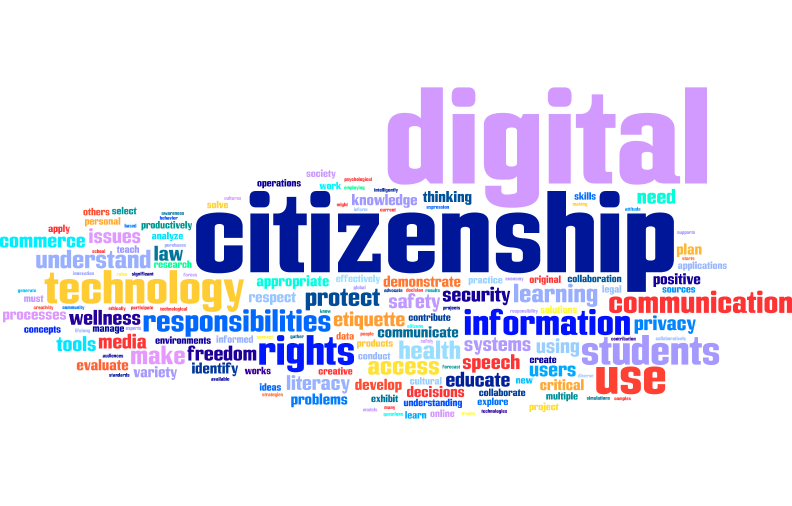
This course was developed to better prepare future educators for the responsibility of orienting students to the responsibilities of digital citizenship as well as the skills for effectively navigating in a world of increasing reliance on digital tools. It is informed by the Digital Literacy Frameworks of the Massachusetts Department of Elementary and Secondary Education (DESE).
Welcome! This course supports the Pre-Practicum experience for students pursuing Initial Licensure.
The course meets weekly on Monday afternoons.
| Credits: 1 | Max Enrollment: 0 |
| Course Type: Laboratory | Section Enrollment: 11 |
| Grade Mode: Credit/Non Credit | Waitlist Count: 0 |
| Reserved Seats: No | |
| Coreq: EDC 345D - Elementary Curric & Methods | |
| Time/Location: Monday | 3:05 PM - 4:20 PM / Seelye 105 | Instructional Method: In-Person |
This lab accompanies the elementary student teaching internship course EDC 345D. The focus of the lab will be the examination of student teaching dilemmas for discussion and reflection. Student teachers will be introduced to key topics germane to their internship while examining the student teaching experience. The course will bring together content knowledge, professional dispositions/caring, instructional methods, assessment strategies, collaboration, diversity, classroom management, and technology. In this lab, student teachers will also reflect on teaching and their plans for future learning, and work on building the portfolio of teaching required for state licensure. Only open to students in Smith's teacher education program. Corequisite: EDC 345D. S/U only. (E) | |
This graduate-level course equips educators with a deep understanding of how the brain processes written language and how that science translates into effective, inclusive instruction. Grounded in cognitive neuroscience, linguistics, and theoretical models of reading, candidates will explore the foundations of reading acquisition, skilled reading, and the challenges faced by diverse learners—including those with dyslexia, language-based disabilities, and multilingual backgrounds.
EGR270 provides an introduction to the analytical methods of engineering design. We will learn tools for examining force systems in equilibrium, which will allow us to solve design problems related to engineering structures and bodies such as trusses and beams. Students will demonstrate proficiency in: working with vector representations of forces, moments, and couples; drawing and analyzing free body diagrams; solving 2-D and 3-D equilibrium problems considering particles, rigid bodies, and structures; and basic stress and strain analyses. Mechanics is a foundational course upon which many subsequent engineering courses will build.





This creative writing course gives us opportunities to experiment with multiple genres of writing. We will read, write, and discuss poetry, fiction, and creative nonfiction from a writer's point of view. This means we’ll immerse ourselves in the process of generating new work in most classes and practice strategies that will structure the ideas and feelings you’ll want to bring to the page.
At this early stage, you don’t have to worry about whether you’re a poet, novelist, essayist, and so on. This course introduces you to creative writing through the practice of mindfulness—learning how you can closely observe the 7 senses (yes, 7!) and draft unique writing from them—writing that reflects your unique sensibilities rather than cliches. Through poetry, fiction, and nonfiction, we will focus on the beginnings of short drafts you can continue expanding and revising after our class ends. We’ll emphasize the powers of observation, experimentation, and revision as core creative practices. Complete each prompt and assignment to the best of your ability.
This course enables students to hone skills in writing creatively within the genres of nonfiction, poetry, and fiction. Over the semester, you’ll acquire essential tools for telling your stories — for choosing effective “form(s)” and language for the ideas, visions and emotions you wish to communicate. Students will draft, workshop, and revise three pieces of writing over the course of the semester, one each in the genres of creative nonfiction, poetry, and fiction.
Class learning includes participation in “workshop” sessions in which student work is read aloud and critiqued in a group setting. There will also be in-class writing exercises and discussions about process and revision. Students will be assigned to breakout groups for small group discussion during the week [all groups listed in the ENG 125-04 S’24 Shared Google Drive and will have particular responsibility for providing in- depth peer evaluations of the drafts of the other students in their breakout group at specified moments in the term. All students will also be expected to supply comments on shorter pieces-in-process posted on ENG 125-04 S'24 Word-Press by all the students in the course.
Assigned readings on craft will introduce, exemplify and enhance your understanding of particular aspects of craft and technique within the three genres of our focus. And because all serious writers learn the most important writerly lessons from masterful examples, we’ll also examine each genre through a variety of readings exemplifying practice within each genre.


Welcome to Teaching Literature! This course is designed to provide meaningful opportunities for diving into how and why we teach literature by experimenting with connecting theory and practice and crafting inclusive, culturally and linguistically sustaining, and evidence-based lesson plans. We will workshop lessons in class during which we will practice teaching, receive and give feedback, and reflect on our teaching practices and lessons. Our work supports and grounds our major assignments: a statement of teaching philosophy, lesson plans, and a unit plan. Outside of class, you will explore a variety of pedagogical content that will inform your teaching philosophy and lesson design.
Please see here for the course syllabus. Culturally Responsive Approaches to the Teaching of Literature in Secondary English Classrooms
This course focuses on the interpretation and communication of environmental issues and solutions from multi- and interdisciplinary perspectives. Using contemporary environmental topics as a foundation, this course emphasizes careful assessment of both message and audience to design effective communication strategies for complex topics. Students develop the ability to read, interpret, and critique environmental research from a variety of disciplines; to consider the needs and motivation of their audience; to develop evidence-based arguments tailored to a particular audience; and to articulate those arguments clearly and concisely.
Applied Sports Medicine ESS 280 Spring 2024
Foundations of Injury Prevention and Treatment
Instructor: Dr Lori Hittner-Engel (She/Her/Hers)
Credit Hours: 4
Class Hours: Tuesday/Thursday 1:20pm—2:35 Ainsworth classroom
Office: Phone Email: lengel@smith.edu
Office Hours: by appointment available on Zoom or in person at HPL
Course Description:
In this course, students will review musculoskeletal anatomy, etiology of common sports injuries, injury prevention, concussion management and learn how to train individuals involved in sport to maintain health and performance. Students will be introduced to different assessment tools, treatment interventions, sports nutrition, sports psychology, and research methods. Students will apply new knowledge and research a common sports injury to be presented to peers at the end of the semester.
In this course student will:
1. Develop an understanding of the anatomy and etiology of common sports injuries.
2. Understand strategies for injury prevention and treatment
3. Gain understanding of role of nutrition on sports performance
4. Understand Concussion management
5. Develop an understanding of commonly used assessment tools
6. Utilize appropriate treatment and training interventions
7. Identify primary source literature to develop a research paper
8. Interpret and translate research findings and design a sports injury presentation
Required Materials:
Introduction to Sports Medicine and Athletic Training, by Robert C. France (3rd edition) ,Cengage, USA. IBSN:978-0-357-37916-5. e-copy will be provided on Moodle.

This course is designed to give students an experience that will allow them learn, apply, and analyze the major physiological factors related to the response to acute exercise and exercise training. Students will study metabolism, cardiorespiratory, muscle and physiology as they pertain to physical activity and exercise. We will investigate energy systems, energy expenditure, oxygen delivery and utilization, and the many factors (such as training) that affect health and performance.
This course is designed to teach the basic mat exercises of Joseph Pilates. These exercises are designed to increase core strength, increase joint mobility and stability, maintain and increase muscle tone, increase flexibility and articulation of the spine plus
increase coordination and concentration. This course will explore the history of Pilates, the benefits of Joseph Pilates mat work and the six main Pilates principles. By the end of this course the participants will be able to effectively develop and maintain their own Pilates mat exercise program. Lectures on related topics including anatomy, myofascial training principles, functional training, somatics, and the science of movement will be included. This course is designed for all levels.
This course is designed to teach the mat exercises of Joseph Pilates. These exercises are designed to increase core strength, increase joint mobility and stability, maintain and increase muscle tone, increase flexibility and articulation of the spine plus increase coordination and concentration. This course will explore the history of Pilates, the benefits of Joseph Pilates Matwork and the six main Pilates principles. By the end of this course the participants will be able to effectively develop and maintain their own Pilates mat exercise program. Lectures on related topics including anatomy, myofascial training principles, functional training, somatics, and the science of movement will be included. This course is designed for STUDENTS WHO HAVE COMPLETED PILATES I or PERMISSION BY INSTRUCTOR TO ATTEND.

Rowing on the Erg Spring 2025 Syllabus: https://docs.google.com/document/d/1SiCN65fB5--ysn-znNi-veB_mvbtiksWZjaIiZUPvps/edit?usp=sharing
Class is located in the Keeler Erg room; in the athletic department next to the varsity weight room.
Upload your polished video din't forget title and credits and onto the class google drive and then copy and paste the onto the Moodle assignment.
https://drive.google.com/drive/folders/1tKBzWySa0a4YYCG6suQdZD0pBFvYG5Ez?usp=sharing
This course is an introduction to the principles, techniques and equipment used to make short videos, including: the development of a concept or story, the aesthetics and mechanics of shooting video, the role of sound and successful audio recording, and the conceptual and technical underpinnings of digital editing. This curriculum centers the conventions and practices of narrative filmmaking, although there will be room for experimentation, both narratively and formally. Through a series of practical exercises, weekly readings and in-class screenings, we will progressively explore the technical and theoretical components of short fiction filmmaking. Through this process of practice and exposure students will generate ideas and develop the necessary tools for a final group project of their choosing.
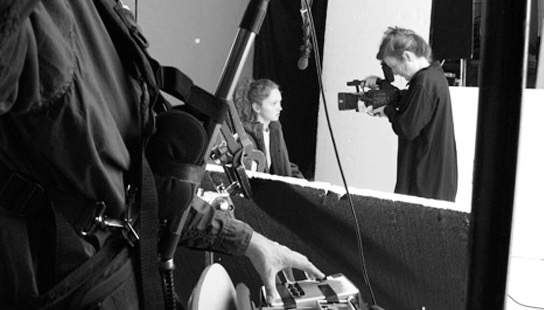
This course will approach the craft of motion picture directing through a mix of conservatory-style studio practice, reading, and discussions. While directing the moving image usually involves close collaboration with many other creative artists, the focus of this course is on the director-performer relationship. Through structured in-class exercises, assigned scene-work, readings and collaborative projects, students will develop and practice working methods including script and scene analysis, rehearsal techniques, and supporting performance through camera placement and movement. Topics will include story, dramatic structure, emotional relationships, and interpretation—within the visual framework of the moving image. Through hands-on exercises and assignments students will explore, develop, and perhaps challenge the “tried-and-true” working methods designed to support the realization of unique vision and voice—this requires collaborating and experimenting as students develop working methods that best suit their own practice.
The projects that structure
this course are not intended to be produced as polished films, but as exercises
in directing actors and supporting performance with the camera. This is a
process-oriented course where we will build skills and confidence in the craft
of directing actors that will support students more ambitious projects elsewhere.
Above all, this course will be a practice-based exploration of the art of
direction in a collaborative and supportive environment that we will build
together.
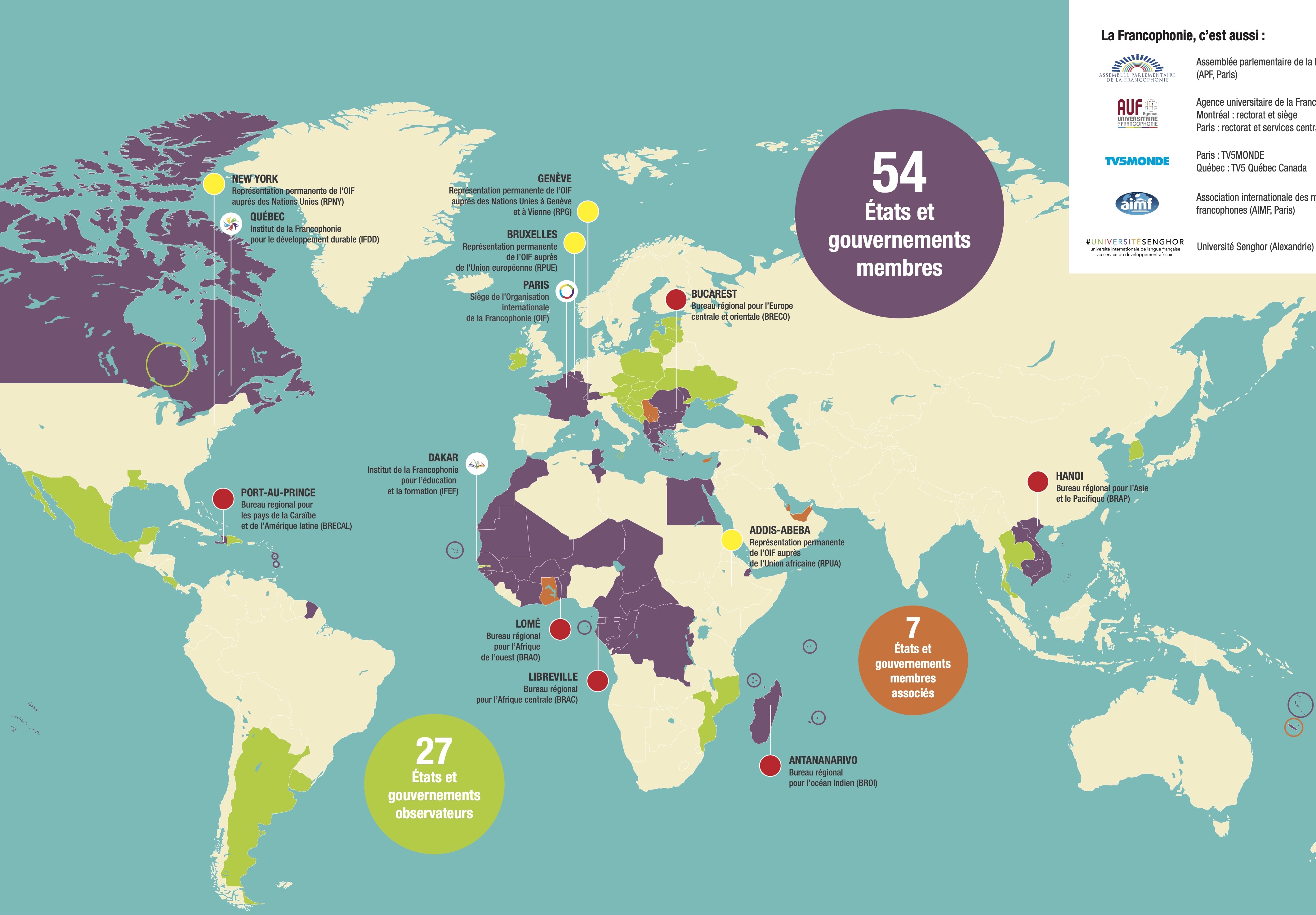
Review of communicative skills through writing and class discussion. Materials include two movies, a comic book and two novels. Prerequisite: three years of high school French, FRN 103, FRN 120 or equivalent. Students completing the course normally enter FRN 230. Enrollment limited to 18.
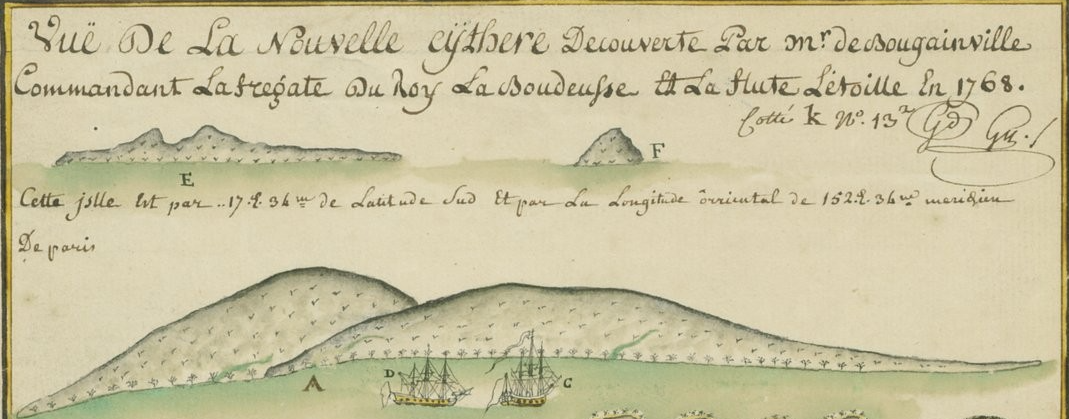
“Je me croyais transporté dans le jardin d’Eden”: the explorer Bougainville’s 1771 description of the abundance and beauty of “Taïti” set the tone for two centuries of exoticism in French literature and art. This course will explore legacies of Enlightenment, colonialism, feminism, and postcolonialism through the shifting representations of this so-called island paradise. Readings include travel narratives, philosophical texts, poetry, and novels by Rousseau, Diderot, Josephine de Monbart, Charles Baudelaire, Pierre Loti, and Chantal Spitz. Works will be approached in historical context, drawing connections with visual culture, global developments, and contemporary debates.
French 230 functions as a gateway to more advanced courses in literary and cultural studies (French 250 and above). Class discussions and course assignments are designed to help students develop skills in expository writing and critical thinking in French. Students will learn to move from comprehension to interpretation in their reading and from the descriptive mode to the analytical mode in their writing and speaking. In addition to class meetings (twice-weekly meetings of 75 minutes, three hours per week), the course requires an average of nine hours per week of reading (40-70 pages per week; in general there is slightly more reading for Monday than for Wednesday), writing, and preparation throughout the semester. Daily contribution to class discussions is expected.
Students entering this course should have acquired a low to mid-B1 level (utilisateur indépendant) in French as defined by the CEFR (Common European Framework of Reference) guidelines, and should aim to attain the mid- to high B1 level by completion of the course.
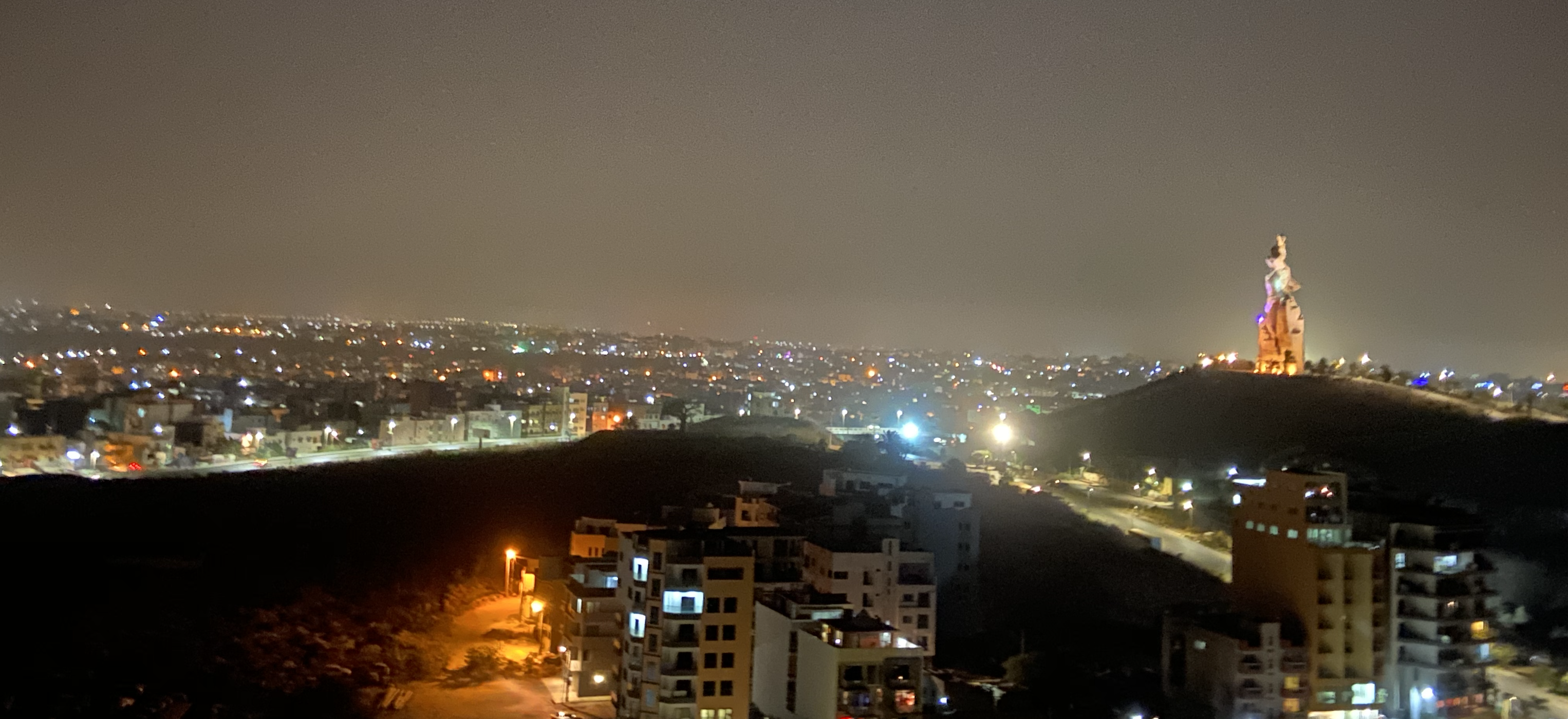
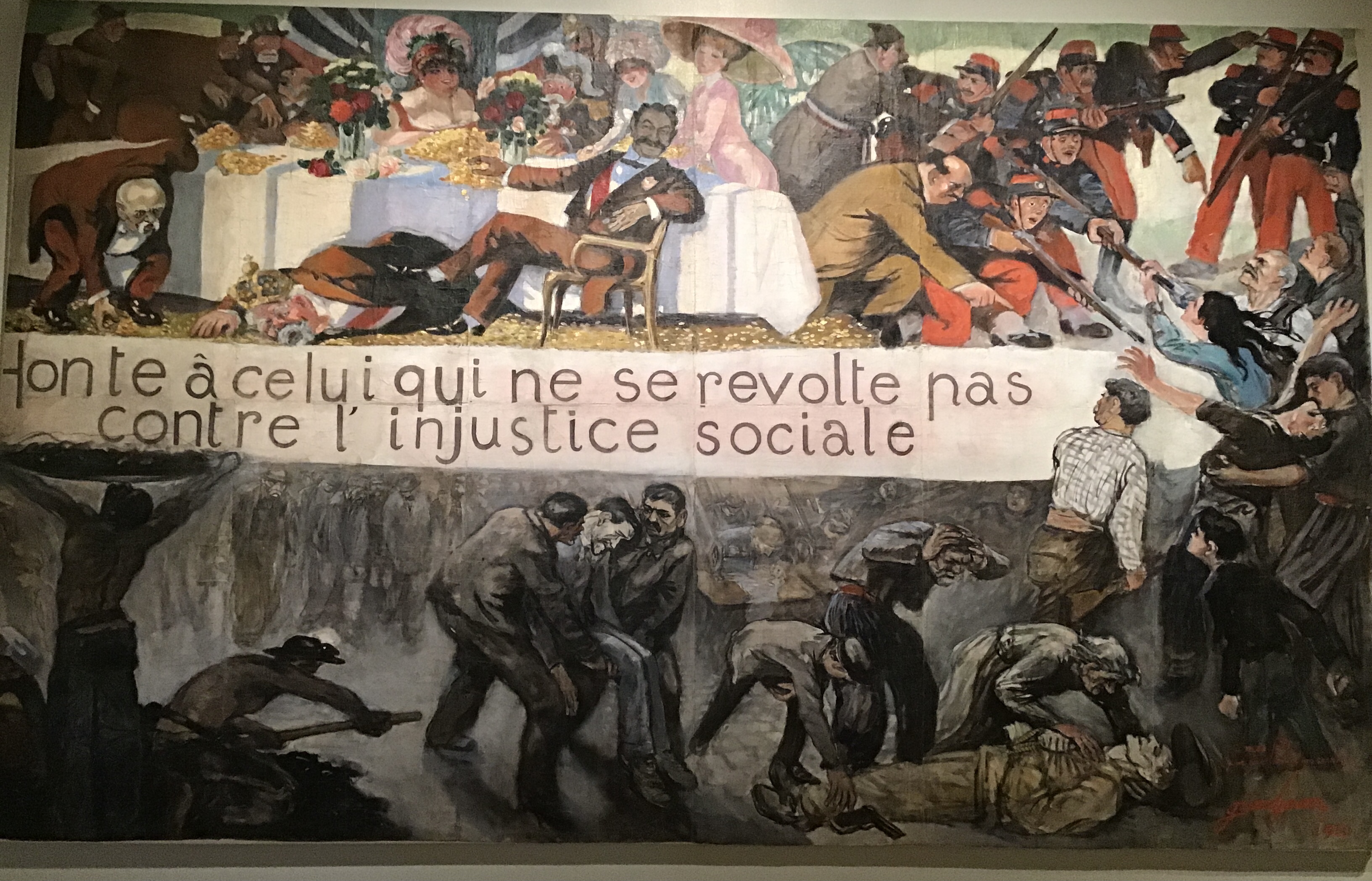
A course in advanced composition for students who wish to improve their mastery of some of the more difficult points of French grammar, syntax and usage, as they reflect on local and global movements calling for social justice in France from the 18th century to the present day. Readings and discussions on topics such as humanism, revolution, the "social question," feminism, antiracism and inclusive writing. Prerequisite: one course in French studies beyond FRN 230, or equivalent.
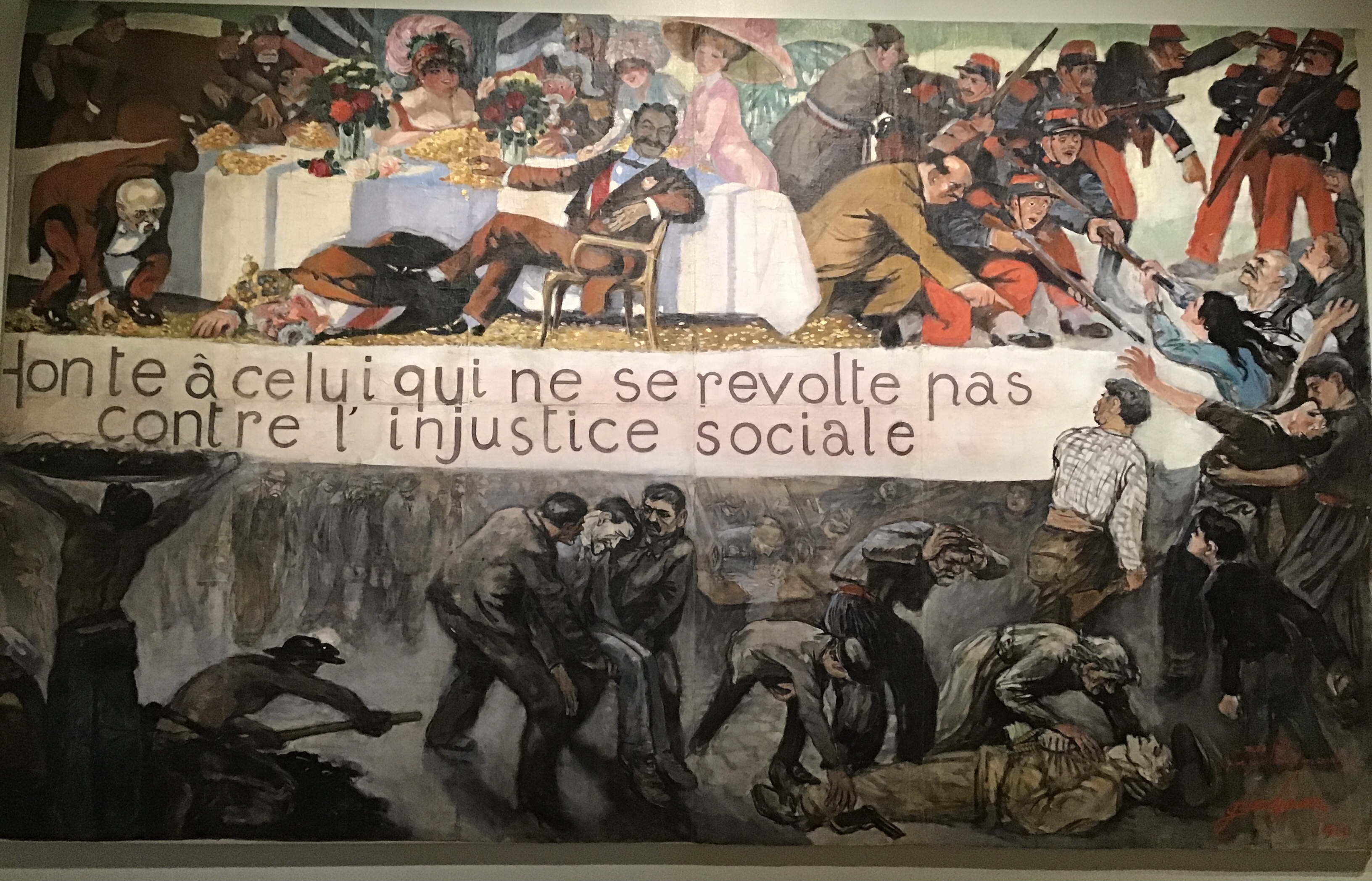
Ce cours de grammaire avancée et de composition écrite s’adresse aux étudiant·e·s ayant déjà un bon niveau de français qui désirent renforcer leurs acquis et perfectionner leur expression écrite et orale tout en développant une meilleure compréhension des difficultés grammaticales de cette langue. Lectures et réflexions autour des thèmes liés à la justice sociale, y compris l’humanisme, la tolérance, les révolutions, la « question sociale », le féminisme, l’antiracisme, et l’écriture inclusive. Le cours aborde les contenus grammaticaux recommandés aux niveaux de compétences B1 et B2 par le Cadre européen commun de référence pour les langues.

In nineteenth-century France, the emerging periodical press lay at the epicenter of public and cultural life. This course explores the press from a number of perspectives: the technological breakthroughs and social upheavals that spurred its growth, the major figures and seminal publications that marked its evolution, the debates and scandals sparked by its rise, and the changing roles of hommes and femmes de presse. Readings include articles from major newspapers and magazines, contemporary literary and cultural criticism, and selections from "novels of journalism" by Balzac and Maupassant. Class introduces students to research in online databases of digitized newspapers. (E)
Gender, Sex, and Sexuality in Russian Culture
Ruth Averbach
Pierce Hall, Room 104
Course Description
In June 2013, President Vladimir Putin signed into law a ban on ‘propaganda’ that advocates for non-traditional sexual relationships, homosexuality, and transgenderism. Despite this, Russia has at times in its history been a bastion of gender and sexual diversity. Nevertheless, Russia’s queer and trans heritage is often neglected in scholarly and popular conceptions of the country. Students in this course examine Russia’s queer and trans history through literature, visual arts, and music. Topics include the history of “homosexuality” and “heterosexuality,” the medical history of transsexuality, gay and lesbian subjectivities, trans autobiography and fiction, and the ethics of queer scholarship.
Course Objectives
This seminar is designed to achieve several goals. First, this course develops students’ critical thinking and writing skills. Students will learn how to outline, draft, and revise papers, effectively summarize literary texts, analyze specific themes in a work, contextualize artistic works in a proper cultural and historical context, understand and respond to critical works, and construct a short research paper with a coherent thesis and clear line of argumentation. Second, students will gain a broad overview of Queer and Trans Russian history and culture and engage with understudied source materials, perspectives and experiences concerning gender, sex, and sexuality.
Course Requirements
Assignments
Weekly reading responses (appx. 250 words)
First Paper: Summary of a Literary Text (3 pages)
Second Paper: Thematic Analysis (5 pages)
Third Paper: Research and Argumentation (7 pages)
Draft paper due one week before final version
Students will read and respond to a classmate’s paper within a week of turning in final drafts
Revisions will be turned in a week after receiving their peer review and instructor feedback
Due dates for all assignments are listed in the reading schedule
Grading Rubric
Attendance and Participation – 20%
Reading Responses – 20%
First Paper – 15%
Second Paper – 15%
Third Paper Presentation – 10%
Third Paper – 20%
Course Expectations
It is essential for students to complete assigned readings, attend course meetings, and contribute to class discussions. Feel welcome to use electronic devices, but do not let them distract others or yourself from the lesson. Please let Ruth know as soon as possible if you are ill or must miss class for any reason.
Academic Integrity
Students are expected to uphold all Smith College policies on academic integrity. AI is only acceptable for proofreading for grammar, punctuation, and spelling. All outside sources used in written assignments must be cited properly.
Accommodations
If you need any accommodations to participate in and complete the course, please contact the Accessibility Resource Center (College Hall 104; arc@smith.edu; 413-585-2071) and let Ruth know how she can best serve your needs.
COURSE READING SCHEDULE
Week II: Sexuality and Russian Civilization
M: (De)legalize Gay
Igor Kon, The Sexual Revolution in Russia (11-38)
Foucault, “The Birth of Homosexuality” from The History of Sexuality, vol. II
Olearius, The Travels of Olearius in 17th Century Russia
W: Is Gender, Sex, and Sexuality Universal?
Xenia the Servant of God, or Andrei Fyodorovich the Holy Fool
Benjamin, excerpts from The Transsexual Phenomenon
Mayhew, “Holy Foolishness and Gender Transgression in Russian Hagiography” (optional)
Week III: Is Homosexuality a Psychological Complex?
M: The Endless Anxieties of Nikolai Gogol
Gogol, “The Nose”
Gogol, “Ivan Fyodorovich Shponka and His Aunt”
Freud, excerpts of “Certain Neurotic Mechanisms in Jealousy, Paranoia, and Homosexuality”
Freud, letter to father of a homosexual boy
W: H-o-t t-o Gogol: Gay Iconography
Gogol, The Overcoat
Gogol, “Nevsky Prospect”
Gogol, “Woman”
First Paper Draft Due Sunday
Week IV: Aleksandr Aleksandrov: Russia’s First Transsexual Writer
M: Conceptualizing Transsexual Autobiography
Aleksandrov, The Cavalry Maiden, Chapters I-VI
Zirin, “Introduction” to English translation of The Cavalry Maiden
W: The Unmaking of a Man
Aleksandrov, The Cavalry Maiden, Chapters VII-XIII
First Paper Due Sunday
Week V: Aleksandrov’s Fiction
M: Trans Men and Misogyny
Aleksandrov, Nurmeka
Zazanis, “On Hating Men (and Becoming One Anyway)”
W: Colonialism and the Transsexual Empire
Aleksandrov, Nurmeka
Puar, excerpts from Terrorist Assemblages (optional, Ruth will summarize)
First Paper Peer Review Notes Due
Week VI: Between Sex and Sexuality
M: Compulsory Heterosexuality
Gan, “The Ideal”
Rich, “Compulsory Heterosexuality and Lesbian Existence”
W: Compulsory Homosexuality
Pomialovsky, Seminary Sketches
First Paper Revisions Due Sunday
Week VII: Becoming ‘Gay’
M: Homosexual or Gay?
Kuzmin, selected poems
Kuzmin, Wings
Somov, selected paintings
W: Is Sexuality an Identity or a Behavior?
Kuzmin, Wings (finish)
Rozanov, excerpts from “People of the Moonlight”
Week VIII: Becoming ‘Gay’ (Cont’d); Lesbianism and Gender Expression
M: Lesbian Gender and Sexuality
Zinovieva-Annibal, The Tragic Menagerie
W: Lesbian Gender and Sexuality (cont’d)
Zinovieva-Annibal, The Tragic Menagerie (continue)
Second Paper Draft Due
Week IX: Lesbianism and Gender Expression (Cont’d)
M: What is the Difference Between Lesbians and (Trans) Men?
Zinovieva-Annibal, The Tragic Menagerie (finish)
Shrier, excerpts from Irreversible Damage
Wittig, excerpts from The Straight Mind (optional, Ruth will summarize)
W: Sapphic Verse
Gippius, selected poems
Parnok, selected poems
Tsvetaeva, selected poems
Sappho, selected poems
Second Paper Due
Week X: Pre-Revolutionary and Revolutionary Sexuality
M: Is Male Heterosexuality Gay?
Gorky, “26 Men and a Girl”
Mulvey, excerpts from Visual Pleasure
W: Is Homosexuality Communist?
Trifonov, selected poems
Kharitonov, “One Boy’s Story” and “Alyosha-Serezha”
Harry Whyte, letter to Stalin
Second Paper Peer Review Notes Due
Week XI: Transsexuality, Soviet Style
M: Transsexuality and Medicine
Gill-Peterson, excerpts from Histories of the Transgender Child
Benjamin, The Transsexual Phenomenon
Blanchard, excerpts from articles on transsexual etiology
Kalnberz, excerpts from My Time
W: Is Gender a Social Duty?
Hammer & Sickle (1994)
Bogdan Popa, Decentering Queer Theory
Second Paper Revisions Due
Week XII: Late and Post-Soviet Sexuality
M: Late Soviet Sexuality
Past, “No Offense in Love”
Rybikov, “The Lay of the Gay Slavs”
Fiks, selected poems and photographs
W: Post-Soviet Tolerance and Intolerance in Popular Culture
t.A.t.U, 200km/h in the Wrong Lane
Strykalo, “vse resheno”
2013 Anti-Gay Propaganda bill
Selections of recent American anti-gay and trans bills
Third Paper Outlines Due
Week XIII: Trans Art in an Age of Reaction
M: Between Homosexuality and Transsexuality
Outlaw (2019)
W: Being Trans When Being Trans is Illegal
Letter, A City Flower
Selections, What Is a Woman?
Dugin, selections from The Fourth Political Theory and interview with Tucker Carlson
Third Paper Drafts Due Sunday
Week XIV: Conclusion and Presentations
M: Student Presentations
Students will present their final projects in progress in a conference format
W: Conclusion
Student presentations will continue
Concluding lecture
Third Papers Due (one week after final date)
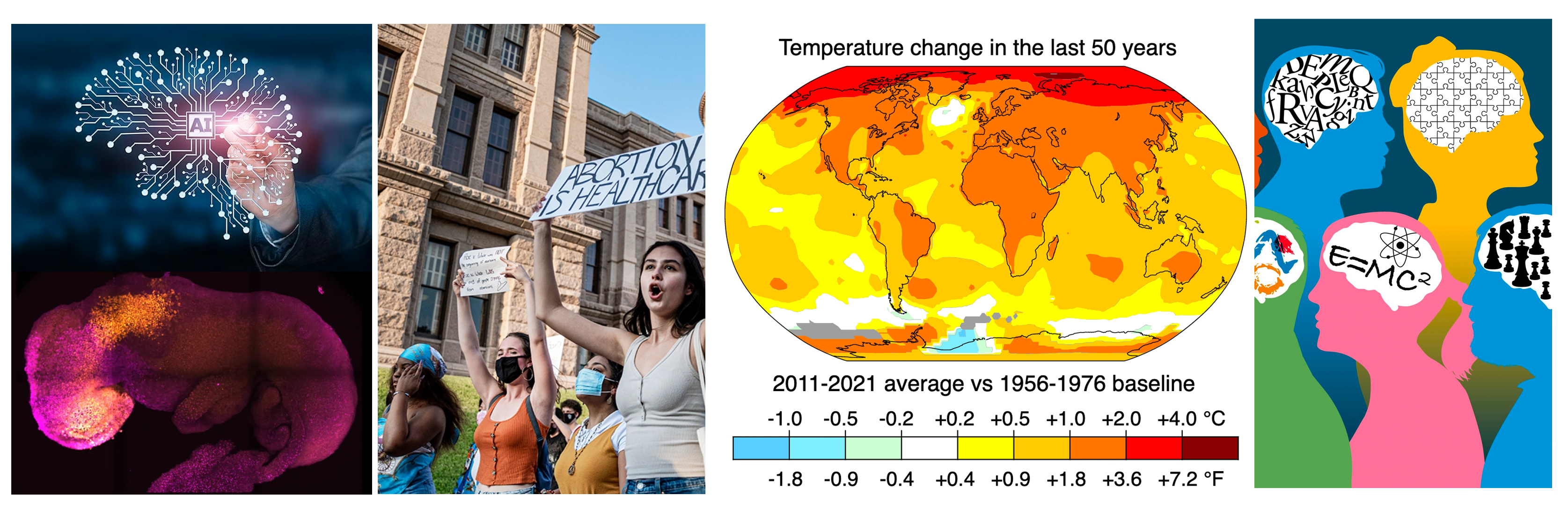
The recent pandemic
has done many things to our society, one of which was to place science on the
doorstep of every human on this planet. The relevance and importance science
plays in the health of human life and of this planet has never been more urgent than
today. In fact, whether its artificial intelligence or embryos derived from
isolated stem cells, science is literally making “life!” It is this question of
when life begins that is at the center of the legal battles over abortion. Unfortunately,
the complex language of science has made its presumed accuracy a weapon against
those less accustomed to interpreting scientific truths. In this first-year seminar, we will explore
four main areas where science and society meet and investigate what the current
data is and how society has interpreted it for better or worse. Students will read, analyze, and write about 1)
the artificial nature of created intelligence and created embryos, 2)
the science surrounding abortion policies, 3) the science of climate
change, and 4) the science of the neural diversity. In this first year seminar, we will not hide from
the hard science underling these topics nor ignore some of the difficult
societal tensions around our bodies, religion, and politics. Students should be
prepared to discuss these topics openly and respectfully in this course.
Students will maintain a personal journal, generate several written pieces of
diverse styles targeting different audiences, and use and analyze quantitative
information.
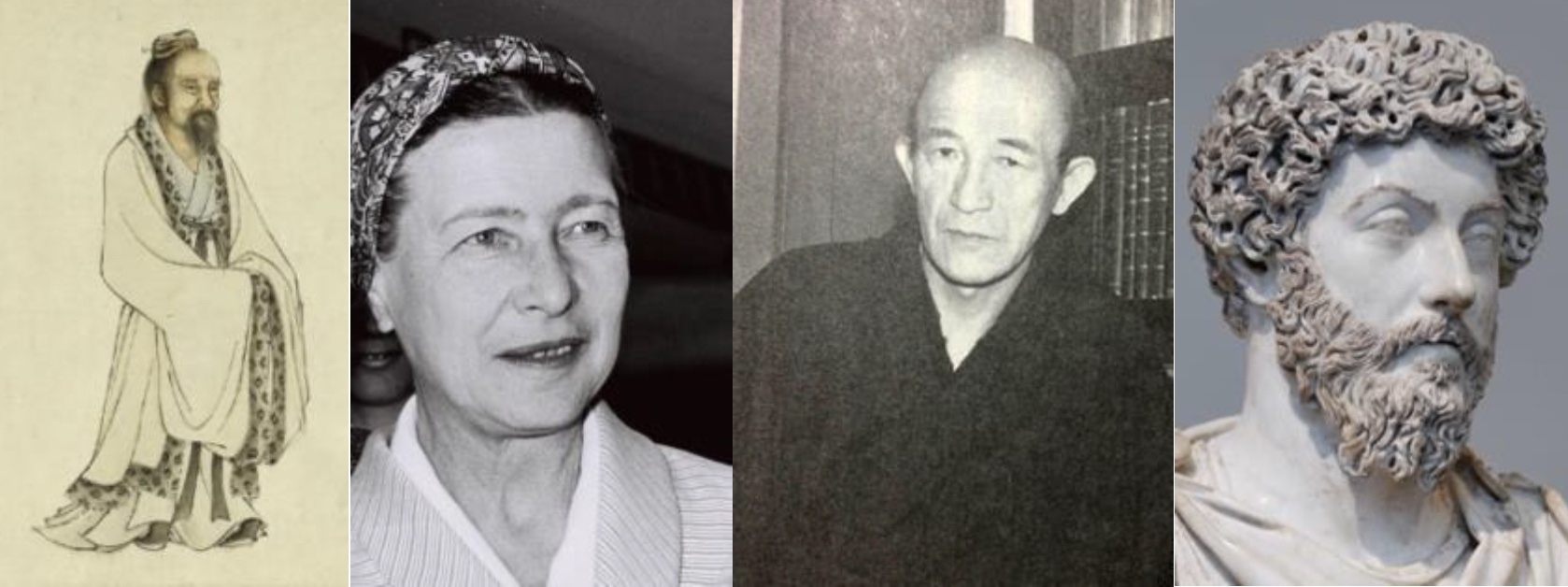
Freedom and angst, affirmation and despair, life and decadence, authenticity and meaninglessness—these and related dimensions of the human condition will be explored in this course through philosophical texts across the globe from antiquity to the contemporary world. Through this exploration, we will engage European, African, and Asian precursors to existential thought, turn to the European development of existentialism, and conclude with the post-colonial global response to existentialism and the specter of nihilism. On this journey, you will closely examine texts and, through your writing, engage with questions that address the search for meaning within the human condition.
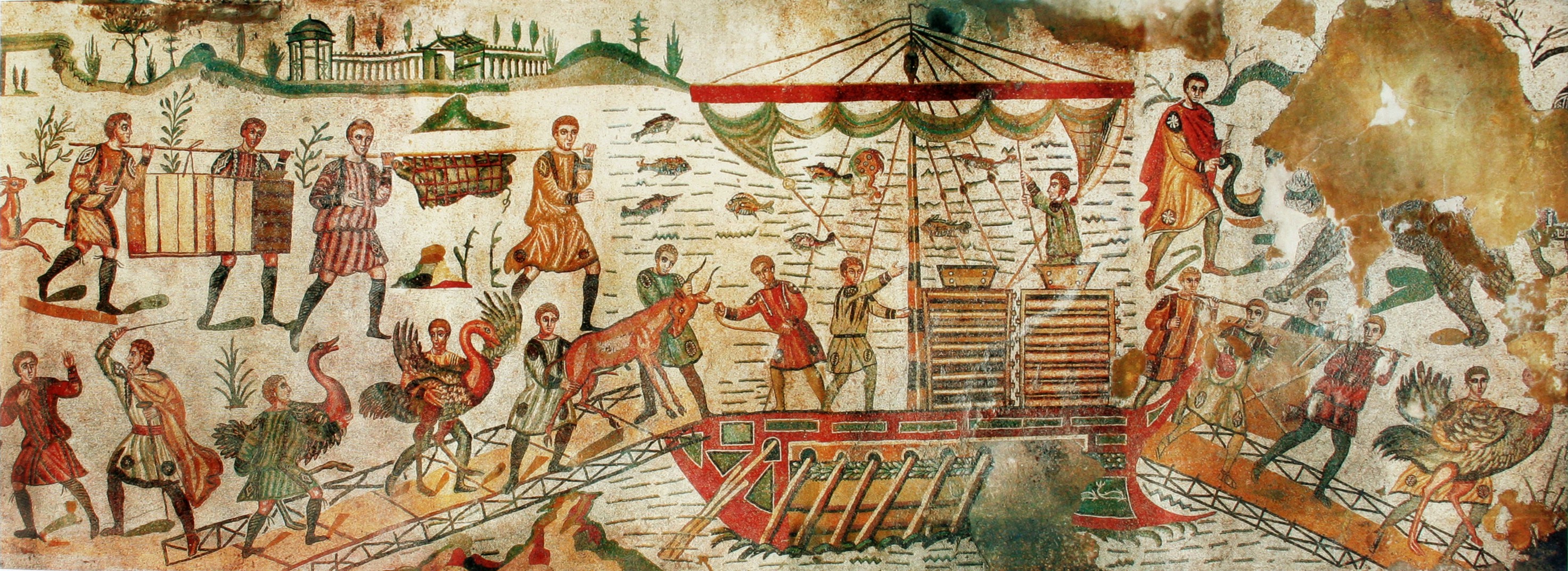
In his book Totemism, Claude Lévi-Strauss wrote, “species are chosen not because they are good to eat, but because they are good to think with.” This course takes up this issue in the context of ancient Greece and Rome, examining how ancient ideas about non-human animals inform our own. Beginning with Homer, we will consider animals as they appear in various Greek and Latin texts as foods, friends, tools, symbols and more. Ancient texts will be supplemented with modern scholarship and theory as we explore how humans and animals have been distinguished and connected, as well as why thinking about animals is so crucial to human culture.

This course examines the stereotype of the “ecological Indian”—a racial trope that has perpetuated the idea that Native North Americans are naturally closer to nature or are natural conservationists. The class looks at how this stereotype has shaped non-Native ideas about Indigenous peoples in what is now the United States and has affected Indigenous sovereignty and self-determination. This course also examines the varied ways Indigenous peoples have thought about ecological relationships and the strategies they developed to live in relation with the environment. The class critically examines the relationship between settler colonialism and the environment and considers contemporary and historical case studies in which Indigenous peoples have fought to protect and care for their lands and waters in the face of the ongoing violence of settler colonialism.



COURSE DESCRIPTION
The Practicum Course combines an experiential element with a classroom component. The experiential element can one of the following:
Students share the
classroom component which provides theoretical background to, and room for
reflection on, the experiential learning experience.
While this section serves
as the backbone of the classroom component, a second section offers an
introduction to the host city / country and some of the social challenges it is
facing, thus aiming at deepening students´ observations and putting them into
perspective.
All students work towards a final project which will present the
outcome of their practicum experiences.
COURSE DESCRIPTION
The Practicum Course combines an experiential element with a classroom component. The experiential element can one of the following:
Students share the classroom component which provides theoretical background to, and room for reflection on, the experiential learning experience.
While this section serves as the backbone of the classroom component, a second section offers an introduction to the host city / country and some of the social challenges it is facing, thus aiming at deepening students´ observations and putting them into perspective.
All students work towards a final project which will present the outcome of their practicum experiences.
In this course, students will solidify and expand their proficiency in the German language at the advanced level through a variety of activities as they investigate a range of topics pertaining to German culture since 1945. With a focus on Germany's rich cinematic history, students will view a variety of short and feature-length films that provide the basis for discussions and analyses. As supplemental materials, we will also look at a few short form texts that will provide context and a deeper understanding of the themes and cultural history touched upon in the class. Listening, reading, and using vocabulary performed in context will help students build their active lexicon. Reviewing grammar structures as needed will develop advanced proficiency and the ability to study and practice independently. Creating short compositions, participating in short social media posts about course materials, and a final video essay project will strengthen not only linguistic skills and communicative competencies but also critical thinking. This class will be conducted in German.
This course offers a comprehensive introduction to the diverse aspects of global finance. It aims to provide students with the necessary intellectual and applied tools to critically assess the roles of various financial institutions, including central banks, investment banks, regulatory agencies, private equity, and venture capital firms in social and economic development. Additionally, students will gain an in-depth understanding of the structure and operations of multilateral institutions such as the IMF and the World Bank. Furthermore, the course will explore how personal portfolio investment decisions may have environmental, social, and governmental impacts.

This course is designed to introduce students to some of the broad concepts and themes of comparative politics. It deepens students’ understanding of how states are formed, the political forces that shape how they are organized, factors that affect state capacity and institutional development, and how state power enhances or limits social mobilization. The approach partially draws on real world case studies and introduces concepts and theoretical tools to explain them. It links them to how comparative politics explains some of the most important political phenomena within countries, and why differences exist between countries. The course is not bound by any particular region but instead uses examples from around the world. The focus remains, however, on politics within states, how the phenomena are similar or different from one place to the next. The core aims of the course include the following:

This course provides a general overview of the study of international relations, with an emphasis on understanding international relations as a discipline by exploring the major theoretical debates as well as the topics it covers. It builds a theoretical and empirical foundation for understanding the actors, processes, and structures that shape and constrain global politics. The course introduces major concepts in the study of international relations and provides an overview of the major theoretical approaches to understanding world affairs. It then explores major research agendas and issues in international politics and concludes by providing a brief review with applications to future challenges to the study of international relations.

This course provides a general overview of the study of international relations, with an emphasis on understanding international relations as a discipline by exploring the major theoretical debates as well as the topics it covers. It builds a theoretical and empirical foundation for understanding the actors, processes, and structures that shape and constrain global politics. The course introduces major concepts in the study of international relations and provides an overview of the major theoretical approaches to understanding world affairs. It then explores major research agendas and issues in international politics and concludes by providing a brief review with applications to future challenges to the study of international relations.
The political thought of the 19th century was directed towards understanding and shaping the clashing waves of human emancipation and reaction that defined the era. From the republican revolutions at the end of the 18th century to the struggles over labor at the end of the 19th, powerful forces both receded in the face of struggles for freedom and subsequently overwhelmingly flowed against them. All the while, political thinkers – themselves often engaged in these struggles – attempted to describe and shape these clashes to their own ends. For them, this era brought forth a “world that is totally new” (Tocqueville) and a condition in which the human “spirit has broken with the world it has hitherto inhabited and imagined” (Hegel). Accordingly, 19th century political theorists took it as their task to develop a new, modern understanding of political life, which would not “draw its poetry from the past, but only from the future” (Marx). Struggles for freedom opened the 19th century, but what would be the meaning and extent of that freedom?
In this course, we will read classic texts by some of these thinkers from the European and American contexts by focusing on four major themes which define the four parts of the course. The first part of the course will read three theorists who respectively celebrated, rejected, or reconciled themselves to the new political world which followed the French Revolution. The next part will turn our attention to the American context. After two short pieces by European theorists that attempt to define the spirit of modernity, we will read political texts from three figures of the Transcendentalist movement who each attempted to understand the spiritual life of the individual in modern politics. The third part of the course will analyze the tensions of freedom and slavery in 19th century America, one of the most important settings for the struggle over the meaning of modern freedom. Finally, the last part will take up texts that consider the meaning and possible extent of emancipation, particularly with respect to labor and gender. During each of these parts we will be concerned with the same set of questions that beguiled the 19th century, but with different priority given in each module. What is the spirit of revolution? What is the meaning of modernity? What is the full experience of freedom and why do some claim that it requires the unfreedom of others? And how would it be possible to bring about a full, complete form of human emancipation? These questions are not be merely antiquarian but are also aimed towards gaining a better understanding of the tensions of freedom and unfreedom which still persist in our own world today.
Finally, the assignment structure for this course will include regular participation, four short reflective essays, and a research paper. Please see the tentative syllabus uploaded here for more details.
Smith College’s Graduate and Special Programs enhance and broaden the liberal arts
curriculum with a commitment to research, scholarship and professional development,
while preparing a diverse student body to be innovative and responsible leaders in their
fields.
The Associate Dean of the Faculty serves as Director of Graduate and Special
Programs and works closely with the Graduate and Special Programs Operations
Coordinator.
There are seven Smith College Graduate & Special Programs:
Master Degrees:
Master of Science in Biological Sciences (MS in BIO)
Master of Fine Arts in Dance (MFA)
Master of Science in Exercise and Sport Studies (MS in ESS)
Master of Fine Arts in Playwriting (MFA, sunsetting in 2027)
Master of Arts in Teaching (MAT)
Non-Degree Programs:
Interdisciplinary Studies Diploma Program
Mathematics Post-Baccalaureate Program

This is the first semester of a year-long course in the fundamentals of Attic Greek, the dialect of Greek spoken in antiquity in the region of Attica and its capital, Athens, and used by writers such as the tragedians Aeschylus, Sophocles, Euripides, the historian Thucydides and the philosopher Plato. This course prepares students to read the works of these authors and a wide range of others through a combination of grammatical study, composition and graded reading practice, while learning about the history and culture of classical Greece. It also prepares them to make the transition to both the early Epic Greek of Homeric poetry and the later (Koine) Greek of the New Testament. This course cannot be divided at midyear with credit for the first semester.
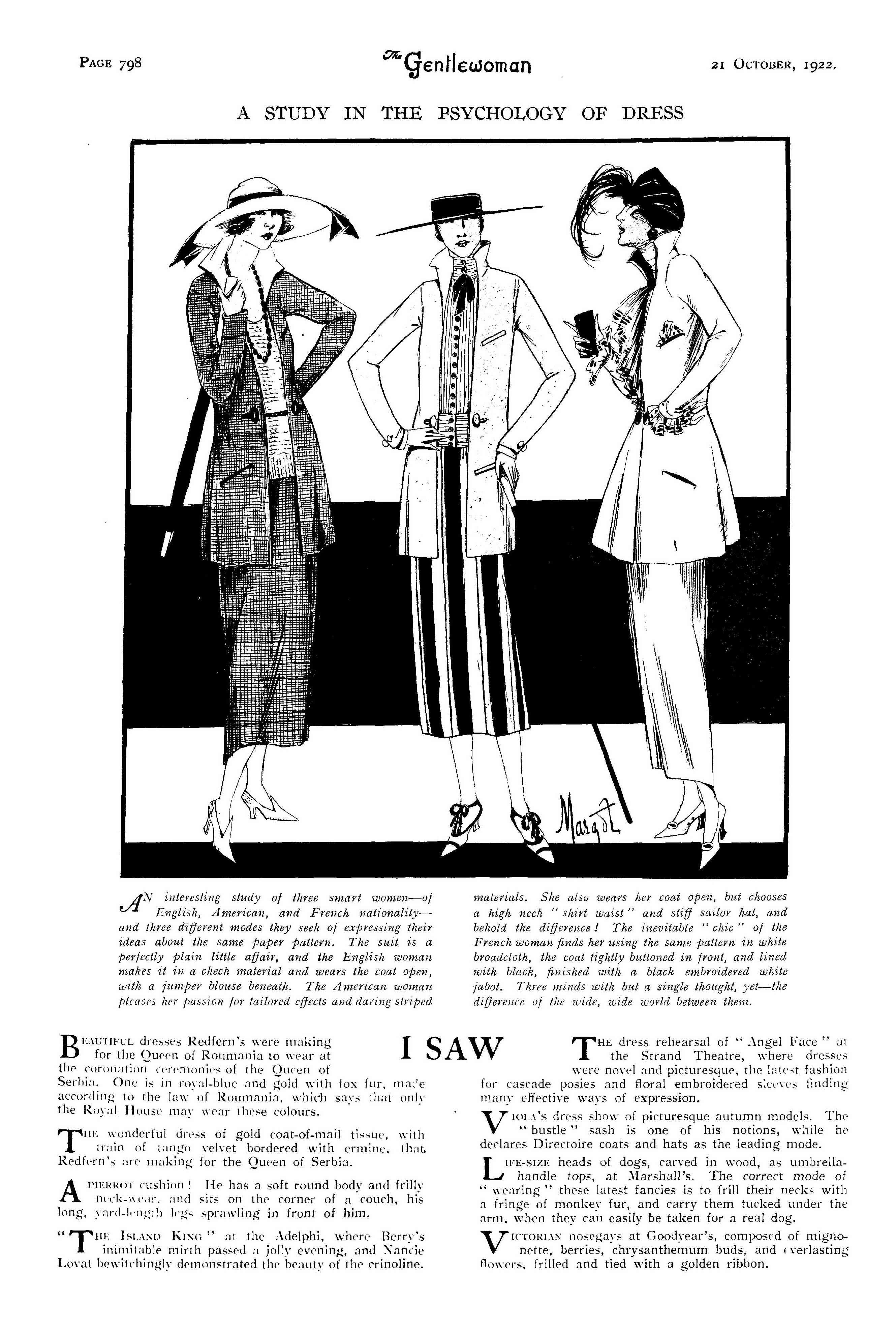
This course is designed to help give future history educators the confidence and skills to build effective, engaging and inclusive learning communities for their students. We will spend the semester exploring how we can help history students think critically about the world they live in. This course connects future instructors with resources for teaching in middle school, high school, and college-level history classrooms. Over the course of the semester, you will receive an introduction to crafting inclusive, culturally responsive, and evidence-based lesson plans. We will explore foundations in history pedagogy as well as lesson planning. We will hold workshops during class meetings that provide time to work toward the capstone assessments: a statement of teaching philosophy and detailed formal lesson plans. Outside of class, you will listen to history podcasts and view videos in order to brainstorm ways to integrate what you learn into lessons. Expect weekly readings and written reflections. Wide-ranging examples of history lesson plans will guide you to tailor lecture content, readings, primary sources, activities, and assessments according to the age level of the grade that you would ideally like to teach. Once during the semester you will visit a history classroom at Northampton High School.
This course is designed to help give future history educators the confidence and skills to build effective, engaging and inclusive learning communities for their students. We will spend the semester exploring how we can help history students think critically about the world they live in. This course connects future instructors with resources for teaching in middle school, high school, and college-level history classrooms. Over the course of the semester, you will receive an introduction to crafting inclusive, culturally responsive, and evidence-based lesson plans. We will explore foundations in history pedagogy as well as lesson planning. We will hold workshops during class meetings that provide time to work toward the capstone assessments: a statement of teaching philosophy, a detailed formal lesson plan, and one unit on a topic of your choosing. Outside of class, you will listen to history podcasts and brainstorm ways to integrate what you learn into lessons. Expect weekly readings and written reflections. Wide-ranging examples of history lesson plans will guide you to tailor lecture content, readings, primary sources, activities, and assessments according to the age level of the grade that you would ideally like to teach.


In this course, students will reflect on their strengths, values, identities and interests in healthcare careers and create a 4-year plan including academic and extracurricular experiences aligned with those factors. Students will also develop the networking skills needed to meet alumni and other healthcare professionals as part of their career explorations. Students will write, discuss and undertake activities facilitated by the instructors, guest alumni and faculty lecturers. Students who take this class will be better prepared to overcome challenges, identify and address gaps in their experiences, build community among their peers, and discuss their motivations and career goals with others.
In this course, students will reflect on their strengths, values, identities and interests in healthcare careers and create a 4-year plan including academic and extracurricular experiences aligned with those factors. Students will also develop the networking skills needed to meet alumni and other healthcare professionals as part of their career explorations. Students will write, discuss and undertake activities facilitated by the instructors, guest alumni and faculty lecturers. Students who take this class will be better prepared to overcome challenges, identify and address gaps in their experiences, build community among their peers, and discuss their motivations and career goals with others.

Students will learn about and gain immediate experience with entrepreneurial innovation by developing ideas, projects and "start-ups” using the lean launch methodology. This is a fast paced, project-based, hands on, course using the Business Model Canvas tool, aspects of design thinking, engaged practice with presentations ("the pitch”), developing clear value propositions, and understanding customer segments and markets.
Because the class will meet every day for a few hours each morning, the instructors expect the work --- your work, primarily! --- to be done in two phases:
(1) outside of the class, during the afternoon and evening, when there will be a lot for you to do, and
(2) inside the class when you will present what you've done the day and evening before, and discuss your discoveries.
During these presentation-discussion sessions, the instructors will provide information, ideas, lovingly critical comments and feedback, and guidance. This class models the Stanford University business school approach: hands-on, real-world work, or what they call the flipped classroom.
Utilizing a case-study approach, including cases that teams developed in IDP155 as well as cases provided by the instructors, students will learn about business and organization finance models, presenting ideas in the pitch format, and planning, testing, and developing ideas, projects, businesses and organizations. It is strongly recommended (but not required) that students take IDP 155 prior to taking this course.
Because the class will meet every day for a few hours each morning, the instructors expect the work --- your work, primarily! --- to be done in two phases:
(1) outside of the class, during the afternoon and evening, when there will be a lot for you to do, and
(2) inside the class when you will present what you've done the day and evening before, and discuss your discoveries.
During these presentation-discussion sessions, the instructors will provide information, ideas, lovingly critical comments and feedback, and guidance. This class models the Stanford University business school approach: hands-on, real-world work, or what they call the flipped classroom.
This is a self-guided course to learn the basics of the learning management system used at Smith College: Moodle. Below the screenshot you should see an option for self-enrollment, which will add you to the course as a student. Select the 'Enroll me' button and let's get started! If you have any trouble self-enrolling or do not see the button to enroll, you can email Abril at dnavarro@smith.edu.


ITL 245 is an upper-intermediate language course designed to reinforce and build upon the communicative and cultural competencies acquired at the introductory and intermediate levels. Some of the goals of this course are: improving reading comprehension, writing, and conversational skills; developing critical thinking in Italian; and deepening students’ understanding of Italian culture, with a particular focus on the peculiarities and contradictions of Italy today. This class is designed especially for students who are preparing to spend the Spring/Fall semester studying abroad in Florence. NB: The course is taught in Italian.
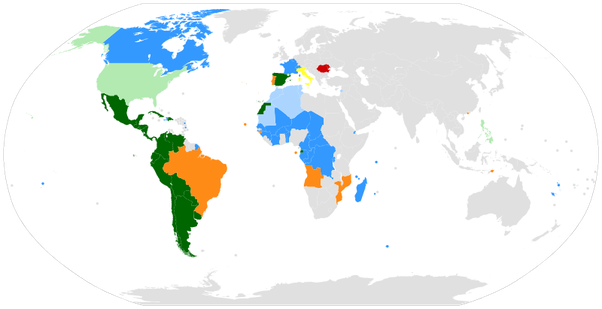
The course explores the issues in world language instruction and research that are essential to the teaching of Romance languages. Special focus will be on understanding local, national and international multilingual communities as well as theories, methods, bilingualism, and heritage language studies. Topics include the history of Romance languages, how to teach grammar/vocabulary, the role of instructors, and feedback techniques, curriculum and teaching materials design, teaching practicum, methods of assessments. The critical framing provided will help students look at schools as cultural sites, centers of immigration and globalization. Class observations and scholarly readings help students understand the importance of research in the shaping of the pedagogical practice of world languages.
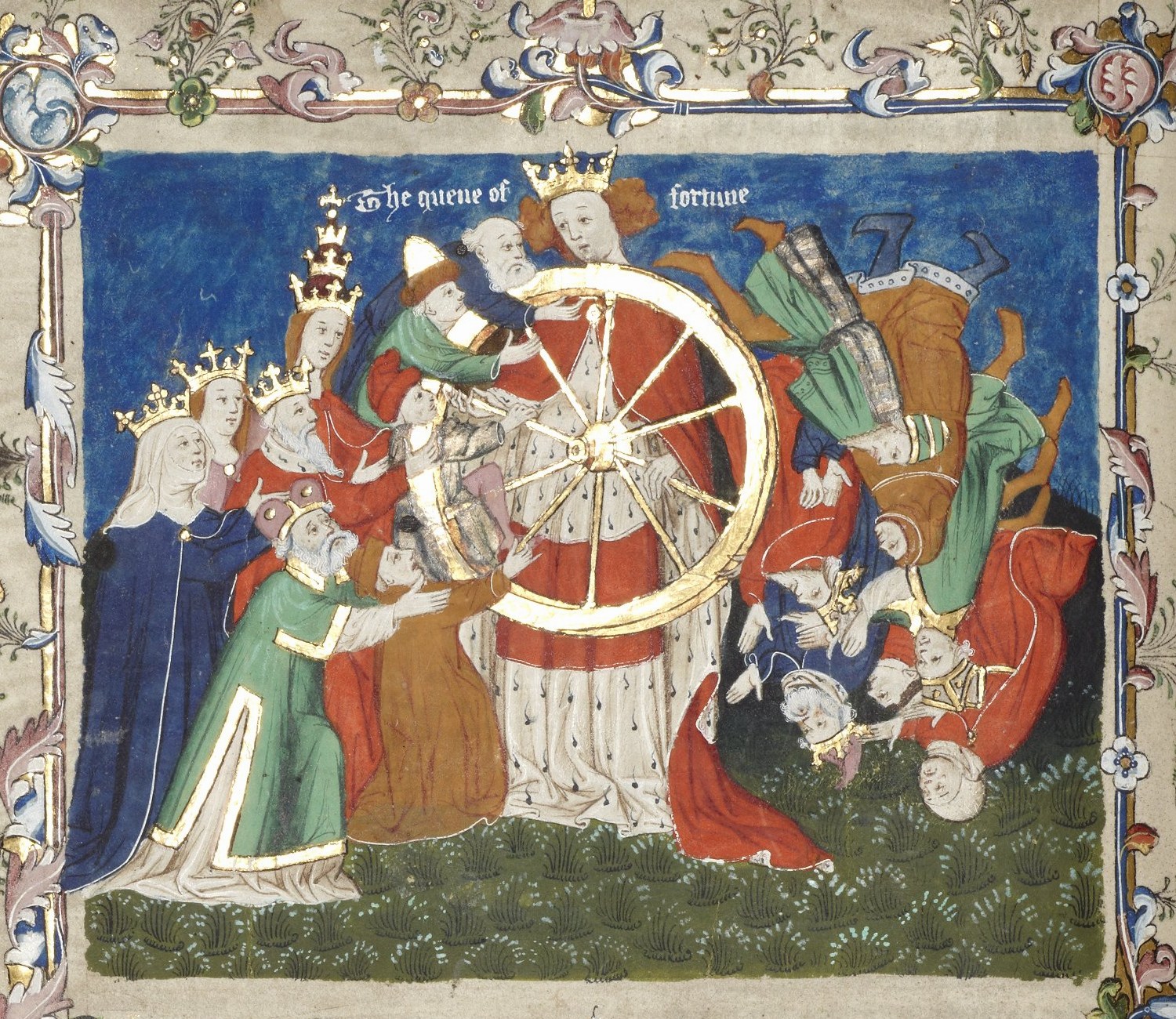
Make the fears, concerns, and desires of the Middle Ages yours through the stories of the “honest brigade” and their ten days of isolation against one of the worst pandemics of the last millennium. Join us in the close reading and discussion of selected stories from one of the best literary guides to the dangers and challenges of our days.
In this course we will read and discuss Giovanni Boccaccio’s Decameron (ca. 1353), we will learn about the culture that originated it, and we will make meaningful connections with today’s world as well. During our fictional stay in the company of the “honest brigade” during the black plague in Florence, we will look at their stories as evidence of erotic, religious, ethnic, and cultural questions vital to understanding medieval Europe (and us). We will also investigate the sensual exuberance of Boccaccio’s tales and the tension between “high” and “low” culture and consider the development of the bourgeoisie and its emerging virtues of wit and self-reliance. We will also review the book’s long-lasting fortune and its adaptation into different old and new media, from manuscript culture to the world of cinema and the performing arts.
This course is the first half of a two-semester sequence introducing Modern Hebrew language and culture, with a focus on development of the five language proficiencies: reading, writing, speaking, listening, and cultural. By the end of the year, you will be able to comprehend short and adapted literary and journalistic texts, describe yourself and your environment, and express your thoughts and opinions. Learning will be amplified by use of online resources (YouTube, tutorials, etc) and examples from Hebrew songs and television/film. This course is available to Mount Holyoke students though a simultaneous video-conferencing option. No previous knowledge of Hebrew language is necessary.
The in-class portion of the course will be heavily based on active listening and speaking practice; you can expect to spend the vast majority of class time speaking with and listening to your classmates.
May only be taken S/U with approval of the instructor and the director of Jewish Studies.
This course is the second half of a two-semester sequence introducing Modern Hebrew language and culture, with a focus on equal development of the four language skills: reading, writing, speaking, and listening. By the end of the year, students will be able to comprehend short and adapted literary and journalistic texts, describe themselves and their environment, and express their thoughts and opinions. Learning will be amplified by use of online resources (YouTube, Slack, tutorials, etc) and examples from Hebrew song and television/film. This course is available to Mount Holyoke students though a simultaneous video-conferencing option.
The in-class portion of the course will be heavily based on active listening and speaking practice; you can expect to spend the vast majority of class time speaking with and listening to your classmates.
May only be taken S/U with approval of the instructor and the director of Jewish Studies.
The JUD 101-102 sequence is required for Smith students wishing to study abroad in Israel.

This course is the second half of a two-semester sequence introducing Modern Hebrew language and culture, with a focus on equal development of the four language skills: reading, writing, speaking, and listening. By the end of the year, students will be able to comprehend short and adapted literary and journalistic texts, describe themselves and their environment, and express their thoughts and opinions. Learning will be amplified by use of online resources (YouTube, Slack, tutorials, etc) and examples from Hebrew song and television/film.
The in-class portion of the course will be heavily based on active listening and speaking practice; you can expect to spend the vast majority of class time speaking with and listening to your classmates.
May only be taken S/U with approval of the instructor and the director of Jewish Studies.
The JUD 101-102 sequence is required for Smith students wishing to study abroad in Israel.
How did the feminist movement impact Judaism and Jewish self-identity, and how and why did Jews play a formative role at key moments in feminist history? Discussions include feminist midrash, ritual innovation and contested issues such as divorce, women's religious leadership and LGBTQ Jews in religious law and practice. Experiential learning is emphasized through lectures from guest speakers, work in the Smith archives which houses the papers of several groundbreaking American (Jewish) feminists and visits to local sites. A prior course in Jewish Studies is helpful, but not required.

In this course, we will begin a study of Latin, the language of the ancient Romans. The study of Latin yields many benefits. Though sometimes referred to as a “dead language,” Latin remains critical for the understanding of not only Romance Languages (Spanish, French, Italian, Portuguese, and Romanian), but also of English. A great deal of English vocabulary is derived either directly from Latin or from French. In addition to its impact on English, Latin, as the language first of the Romans and then of diverse communities throughout Europe and the Mediterranean world, has left its mark on numerous aspects of modern society, from law to Harry Potter. The overall goal of this course is to prepare you to read and understand unaltered Latin texts, and to enjoy Latin literature in subsequent courses. A second goal is to contextualize the language within the cultures that used it, including particularly the Romans themselves. This course does not presuppose any prior knowledge of Latin or the ancient Roman world.

This course covers the first 20 chapters of Wheelock’s Latin, an introductory Latin textbook. We will focus on learning Latin vocabulary and grammar with the ultimate goal of enjoying Latin texts. We will practice effective reading comprehension strategies and, in addition to brief excerpts from ancient texts, we will read a Latin novella, Ego Polyphemus.
This course presumes no prior study of Latin and there are no prerequisites. Please note that is a year-long course and you must take both semesters to receive credit. At the end of the two-semester sequence, you will be prepared to read authors such as Vergil and Cicero in intermediate Latin.
The objectives of this portion of the course will be to complete the study of Latin grammar begun in the Fall semester and to explore more deeply at Roman cultural and social values and mores as they are embedded in Latin literature. To this end, we will begin to comment on style and literary and rhetorical techniques in selected passages of Latin works.
Learning Goals:
1) To acquire a reading knowledge of the Latin language that will equip each student to read works in classical Latin, including both prose and poetry.
2) To gain confidence with more complex grammatical constructions, including especially the uses of the subjunctive.
3) To contextualize reading assignments by observing trends in Roman literature through time and to gain the ability to compare this elite literature with accessible, public-facing writing, such as inscriptions.
The objectives of this portion of the course will be to complete the study of Latin grammar begun in the Fall semester and to explore more deeply at Roman cultural and social values and mores as they are embedded in Latin literature. To this end, we will begin to comment on style and literary and rhetorical techniques in selected passages of Latin works (for instance, Cornelius Nepos, Caesar, etc.).
Learning Goals:
To acquire a reading knowledge of the Latin language that will equip each student to read works in classical Latin, including both prose and poetry.
To gain confidence with more complex grammatical constructions, including especially the uses of the subjunctive.
To contextualize reading assignments by observing trends in Roman literature through time and to gain the ability to compare this elite literature with accessible, public-facing writing, such as inscriptions.
Before he penned arguably ancient Rome’s most famous and widely-read work of literature, the Aeneid, the young poet Vergil began his career with two very different works. This course explores these two poems: the Eclogues, a collection of 10 short pastoral poems, and the Georgics, a learned instructional poem on agriculture. Through close readings of their original Latin, translations and modern scholarship, we will explore major stylistic and thematic elements of each work: how they depict agriculture and the natural world, how they interact with Greek and Latin poetic models, and how they speak to the rapidly shifting cultural and political landscape of Rome as it transitions into the Augustan Age.
W elcome to MTH 153! We're going to be learning about discrete mathematics this
semester, which means that we get to talk about a variety of different
subjects like combinatorics, number theory, and graph theory. We're also
going to be talking about mathematical logic and proof-writing, and
spending some time learning to typeset math using LaTeX code.
elcome to MTH 153! We're going to be learning about discrete mathematics this
semester, which means that we get to talk about a variety of different
subjects like combinatorics, number theory, and graph theory. We're also
going to be talking about mathematical logic and proof-writing, and
spending some time learning to typeset math using LaTeX code.
Looking forward to working with you all!
- Zach
An introduction to probability, including combinatorial probability, random variables, discrete and continuous distributions.
This course gives an introduction to the theory and applications of ordinary differential equations. We explore different applications in physics, chemistry, biology, engineering and social sciences. We learn to predict the behavior of a particular system described by differential equations by finding exact solutions, making numerical approximations, and performing qualitative and geometric analysis. Specific topics may include solutions to first order equations and linear systems, existence and uniqueness of solutions, nonlinear systems and linear stability analysis, forcing and resonance, Laplace transforms. Prerequisites: MTH 112, MTH 212 and MTH 211 (recommended) or PHY 210, or equivalent.
This course gives an introduction to the theory and applications of ordinary differential equations. We explore different applications in physics, chemistry, biology, engineering, and social sciences. We learn to predict the behavior of a particular system described by differential equations by finding exact solutions, making numerical approximations, and performing qualitative and geometric analyses. Specific topics include solutions to first-order equations and linear systems, existence and uniqueness of solutions, nonlinear systems and linear stability analysis, forcing and resonance, Laplace transforms.
This course explores different approaches to the study of music as a cultural phenomenon. The course considers basic questions, such as: Why is music so often at the center of one's most profound personal and social experiences? Why is music a fundamental means of connecting with one's lives, communities and the wider world? Through in-depth reading and in-class discussion, students study the institutions of music (concerts, recording studios) and the varied practices of music making (classical, popular, amateur, professional) in order to construct a picture of the musical worlds and to understand what they say about society. This course also serves as an introduction to the main music academic discipline related to studying global music cultures: ethnomusicology. Together we will consider and apply key concepts and methodologies of this field, including ethnography.
Popular music is deeply embedded in aspects of everyday life in the United States and can both reflect and resist pervasive notions regarding identity. But what is popular music, and what is its role in American culture? What makes music popular? What do we listen for when we listen to popular music? In this course, we will explore these questions and more as we study the history and development of popular music with a focus on music in the United States during the twentieth century. We will examine various genres and styles, including pop, rock, and soul, from a musical-analytical perspective, as well as a social and cultural perspective. We will listen critically to popular music in order to better understand how it might reflect, shape, and/or challenge prevailing notions of American identity.
MUSIC-220: Topics in World Music:
The Power of Black Music
Course Description
The course focuses on the musics of Africa and the African diaspora through the lens of ethnomusicology. Concentrating on selected countries, including Benin, Brazil, Cuba, Nigeria, South Africa, and the United States, it examines the musical performance of gender, race, ethnicity, and nationality and the role of music in social and political movements. The course examines the global dimensions and resonances of Africanist musical aesthetics as enabled historically and sustained through ongoing transatlantic exchanges between Africa and the African diaspora. The course also explores the issues of representation and identity in iconic works like Black Is King & Lemonade by Beyoncé. Other topics include hip-hop adaptation in Africa and the phenomenal popularity of West African Afrobeats in the United States and globally. Class discussions will be supplemented by workshops conducted by visiting professional musicians as well as the instructor's ethnographic research in West Africa, Brazil, Cuba, and the United States.
With this course, students will explore composing for and performing with laptop orchestra, focusing on topics such as sound synthesis, software-based digital instrument design, live audio processing, and gain practical skills in group composing, concert performance, and computer music programming.
Students will be challenged to design and implement their own laptop-mediated musical instruments, interpret graphic and text based scores, program sounds, and perform as a group. Regular in-class rehearsals and performances will culminate in a final concert showcasing the ensemble's work. This course is ideal for students interested in exploring music technology, group improvisation, and studying historical and contemporary approaches to musical composition and performance.
Through streaming, radio, television, film, online media, public and private social spaces and more, both artists and listeners use popular music to construct, perform, and assert their queer and trans identities. In this course we will explore key moments in LGBTQ+ popular music history in the United States in the 20th and 21st centuries. We will examine shifting conceptions of queer and trans identities and how they are constructed through, reflected in, and challenged by popular music. Some topics we will cover include: rock ‘n’ roll; women’s music; queercore and punk; and contemporary sapphic pop. Weekly assignments include readings and listening examples as we will develop critical thinking and listening skills. Through the semester, students will also learn about zines and, working in groups, will create a final zine project related to a queer pop topic.
In the last five decades, hip hop has become a dominant force in American and global popular music. Originating in the street culture of the Bronx in the 1970s, hip hop is a multifaceted cultural movement that has influenced almost all aspects of American culture. In this course, we will explore the musical expressions of hip hop, especially rap, within their cultural and historical contexts. Taking a largely chronological approach, this course will focus on the development and major trends in rap as they intersect with social and political movements at the turn of the twentieth and twenty-first centuries. We will examine important topics in rap and hip hop music, including issues surrounding race, gender, sexuality, disability, and geopolitics.

This course will focus on an upcoming exhibition at the SCMA on polychrome wooden sculpture (13th-17th centuries). Co-taught by the curator of the exhibition and an art conservator, it will explore four of the museum’s objects to be included in the exhibition within the contexts of their history and related issues of conservation. Lectures and discussion will alternate with in-person technical examination of the sculptures, their treatment, and hands-on workshops concerning materials and methods.
Please note: This course will be taught virtually.Public trust in science has been tested in recent years not because the public stopped caring about knowledge, but because many felt unseen or unheard by those who create it. This course invites students to reimagine neuroscience outreach as an act of rebuilding trust, where connection, transparency, and empathy are as important as accuracy.
Students will gain hands-on experience designing and leading neuroscience-based outreach for youth audiences, with a focus on building authentic, two-way relationships between scientists and communities. Through interactive workshops, reflective writing, and community partnerships, students will learn how to communicate neuroscience in ways that foster curiosity while honoring the lived experiences of others. Throughout the semester, we will examine what makes science communication trustworthy exploring how humility, listening, and representation strengthen public confidence in scientific knowledge. Guest speakers, mentorship sessions, and shadowing opportunities will provide students with diverse perspectives on how scientists can be both educators and allies.
The course culminates in a capstone outreach event where students design and deliver an interactive neuroscience experience for local middle school students, serving not only as science ambassadors but as builders of trust in the next generation of thinkers.
Instructor: Mikaela Laine, PhD
Email: mlaine@smith.edu
Class hours: M and W 9:25 – 10:40am
Class location: Bass 203
Office hours: Tues 1:30-3:00pm, W 12:00-1:30pm
Office location: Sabin-Reed 424 (+ Zoom)
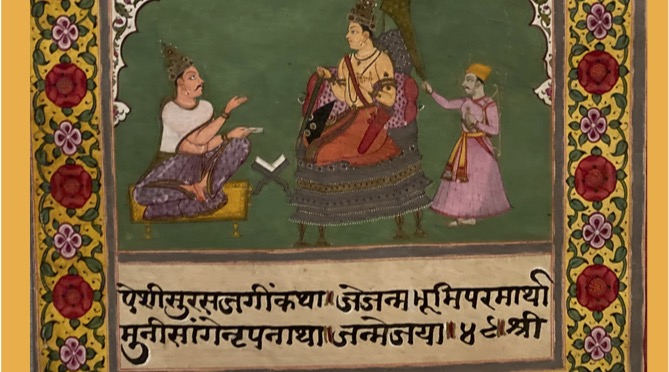
Did you know Indian philosophy has been around for at least two thousand years? In this course, we’ll get introduced to some highlights of its history. We’ll ask questions like: What is reality, and how do we fit into it? Is the world we experience an illusion? Are there other minds, and can I know them? Can I even know my own mind? Is there a divine being or beings? How can we know the answer to these questions? How should our answers to these questions guide our lives?
Given the depth and breadth of what we call “Indian philosophy” (philosophy on the subcontinent that includes modern-day India, as well as Afghanistan, Bangladesh, Bhutan, Nepal, Sri Lanka, and Pakistan), there is no way this course can be comprehensive. Therefore, we will focus on representative texts and topics, leaving an option during the last week for the class to choose a new text to investigate together.
As a textually grounded course in philosophy:

This course provides an in-depth exploration of modal logic, a type of formal logic that extends classical logic to include operators of necessity, possibility, knowledge, belief, time, and obligation. We will cover the syntax and semantics of various modal systems, including propositional (normal and non-normal) and quantified modal logic. Additionally, we will explore philosophical questions regarding modality, including (but not limited to) the ontological status of possible worlds.
Phil 233_01: Aesthetics and the Philosophy of Art
Fall 2025
Instructor: Angela Curran (pronouns: she/her)
Office: Wright 222
Office Hours: In person, in Wright 222, Tuesday and Thursday, 11:30-1 pm and other times by appointment.
email: acurran24@smith.edu
Course Meeting Times: Tu and Th 9:25-10:40 am
Course Room: Hatfield 106
Course Syllabus: Aesthetics and the Philosophy of Art
“The experience of art is a manifestation of human freedom, enabling individuals to express their uniqueness and engage with the world in meaningful ways, ” Hannah Arendt
“The function of art [experience] has always been to break through the crust of conventionalized and routine consciousness.” John Dewey
The central goal of the course is to introduce you to some of the puzzles and problems that philosophers have considered when they think about art. After going through the course, you will have learned a new way to think about art. You will also learn about philosophical thinking and see how examining art can teach us more about the nature of philosophy.
We investigate several central questions in aesthetics and the philosophy of art:
1). The Definition of Art: can art be defined? Could anything, including a pile of bricks, be art?
2) The Experience of Art: What is the nature of our experience of art? Is there something unique or valuable about our experience of art that sets it apart from our experience of everyday experiences?
3) Is intention relevant for interpreting a work of art?
4). How can we feel genuine emotions towards fiction when we know the characters are not real?
4) Are art and morality independent?
We will use many examples of artworks of various kinds (paintings, film, literature, music, and so on) as we discuss the ideas in the readings. You are also encouraged to bring in examples of artworks you would like to discuss about the readings. In addition, we will make use of the Smith College Museum of art throughout the semester.
You do not need to have taken philosophy to enjoy and do well in this class. But you do need to commit to learning the tools of philosophy, which we will introduce the first few weeks of the class, especially logical reasoning and evaluating arguments.

Over the past few decades there has been an explosion of research on animal consciousness. This class will examine three interrelated issues: (i) questions of animal consciousness, (ii) issues related to the study of animal consciousness, and (iii) how current understandings of animal consciousness should impact our treatment of animals. Some topics which will be covered in class include: whether animals have beliefs and desires, whether animals have a conception of the self and others, problems of researching animal consciousness, which animals are sentient, the ethics of animal experimentation and captivity, and whether there is evidence of cognition in plants.

This course is meant to introduce students to a range of ethical considerations which one confronts in the business world. The aim is to carefully consider ethical questions, problems, and dilemmas found in the business world, and to develop the conceptual tools to find solutions to them. This course will examine ethically appropriate business conduct in relation to issues of social and distributive justice, corporate responsibility, employee and human rights, globalization, environmental issues, and government intervention. This course will also explore what it means for a business to have a positive societal impact, and ways to achieve that goal.
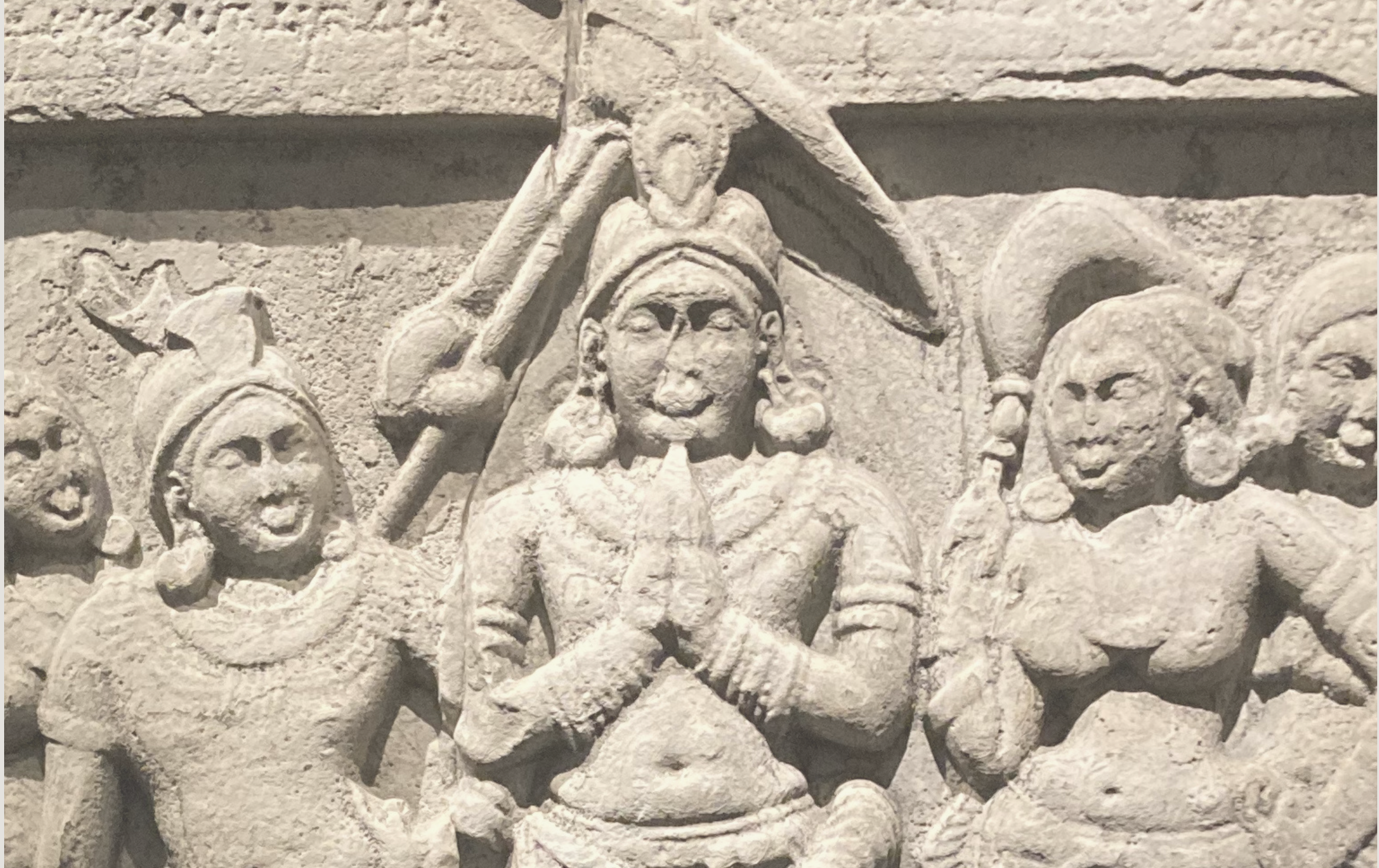
Buddhists and Brahmanical thinkers were frequently philosophically at odds with each other in premodern India. They disagreed over what reality is and how we can know it as well as how we can think and talk about it. This course focuses on key debates between these groups in order to appreciate the range of positions within both Buddhist and Brahmanical philosophy. Topics may include: whether there is a self or a God, what words refer to, what we can know through language, the relationship between language and inference.
Feminist philosophy of language in the analytic tradition seeks to understand how language may contribute to gendered patterns of oppression. It also proposes interventions to disrupt that oppression. This class surveys major topics in feminist philosophy of language, for example, the semantics of generics like "man" or "woman," the meaning of slurs, the silencing effects of speech, the influence of gendered metaphor, the grammatical encoding of gender into natural language, and more. Students will read both foundational and contemporary works of analytic philosophy.
Course syllabus is available on Google Drive. Moodle is used only as means of communication with students.
What is language? What does it mean for words to have meaning? What is the meaning of words? These are the fundamentalquestions in the philosophy of language. We start with the question: what kind of meaning do linguistic expressions have? Do thesigns we use to communicate concern thoughts we want to express, as seventeenth-century philosopher John Locke thought? Ordo the words we use to communicate concern things in the world, as philosophers in the nineteenth and twentieth centuries suchas John Mill, Gottlieb Frege, Bertrand Russell, and Saul Kripke maintain? We look at what kinds of meaning specific linguisticexpressions have, such as names and definite descriptions, e.g., “The King of France.” We examine syntax questions: how themeaning of sentences depends on the meaning of their parts.
Second, we turn to the question of linguistic meaning in general. We look at the conception of language and meaning proposed byW.V. O. Quine and developed by Donald Davidson.
We examine Quine and Davidson’s views on what it is to make sense of language. We also look at Quine’s famous attack on theanalytic-synthetic distinction—the issue of whether statements are true or false by meaning alone, e.g., “All bachelors areunmarried,” or in virtue of experience, e.g., “It is raining now.”
The third issue we try to understand more profoundly is the role of language in our lives. We look at J. L. Austin’s speech act theory,according to which the fundamental thing we must understand about any language is how a speaker uses it. Then, we look at H.P.Grice’s attempt to explain what speakers mean by the expressions they use to communicate.
The fourth issue we discuss is the evolution of language. Did language evolve from the primate brain? Do non-human animals havea system of communication we could call language?
The fifth issue we discuss is metaphor. What are metaphors? How do we use metaphors to understand our lives?
The sixth issue we discuss concerns the effect of our words on others. We examine the nature of slurs, racial epithets, and silencing speech, among other topics.

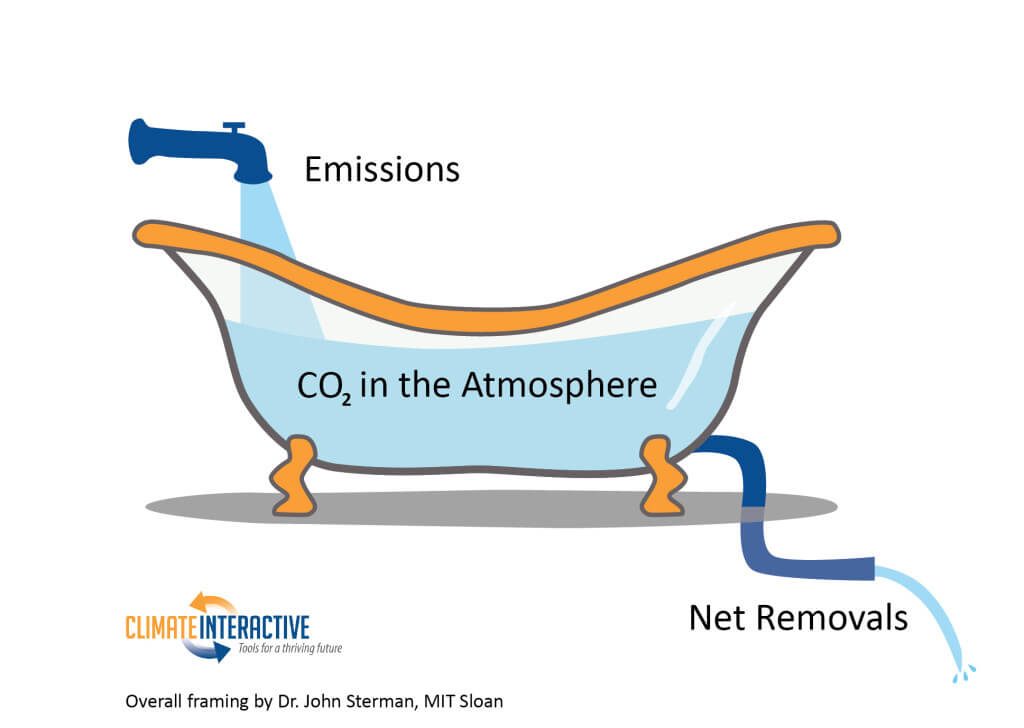

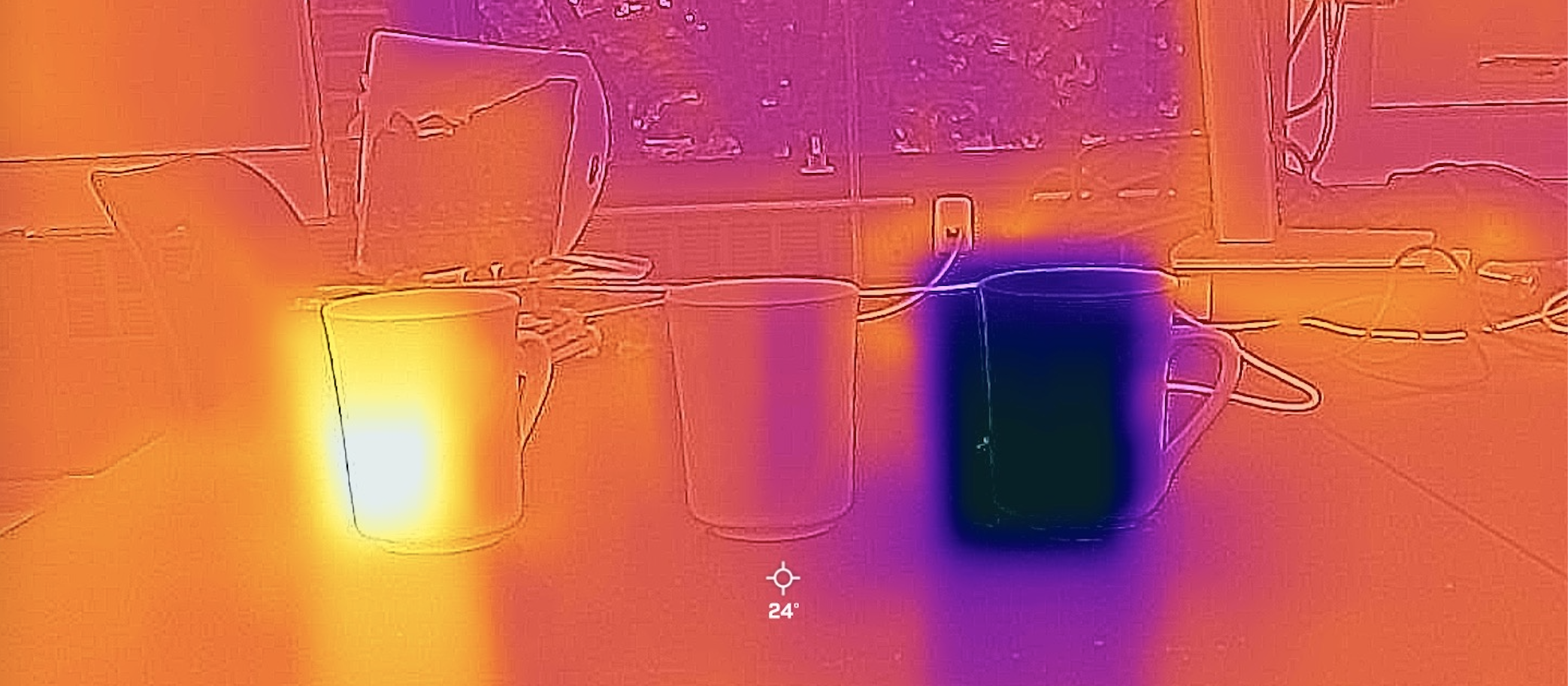

Sejam todes bem-vindes a POR 125!
Course Description:
This course is an accelerated introduction to Brazilian Portuguese with the objective of creating a solid foundation in all four language modalities: listening, reading, writing, and speaking. The course will also introduce aspects of the cultures and societies of Brazil, Portugal and Lusophone (Portuguese-speaking) Africa, with presentation and discussion of audio-visual materials and short readings. Classes will be conducted in Portuguese, following a student-centered, communication-oriented approach and concentrating on activities to develop speaking and listening skills.
The accelerated pace of the course relies on students’ proficiency in Spanish.
While one of our objectives is an awareness of the principal differences and similarities between Spanish and Portuguese, do not always expect direct, systematic comparisons (of grammar, vocabulary, pronunciation). Our classroom methodology will focus more on practicing Portuguese, with students intuitively developing an awareness of similarities and distinctions between Spanish and Portuguese.
Course Materials:
Required Textbook: Ponto de Encontro: Portuguese as a World Language, Pearson/Prentice Hall, 2 nd edition, 2012. (E-book or physical book)
A/V Component: Free audio content corresponding with our text (link on Moodle course website)
Yellow notebook (caderninho amarelo) for compositions provided by the instructor in the first week of classes.
This course will combine the theatrical theories and techniques created by Augusto Boal in his ‘Theater of the Oppressed' with the ‘Pedagogy of the Oppressed’ by Paulo Freire as well as the work of other authors who were Boal's inspiration. The course will include transnational performative perspectives that prompted Boal’s view of theater as a political act. These contributions are from philosophers of the Classical period in Ancient Greece such as Aristotle; Niccolò Machiavelli during the Italian Renaissance and more contemporary European theatrical notions, namely play writers Bertolt Brecht and Dario Fo. The purpose is to expose the students to performative, pedagogical and social justice theories that are implicit and explicit in the Theater of the Oppressed. The first part of the course will examine and discuss important issues based on Boal’s books and the above-cited authors. In the second part, the students will have the opportunity to experiment with theatrical practices based on the approach developed by Boal, transposing them to current social topics which will culminate in their final projects. All course content will be in English, but the students who can read Portuguese, Italian and German will have the option of reading some texts in the original versions.
Welcome to Philosophy of Religion! In this course you will become familiar with the history of the philosophy of religion and enter into its major debates: Is there a God? Can religious experience be trusted? What is the proper relationship between faith and reason? Can belief in God be reconciled with the existence of suffering and evil? Is there reason to hope for life after death? Can a committed religious believer still experience doubt? Investigating classic and contemporary responses to such questions will enable you to refine your skills as a critical reader and thoughtful interpreter of philosophical and religious texts.

Russian II
Ruth Averbach
Pierce Hall, Room 104
Course Description
The first half of a two-semester sequence. Students practice all four language modalities: reading, listening, writing and speaking. The course incorporates a variety of activities that are based on a range of topics, text types and different socio-cultural situations. Authentic texts (poems, short stories, TV programs, films, songs and articles) are used to create the context for reviewing and expanding on grammar, syntax and vocabulary. Prerequisite: RES 100Y or equivalent.
Grading Rubric
Attendance and Participation – 35%
Assignments – 35%
Quizzes – 10%
Exams – 20%
Course Expectations
It is essential for students to complete assigned readings, attend course meetings, and contribute to class discussions. Feel welcome to use electronic devices, but do not let them distract others or yourself from the lesson. Please let Ruth know as soon as possible if you are ill or must miss class for any reason.
Academic Integrity
Students are expected to uphold all Smith College policies on academic integrity. AI is only acceptable for proofreading for grammar, punctuation, and spelling. All outside sources used in written assignments must be cited properly.
Accommodations
If you need any accommodations to participate in and complete the course, please contact the Accessibility Resource Center (College Hall 104; arc@smith.edu; 413-585-2071) and let Ruth know how she can best serve your needs.
Course Schedule
Week II
M – Chapter I, Part I
HW due: practice vocab on p. 2-4, read texts on p. 7, 11
In class: Reading practice, questions to texts
W – Chapter I
HW due: #5, p. 8-9
In class: Grammar review
F – Chapter I
HW due: write short composition on family
In class: NO CLASS, RUTH AT CONFERENCE;
Week III
M – Chapter I
In class: present compositions, ask classmates questions
W – Chapter I
HW due: exercises 11 & 12, p. 12-13
In class: Accusative and Dative case practice
F – Chapter I
HW due: exercise 17, p. 16-17
In class: discussion, grammar review, poetry
Week IV
M – Chapter I, Part II
HW due: Practice vocabulary, p. 18-19
In class: short vocab quiz, relative clause
W – Chapter I, Part II
HW due: 10 sentences with который
In class: exercises 23-25, p. 22-24; оба\обе
F – Chapter I, Part II
HW due: exercise 27, p. 25
In class: dating profiles p. 27; Russian music
This Moodle site compiles resources for inclusive teaching from the following sources:
Theory and applications of regression techniques; linear and nonlinear multiple regression models, residual and influence analysis, correlation, covariance analysis, indicator variables and time series analysis. This course includes methods for choosing, fitting, evaluating and comparing statistical models and analyzes data sets taken from the natural, physical and social sciences.
Theory and applications of regression techniques; linear and nonlinear multiple regression models, residual and influence analysis, correlation, covariance analysis, indicator variables and time series analysis. This course includes methods for choosing, fitting, evaluating and comparing statistical models and analyzes data sets taken from the natural, physical and social sciences.
Theory and applications of regression techniques; linear and nonlinear multiple regression models, residual and influence analysis, correlation, covariance analysis, indicator variables and time series analysis. This course includes methods for choosing, fitting, evaluating and comparing statistical models and analyzes data sets taken from the natural, physical and social sciences.
A place to share Moodle information. If you are not part of the course yet, click "Enroll me."
A place to share Moodle information. If you are not part of the course yet, click "Enroll me."
This
course is designed to give students a broader understanding of individual
actions in the social context, using what sociologist C. Wright Mills calls a
“sociological imagination.” Throughout the semester, students will learn to
apply their sociological imagination by setting aside preconceived ideas about
social relationships, and analyze how external social factors, like class, race
and ethnicity, gender, education, and community, shape people’s lives. This
course highlights the role of transnational/global flows of people, capital,
culture and economy, and encourages students to reimagine our everyday lives in
American society by connecting global forces to local contexts. Major topics
include sociological theories, methods, culture, socialization, race and
ethnicity, gender, class, education, and globalization.
According to the U.S. Census Bureau, about 80% of the U.S. population lived in urban areas in 2020. Cities are prime research sites and laboratories to analyze everyday 21st-century American life, as many of Americans’ identities and daily lives are strongly tied to urban spaces and shaped by their economic, social, and cultural power in cities. This course connects macro-level processes, including global forces, politics, and economy to micro-level daily life, such as social interactions among city dwellers in both global cities and small towns.
This course is designed to help students develop both theoretical understanding and empirical analysis. Theoretical discussions of the emergence of modern cities both in Europe and in North America during the industrial revolution by urban theorists Engels, Simmel, Tonnies and Benjamin are emphasized. Students learn how cities were understood not only as a site for production, but also a driving force for modern consumption and colonial expansion by looking at department stores and world fairs in Europe and in the U.S. Then, students move to explore the U.S. context through Chicago School scholars’ ecological perspectives, and discuss how and why these scholars used the city as a laboratory to analyze modern social life in America.
This course particularly focuses on contemporary urban issues in American cities, starting with the post-war era. Why did whites leave cities for suburbia? Who was left behind in cities? What caused urban unrest in the 1960s? What did urban America lose during that time? By taking new urban sociological approaches into account, students will conceptualize the relationships among the state, economy and urban form in order to understand urban America.
Despite the focus on American cities, this course also underscores global and transnational perspectives. From immigrants and refugees who bring their own culture to the presence of global/transnational corporations, most U.S. cities are global entities, and urban lives are intricately tied to globalization and transnational practices. Yet we, as urban dwellers, whether in big cities or in small towns, do not know, and often care not to see, the dark side of global consumption. This course aims to open this discussion about how we connect the micro-level of our social interactions, consumption, and daily lives to macro-levels of the progress, global economic forces, politics and culture. Topics that will be covered include: modernity and modern cities, urbanism as a way of American life, critical urban theory, poverty and ghettos, urban ethnography, gentrification and displacement, urban branding, global cities, immigration and gateways, new destinations, ethnic enclaves, and financial crisis and the right to the city movement.

Course Description and Goals
“The academy is not paradise. But learning is a place where paradise can be created. The classroom, with all its limitations, remains a location of possibility. In that field of possibility we have the opportunity to labour for freedom, to demand of ourselves and our comrades, an openness of mind and heart that allows us to face reality even as we collectively imagine ways to move beyond boundaries, to transgress. This is education as the practice of freedom.” (bell hooks in Teaching to Transgress, 1994, p. 207)
Drawing from bell hook’s inspiring quote above, this course introduces you to the vibrant field of Sociology of Gender and Globalization and its unique interdisciplinary perspectives, borrowing insights from Sociology; Women, Gender, Sexuality Studies; Anthropology; Economics, Politics and so on. This 200-level course moves beyond geographical and disciplinary boundaries, to engage with the key dimensions of global restructuring and globalization through the lens of gender, sexuality, race, class, ethnicity, and North-South relations. We will study how various modes of oppression and inequalities intersect in global manufacturing, supply chains, and in the transnational politics of representation and access in global media, religion, culture, war, and dissenting spaces. Questions that we will interrogate throughout the semester include: What is globalization and how and why is it a contested concept? Is globalization a new process? How can globalization be understood as a social, cultural, political, and ecological process and not just as a technological-economic process? How are structures of identity and oppression i.e., gender, race, ethnicity, class, sexuality, nation, religion, ability, and other forms of difference, interwoven with globalization? How do biological, cultural, historical, and political frameworks shape knowledge and processes of globalization? In exploring these questions, the course incorporates sources ranging from social science research, creative non-fiction, films/documentaries, art, media, and popular culture. Topics may include transnational feminisms, gendered labor and the global economy, feminist and queer theory, reproductive politics and globalization, carceral politics, rights-based advocacy, visual cultures.
This course will accomplish its goals by:
● Communicating persuasively and effectively in public speaking and writing
● Working collaboratively and creating safe and kind spaces for each other to teach and learn in
READINGS
You do not need to purchase any readings/books for this course. All reading materials will be on the course’s Moodle website and all videos will be linked on the syllabus. You would be able to access the videos required for the course for free through YouTube or the Smith Kanopy service (https://www.kanopy.com/en/smith/). The course schedule below lists the readings/videos we will cover each class day during the semester.



The course will introduce clinical social work practice by addressing the fundamental purposes, historical and ongoing debates, functions, and practice methods. Links to clinical social work practice with groups are made in this course in addition to social work theory (including psychological and social theories), issues related to social policy, agency and community contexts, and advocacy work, as well as research (e.g., empirical evidence, evaluation).
This 10-week course is organized by three broad areas of social work practice competence:
First, this course will focus on social work values, ethics, and other key principles, in clinical social work practice. Attention will be given to the clinician’s capacity for an intentional and effective use of self as well as understanding and addressing complex and intersecting nature of power and various social locations within a therapeutic process.
Next, the course will address foundational practice competencies required in the beginning phase of practice, namely interviewing skills for relationship building, assessment, case formulation, goal setting, contracting, and treatment planning. Understanding that much of clinical practice was built on Euro-centric, western, colonial epistemologies, instructors will invite students to critically appraise and identify ways to engage clinical skills responsibly from racial and social justice perspectives.
Finally, the last part of this 10-week course will introduce students to the competences relevant to the middle phase of practice, such as common tasks and processes involved with this phase of work, an introduction to several intervention models of working with individuals and families, case management (e.g., working with collaterals, resource development, referral), as well as the ending phase of practice, such as practice monitoring, evaluation, and termination. While several conventional intervention models (e.g., psychodynamic, cognitive-behavioral, trauma work) will be introduced, the course will also engage students in critically examining the utility and limits of these models, with a goal of centering practice decisions on the needs and voices of clients from marginalized communities. A variety of pedagogical methods, including lectures, discussions, the use of media, case-based learning, mindfulness exercises and role-plays, will be used to introduce practice principles, theoretical and empirical literature and competency-based skills. Throughout the course, student learning will be scaffolded, moving from learning aboutpractice to doing practice through various experiential methods, such as mindfulness exercises, case-based discussion and peer-to-peer role plays. Case materials used for discussion and role-plays will reflect individual and family practice in a range of service settings with a focus on the social and structural contexts surrounding marginalized communities.



Welcome, all!
Group Theory and Practice introduces students to the history of social group work and focuses on applying the values, skills and knowledge of the social work profession to a variety of groups. Theoretical and practical principles of group work are introduced to enhance understanding and use of “group” as a complex system of roles and interrelationships. Students learn how to construct task and treatment groups and how to mobilize the resources of existing groups. Primary focus is given to those dynamics that are common to all groups, and students will begin to explore how issues of difference (gender, race, sexual orientation, age, culture, class, ability, spirituality) affect group processes.
This course introduces students to the role of research and data within social work practice. Students will assess this relationship, both historical and current, through the liberatory lenses of critical theories about race, Indigenous approaches to research and knowledge, and intersectionality. The goal of this course is to critically analyze research theories, methods, and findings in a way that advances the social work profession’s goals of racial and social justice. Students will strengthen their understanding of current research landscapes and approaches to knowledge building, with the aim of achieving self-determination for marginalized clients and communities. Examples throughout the course will be practice-oriented and build an understanding of research justice as a strategic framework for evaluating and recalibrating social work practice at micro, messo, and macro scales.

The required First Year Practicum Learning Seminar is designed to help students successfully enter into and engage in the learning of the first-year internship. The seminar will address issues related to the Essential Attributes and Abilities and is designed to support students in achieving the defined learning objectives and to deepen their understanding and integration of content from summer coursework. Students are expected to use the seminar as a forum to discuss their clinical work and to actively integrate theory and practice as relevant to their internship setting. The course meets for 10 sessions September-April for 2 hours/month.

The required First Year Practicum Learning Seminar is designed to help students successfully enter into and engage in the learning of the first-year internship. The seminar will address issues related to the Essential Attributes and Abilities and is designed to support students in achieving the defined learning objectives and to deepen their understanding and integration of content from summer coursework. Students are expected to use the seminar as a forum to discuss their clinical work and to actively integrate theory and practice as relevant to their internship setting. The course meets for 10 sessions September-April for 2 hours. In October and January we meet two times each for two hours.
Meeting ID: 360 453 5228
To join by computer, click this link: https://smith.zoom.us/j/3604535228
Drawing on frameworks introduced in Introduction to U.S. Social Welfare Policy, this course presents an analytical framework through which to critically examine specific social welfare policies and applies this framework to key social problems and their policy solutions. The impact of policies on clinical social work practice is a key aspect of policy analysis and is considered throughout.
In addition to learning the technical skills of policy analysis, students will also engage social theories and movements that were excluded, intended or not, throughout much of social work education. Our ethical responsibility to advocate for both vulnerable and oppressed populations is key to our historical lens to investigate how historical systems of oppression, particularly towards Black and Indigenous populations, is essential to the understanding gaps in social welfare policy in contemporary American society.


This elective course focuses on developing practical skills using a narrative therapeutic approach with individuals, families, groups, organizations, and communities. It builds on generalist practice to help students apply narrative approaches in practice. The course explores the conceptual foundations of narrative practice, emphasizing the role of stories and language in shaping meaning and multiple perspectives. Through experiential exercises, students will develop collaborative practice skills guided by openness, curiosity, and respect for client and community strengths and expertise. Clinical examples and experiential exercises will support participants' learning, and students will be encouraged to observe and provide feedback to one another. The course explores narrative therapy theories, interventions, and techniques, including externalizing practices and re-authoring conversations, while also addressing special populations and relevant clinical issues.
This seminar will provide dedicated time to work with a faculty advisor and me to prepare for the completion of your Comprehensive Exam. The Comprehensive Exam is a first authored, peer reviewed, publication-quality manuscript based on new work. This process will entail regular meetings with the faculty advisor and me to develop the topic and structure of the comprehensive exam. Students will be expected to gather during the first and fourth weeks of the term in a seminar style to present their topics and progress and provide peer feedback to their classmates.

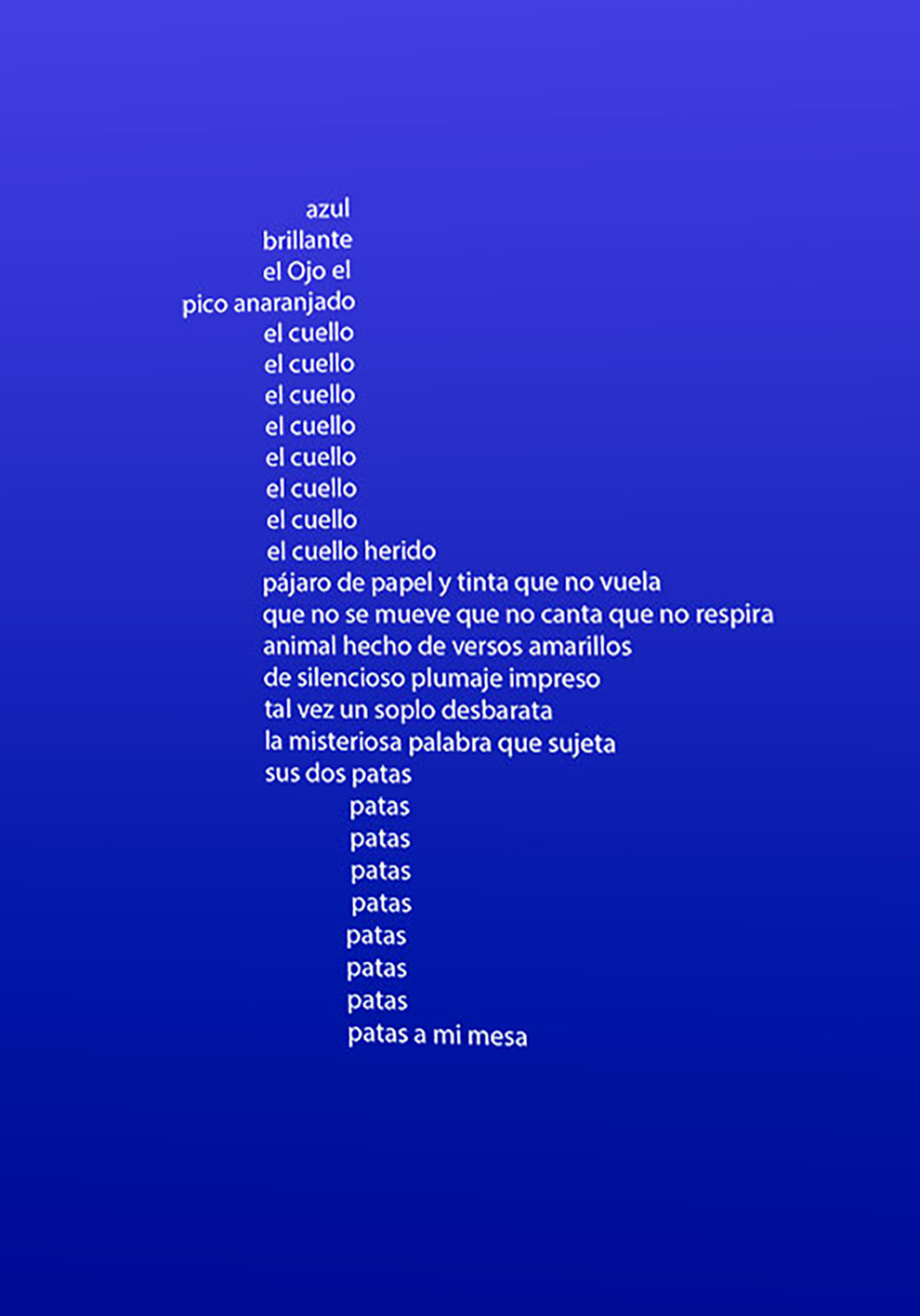
SPN 220/ Intermediate Spanish II is a thematically organized course. This semester we will explore poetry in the Spanish-speaking Latin America and its multiple expressions in connection with art, music, cinema, performance, history, and politics.
In the SPN 220 course, students will continue to develop their Spanish linguistic skills to communicate and sustain their opinions in Spanish about complex topics, offering comprehensive work in listening, speaking, reading, and writing, with targeted grammar review. Course materials discuss poetry in a range of formats, including newspaper articles, manifestos, non-fiction, video documentaries, biography, performance, and visual art. This course is an introduction to how poetic language builds cultural history, engaging with memory, religiosity, social justice, identity, ecology, and activism in the Spanish-speaking Latin America.
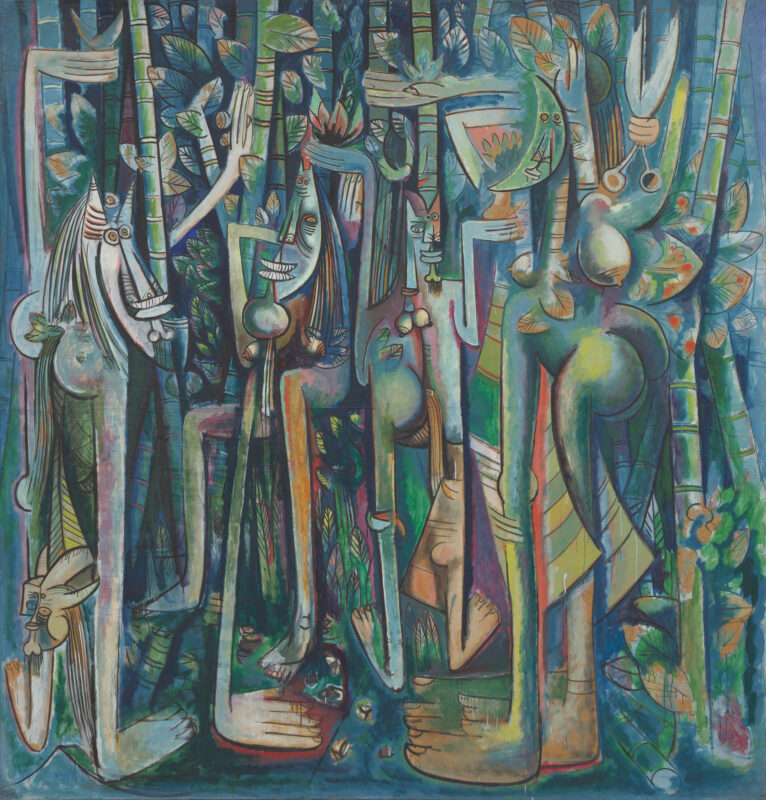
Focusing on Cuba, Puerto Rico, the Dominican Republic, and Peru, this seminar provides students with critical tools to explore and analyze Afro-Latine histories and cultural production in Latin America from colonial times to the present. Centering diverse forms of artistic expression—literary, performance and visual art—in conversation with historical and intellectual debates, the course explores critical themes of African ancestry, Black Pacific and Black Atlantic memories, diaspora experiences, aesthetic innovation, and social justice. Key authors included are Juan Francisco Manzano (Cuba), Gertrudis Gómez de Avellaneda (Cuba), Nicomedes Santa Cruz (Peru), Mónica Carrillo (Peru), Mayra Santos-Febres (Puerto Rico), Rita Indiana Hernández (Dominican Republic), among others.



This course is designed to introduce students to key concepts, debates and provocations that animate the study of women, gender and sexuality. We will engage with a range of analytical frameworks as we develop the critical tools needed to examine the social construction of gender, race, sex, sexuality, class, citizenship, disability and nationality in the US and globally. We will consider how these concepts have changed over time, and how they circulate in popular culture. We will study important historical figures who advocated for gender justice as well as freedom from racial, ethnic, nationality and class oppression and their intersections. This course will address issues of ableism, transphobia, as well as environmental justice and reproductive justice in contemporary movements. We will study how capitalism shapes our lives, our movements and our horizons for social change. This course will develop methodologies of archival research, historical analysis, literary and visual analysis, political economy, ethnography and theoretical analysis. Over the course of the semester, students will engage with and begin to grow comfortable with reading critical theoretical texts.
This interdisciplinary course considers issues of gender, race, sexuality, and class in the context of youth justice. Drawing on gender and sexuality studies, criminal justice and sociological literature, social critiques, policy papers, case law, documentary film, personal narrative, and literature, SWG 211 critically examines the history of the youth justice system in the United States, what it means to be in “the system”; the role of “justice” in the system; and: its major challenges, reformist and abolitionist critiques, and how girls—and young people of all genders--contest its confines, agents of resistance and change.
Our work together will explore the following questions, among others:
What are the lineages of “girls” in the criminal and juvenile legal systems, and how are these histories implicated in the present? What are the goals of these systems, whose interest(s) do they serve, and (how) do these yield gendered and racialized consequences? What role do related systems, processes, and institutions (such as immigration enforcement, foster care, and education) play in youth justice? How have movement, legal, and policy interventions influenced and shaped its trajectories? How do youth of all genders who are subject to the system contest its confines, demonstrating voice, vision, and agency? What other worlds are possible? Is reform in the interests of justice actionable, or is abolition the only way?
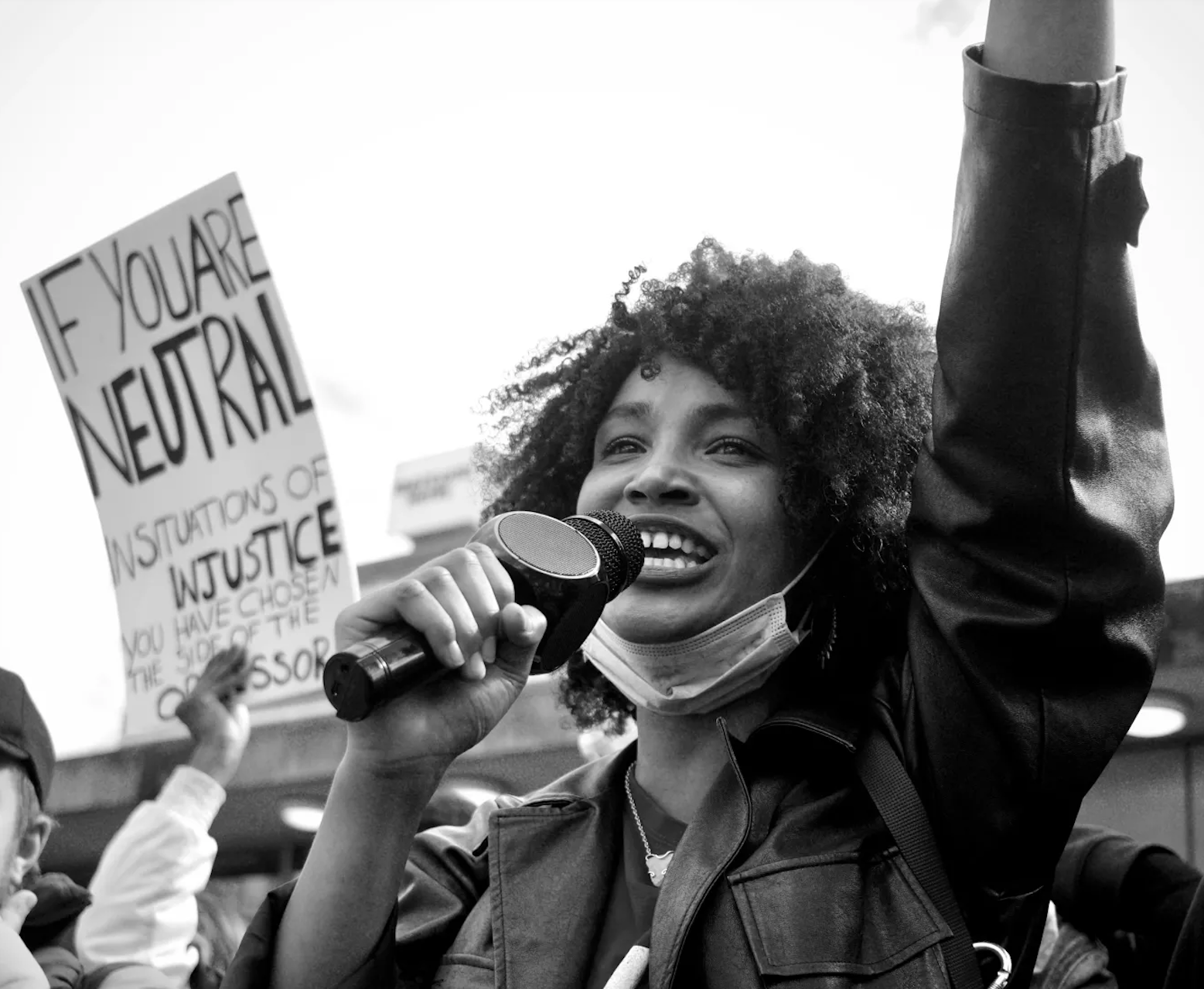
This interdisciplinary course considers the issue of gender, race, sexuality and class in the juvenile justice system. Drawing on gender and sexuality studies, criminal justice and sociological literature, social critiques, policy papers, case law, documentary film, personal narratives and fiction, the course critically examines the history of the juvenile justice system; what it means to be in "the system"; the role of "justice" in the juvenile system; and reviews some of the major issues faced by the youth who are subject to this system. In addition, the course considers the role of youth action and resistance as interventions against the carceral state.
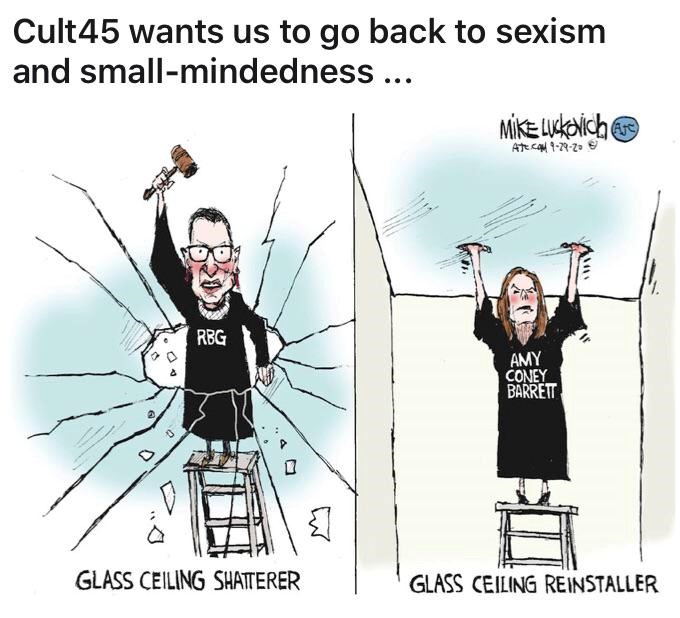
This course explores the influence of gender on legal rights in the United States historically and today, focusing in the areas of constitutional rights, employment, education, reproduction, the family, gender-based violence, and immigration. We will study constitutional and statutory law as well as public policy. Some of the topics we will cover are sexual orientation and gender identity workplace discrimination, pregnancy/caregiver discrimination, pay equity, sexual harassment, school athletics, marriage, sterilization, contraception and abortion, sexual assault, intimate partner violence, and gender-based asylum. We will learn about how feminists have attempted to reform the law and examine how inequalities based on gender, race, class, and sexuality shape the law. We will also discuss and debate contemporary policy and future directions. The core questions of this class are “what is equality?” and “is equality enough to achieve social justice?”
This course explores contemporary economic interactions through a feminist lens. This feminist exploration of the economic structures will allow us to bring to the forefront the historical nature of capitalism as a system that relies on the exploitation of specific racialized and gendered groups. At the same time, the notion of the transnational will take us a step further in this exploration, linking geographies of power at various scales (local, national, regional and global). Through this approach, we will be attentive to the heterogeneity of identities and experiences that take place across global economic structures, while developing a critical understanding of capitalism’s capacity to shape us as gendered and racialized subjects. Throughout the semester we will focus on exploring the division between production and reproduction and we will look into feminist understandings of debt and current economic labor configurations. At the same time, we will pay attention to the different ways through which locally and globally women are resisting, rejecting, and confronting these configurations and developing alternative processes grounded on solidarity and collectivity.
We will assess the alternatives proposed by global social movements, from micro-finance to worker-owned cooperatives to workers associations, to shed light on the cultural fabric of the global financial economy. Assignments include a time-labor mapping of our day; a community-based research project on local and global political movements, a short paper, class-led discussions, final reflection project & collaborative assessment.
Is White Supremacy a permanent feature of race and gender politics in contemporary U.S. society? How does one appropriately respond to its ideology and political power in the Age of Trumpism, also known as Neo-fascism, understanding that Trumpism may last beyond any presidential election? This course will analyze the history, prevalence, and current manifestations of the white supremacist movement by examining ideological components, tactics and strategies, and its relationship to mainstream politics. We will also research and discuss the relationship between white supremacy and white privilege through liberal and conservative writers and explore how to build a human rights movement (including reproductive justice) to counter the white supremacist movement in the U.S. Students will develop analytical writing and research skills, while engaging in multiple cultural perspectives. By focusing on Native American and African American experiences of white supremacy, the course will be interdisciplinary, covering social sciences, anthropology, history, geography, philosophy, political science, economics, and feminist theory. This class is an entry-level overview of the white supremacist movement in the U.S. Further study is necessary to develop more expertise. The overall goal is to develop the capacity to understand the range of possible responses to white supremacy, both its legal and extralegal forms.

On June 24, 2022, the U.S. Supreme Court overturned Roe v. Wade, reversing a half-century-long precedent of constitutional abortion rights. This seminar will explore the history, law and politics of abortion in the U.S. before, during and after Roe. We will examine ideologies, strategies and tactics of the abortion rights movement as well as the anti-abortion movement, focusing in particular on the gender and racial politics of these movements. Topics examined include abortion access, anti-abortion violence, “crisis pregnancy centers,” fetal personhood campaigns, the criminalization of pregnancy, abortion pills, telemedicine abortion and self-managed abortion.

This course will teach you how to use the knowledge and concepts you have learned in your women and gender studies classes to write publicly in a range of formats, including book and film reviews, opinion editorials, and news articles. Over the course of the semester, you will learn about and practice translating feminist scholarship for a popular audience. You will also learn to discern your audience, find your voice, and develop a message. During the semester, we will meet and speak with professional feminist editors and writers who have successfully published in the popular press. We will examine some of the barriers, challenges, rewards and impacts of feminist public writing, and explore some of the political and ethical questions relating to feminist public writing.

Welcome! This course introduces students to the practice of sound design in audio-based storytelling settings, including in public radio, podcasts, and other creative audio pieces. The course explores the histories of these audio platforms and how music and sound have been included to help tell such stories as well as increase listener understanding and engagement, and sculpt the emotional journey of the listener. Through listening and producing projects, students learn the power of sound and music in enhancing stories, acquire skills in storytelling, recording and editing sound and apply those skills to collaboratively and independently created radio, podcast and other aural storytelling projects.
Office Hours: T111, Wed. 1:30 - 3:30 pm
Email: ewilson@smith.edu
FALL 2021: WLT 205 - Contemporary African Literature and Film

This course will study the emergence of contemporary African literature and film in their historical, political, and social contexts. On the one hand, we will explore the history and development of African film as a visual art, and study, as well, a selection of the political and social themes that have preoccupied its practitioners since its inception. On the other hand, we will pay similar attention to emergent literary works, particularly the novel form, paying particular attention to some of the major debates in African Literature, regarding the role of African writers and their relationship to selective important sociopolitical concerns.
The course requires no prior knowledge of the field. All films are streamed to your computer from the library on demand. Required readings are provided online, and the student is responsible for a few selective book purchases are necessary
In this writing course, students will explore the transformative process of converting their prior academic research papers into engaging articles tailored for a general audience. By analyzing nuances in structure, voice, and rhetorical devices, participants will understand the art of making complex ideas accessible and compelling. With an emphasis on real-world application, students will learn to strategically position their work for specific publications or contests. Interactive group workshops will provide a platform for constructive feedback, allowing for iterative refinement and experimentation. The course culminates in students crafting professional cover letters and submitting their creative work.

In the era of climate change, global migration, income disparities driven by capitalism, and a pandemic that has disproportionately affected Black, Brown, and low-income people, the future has become an urgent concern. Although media reports can feel apocalyptic, this concern has also inspired new visions of a world liberated from capitalism, police, and injustice. Our course delves into innovative responses to this moment of crisis. Our readings foreground the voices of Black, Indigenous, and LGBTQ+ writers in a wide range of nonfiction genres, including personal essays, manifestos, magazine articles, and academic scholarship.
These readings will serve as a departure point for your own writing. You will write a lot, both formally and informally, working toward greater clarity, confidence, and nuance.

Our class will introduce you to restorative responses to climate change. Although climate change affects everyone, it especially harms Black, Indigenous, and low-income people. These groups have also led the efforts to combat climate change by protesting capitalist extraction of resources, building food sovereignty, and leading ecological restoration projects.
Our class centers Indigenous and Black perspectives on climate justice, especially ideas and practices that restore traditional, anticapitalist land and water stewardship, fishing, and farming. In addition to readings, you will gain interdisciplinary experiences through visits to the Smith College Museum of Art, the Botanic Garden, the Boutelle-Day Poetry Center, the Neilson Library’s Special Collections, and the MacLeish Field Station. We will sometimes have class outside, sitting on the grass, standing, and walking. Our course materials and discussions will help you generate ideas to write about.
© Smith College 2025