
Category: Fall 2016-2017
Smith College's Moodle
Search results: 785
Category: Fall 2017-2018
Category: Fall 2015-2016
Category: Spring 2015-2016
Category: Fall 2016-2017
Category: Fall 2019-2020
Category: Fall 2015-2016
Category: Spring 2016-2017
Category: Spring 2016-2017
Category: Spring 2015-2016
In this course, we will explore the multifaceted process of developing effective clinical approaches for working with children and families in community-based clinics, agencies, or practice. Combining biopsychosocial, family systems, and trauma lenses, we will look at the impact that environmental contexts have on individuals' abilities, as well as those of entire families, to maximize their relational resources. We will take particular care in exploring the impact that multi-generational trauma (due to various forms of historical and ongoing oppressions) and the social identity of the therapist can have on the efficacy of treatment. Therapeutic collaboration will be a thematic constant throughout the course, as will be identifying approaches in assessment, treatment-planning, and in-the-room interventions that increase a sense of client agency and decrease the risk of pathologizing. Affect regulation, interpersonal neurobiology, and family systems theories will guide the direction of our work—particularly in terms of what brings clients into treatment in the first place. Finally, this course will provide multiple opportunities to practice moving clinical conversations away from the problem-saturated stories that are often one of the leading challenges of working in community-based mental health settings. Expect an interactive class that will utilize case studies and experiential exercises, and will have us all learning skills to effectively work with children and their families in community settings.
- Instructor: Amy Bauman
- Instructor: Amy Bauman
Category: SSW S16
In this course, students use intersectionality theories to critically analyze scholarly and activist writings that expose and interrogate the spectrum of legal and extralegal individual, collective, and institutional anti-black violence in the United States from slavery to the present. Students also investigate dominant narratives on blackness, whiteness, and white terrorist violence in print media, such as post-Civil War era lynching photographs and lynching advertisements, and eyewitness video footage and television news reports on police violence targeting blacks from the 1960s to 2016. The discourses of marginalized and traditionally unheard voices critique and challenge the implicitly and explicitly gendered, classed, and sexualized racist discourses that animate, perpetuate, and justify anti-black violence in particular, and intersecting structural racism in general. Students will leave the course with an understanding that racist violence is historical (or deeply rooted in the past), ongoing, ideologically-premised, institutionalized, and fundamentally enmeshed with multiple oppressions, including sexism, classism, heterosexism, and cissexism; therefore, effective antiracist activist responses to anti-black violence must be intersectional and inclusive. This course supports students’ work to become effective social work practitioners attentive to the ways in which the historical, convergent dynamics of race and racism, class and classism, sexuality and heterosexism, gender and cissexism, and violence might influence their engagement with the individuals, communities, and institutions they encounter in the field. The course also supports student efforts to integrate intersectional anti-racist politics into their clinical practices.
- Instructor: Leigh-Anne Francis
Category: SSW S16
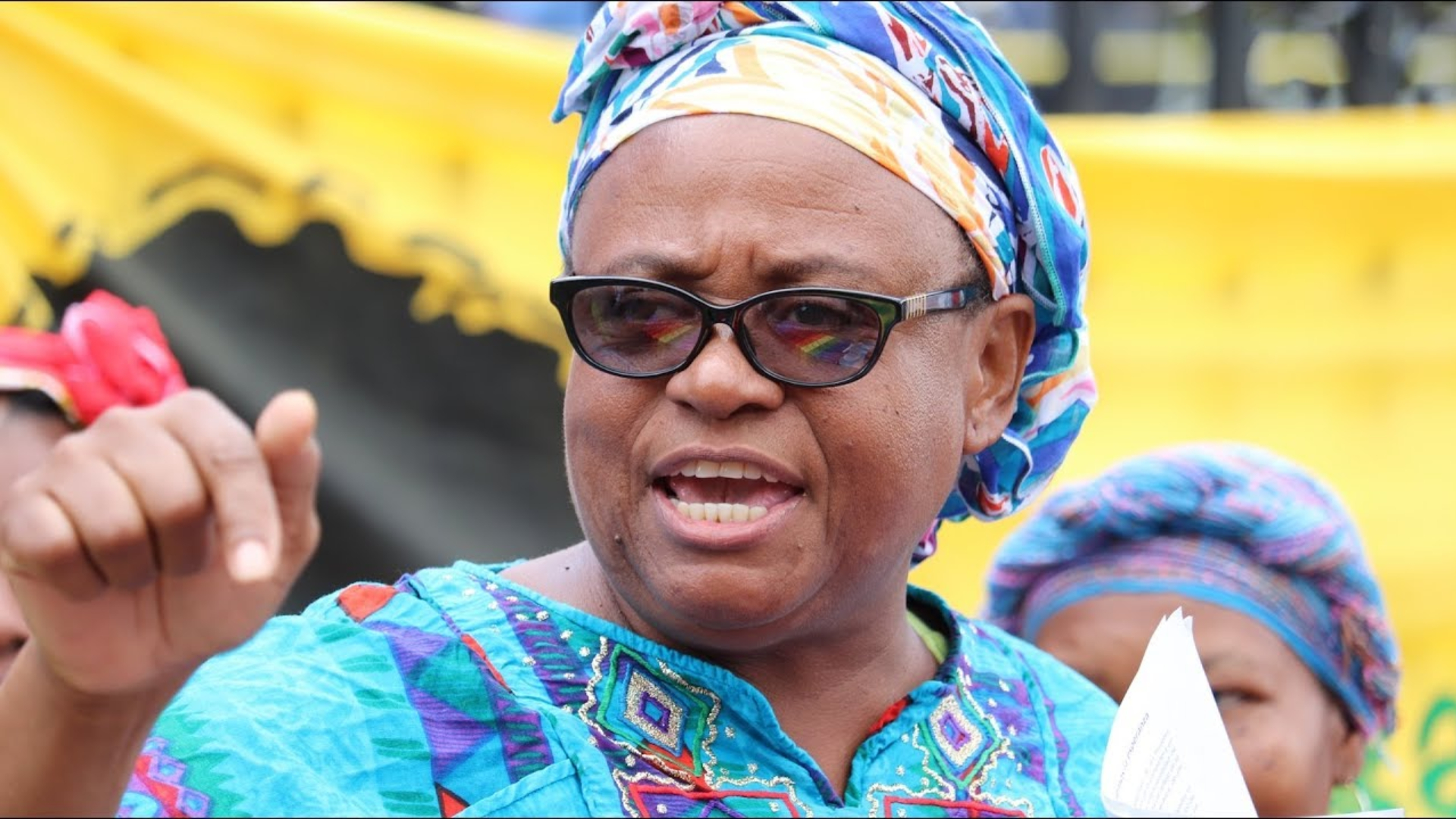
This course examines historical, critical and theoretical perspectives on the development of Black feminist theory/praxis. The course draws from the 19th century to the present, but focuses on the contemporary Black feminist intellectual tradition that achieved notoriety in the 1970s and initiated a global debate on “Western” and global feminisms. Central to our exploration is the analysis of the intersectional relationship between theory and practice, and of race, to gender and class. We conclude the course with the exploration of various expressions of contemporary Black feminist thought around the globe as a way of broadening our knowledge of feminist theory.
- Instructor: Paul Joseph Lopez Oro
Category: Spring 2020-2021
Course Description:
Colloquium: Methods of Inquiry in Africana Studies is designed to introduce students to how we do the work of Africana Studies. Through study of a single topic, students will be introduced to and employ methods of inquiry that speak to the interdisciplinary and multidisciplinary nature of the field of Africana Studies.
Focused on Blackness and water (broadly conceived), this course will tend to Tiffany Lethabo King’s claim in The Black Shoals, Offshore Formations of Black and Native Studies that “Water, most often the ocean, has been Black studies’ most faithful metaphor”:
Land is not the traditional element used to analogize Black flux or
think about dynamic, fluid, and ever moving Black diasporic subjectivity.
Rarely does land evoke the kind of flexibility, elusiveness, and trickster-like
qualities that Black diasporic life symbolizes in the Western Hemisphere.
Water, most often the ocean, has been Black studies’ most faithful metaphor.
Across eight framing units, students will read/view/listen to works by Black scholars, writers, and creatives that showcase the ways in which Africana Studies, in praxis, interfaces with water (broadly conceived). Once introduced to a variety of methods in Africana Studies, students will then apply those methods to a selection of corresponding texts/media on Blackness and water (broadly conceived). Framing units include but are not limited to Black Atlantic Oceanics as Archive, African Atlantic Water Cultures, The Liquid of Black Freedoms, and The Oceanic Age of Blackness.
- Instructor: Karla Zelaya
Category: 2023 Fall Semester
Course Description:
This course will examine the U.S. Black autobiographical tradition from its beginnings in the eighteenth century to its present iterations. Black autobiography will be constituted broadly to include long-form prose, slave narratives, poems, a sketch, essays, a biomythography, and a meditation. The course will privilege the study of the Black autobiographical tradition as a literary tradition. As such, we will consider questions of form, genre, publication history, narrative voice, language, audience and other literary markers critical to understanding the literariness of Black autobiographies. We will also consider the socio-political, historical, and economic milieus that shaped Black autobiographers’ lives and the telling of their stories. As we journey through the Black autobiographical tradition, I invite us to consider how Black autobiographies and autobiographers engaged and continue to engage the central meditation-cum-query found in Carolyn Rodgers’ poem, Breakthrough:
How do I put myself on paper
The way I want to be or am and be
Not like any one else in this
Black world but me (12-15).
- Instructor: Karla Zelaya
Category: 2023 Fall Semester
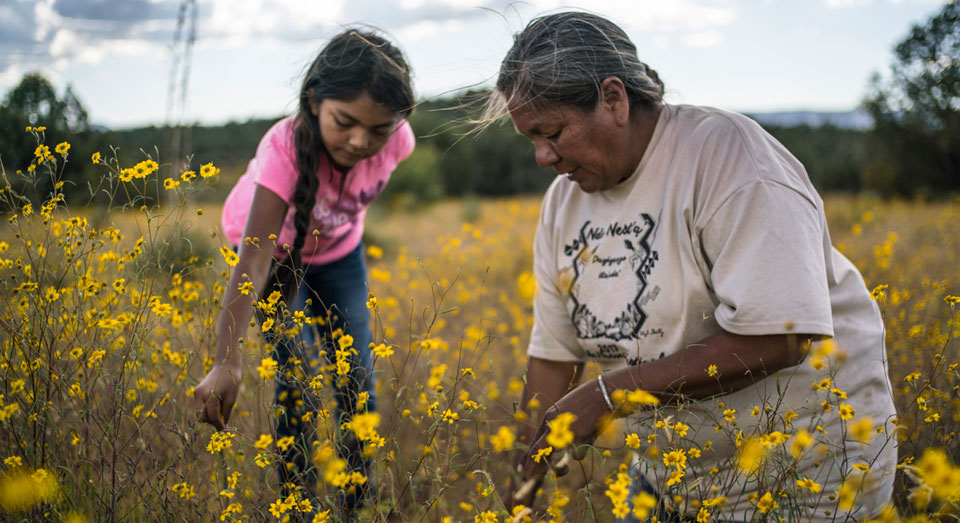
It is often noted
in mainstream news media that Indigenous peoples are “on the front
lines” of the climate crisis, while providing little explanation as to
why this is. Narratives of inherent Indigenous vulnerability obscure the
ways in which Indigenous communities have mobilized to navigate
environmental change, not only in the face of contemporary global
warming, but historically, as settler colonial incursions radically
transformed landscapes and constrained Indigenous knowledge practices
that have provided tools for adaptation for thousands of years. This
course considers how Indigenous climate vulnerability is largely a
product of settler colonialism—not only a process and system, but also a
particular way of understanding and relating to the nonhuman
environment.
- Instructor: Kaden Jelsing
Category: 2024 Spring Semester
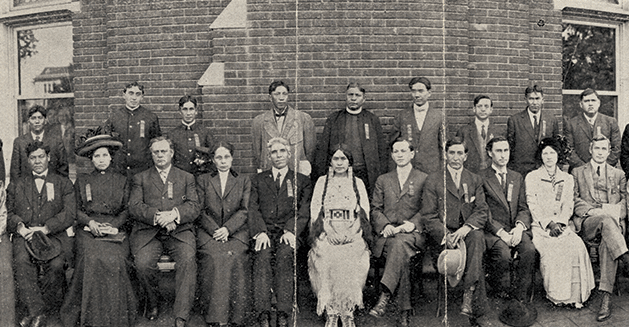
Long before
settler colonialism was developed as a theoretical lens and settler
colonial studies emerged as an academic field, Indigenous peoples in
North America were approaching it through their own knowledge traditions
and frameworks. This course centers the long history of Indigenous
theoretical understandings of settler colonialism: through the work of
“prophets” and visionaries like Handsome Lake (Seneca) and Tenskwatawa
(Shawnee), “Red Progressives” like Zitkala-Să (Lakota), post-WWII
intellectuals like Vine Deloria Jr. (Standing Rock Sioux), and many
more. The course also considers how critiques of settler colonialism
have been embedded in Indigenous future imaginaries and have been an
integral part of the emergence of Indigenous internationalism in the
20th century.
- Instructor: Kaden Jelsing
Category: 2024 Spring Semester
- Instructor: Lili Kim
Category: 2023 Fall Semester
In this course, we will survey the history of American political conservatism since World War II, with particular emphasis on the present moment. The goal of this course is to help students gain (1) a factually grounded understanding of the recent history of political conservatism in the U.S. and (2) a facility with basic theoretical concepts – such as power, ideology, discourse, identity, representation, and affect – that offer insight into political conservatism and the broader contours of American political life.
Topics covered will include the various ideological strains that inform American conservatism (traditionalism, neoliberalism, neoconservatism, Christian evangelicalism, white nationalism); the affective styles and strategies that animate conservative politics; the institutional networks that support conservative coalition-building and the propagation of conservative ideas (media, think tanks, PACs); and the “tribal” polarization of the American political parties around issues such as race, gender, sexuality, climate change, and gun control. We will seek especially to analyze and interpret the election of Donald Trump as the nation’s 45th president.
Topics covered will include the various ideological strains that inform American conservatism (traditionalism, neoliberalism, neoconservatism, Christian evangelicalism, white nationalism); the affective styles and strategies that animate conservative politics; the institutional networks that support conservative coalition-building and the propagation of conservative ideas (media, think tanks, PACs); and the “tribal” polarization of the American political parties around issues such as race, gender, sexuality, climate change, and gun control. We will seek especially to analyze and interpret the election of Donald Trump as the nation’s 45th president.
- Instructor: Lane Hall-Witt
Category: Spring 2017-2018
- Instructor: Lane Hall-Witt
Category: 2024 Spring Semester
- Instructor: Lane Hall-Witt
Category: 2023 Spring Semester
- Instructor: Lane Hall-Witt
Category: 2021 Fall Semester
- Instructor: Lane Hall-Witt
Category: 2026 Spring Semester
- Instructor: Lane Hall-Witt
Category: 2025 Spring Semester
What is the relationship between objects and ideas? How do objects both individually and collectively convey patterns of everyday life? This seminar draws upon the disciplines of history, art and architectural history, landscape studies, anthropology, archaeology, and cultural geography to examine the material culture of New England from the earliest colonial settlements to the Victorian era. It introduces students to the growing body of material culture studies and the ways in which historic landscapes, architecture, archaeology, furniture, textiles, art, metals, ceramics, foodways, and domestic environments can be interpreted as cultural documents and as historical evidence. We will explore objects not only as finished products but also the processes by which they were made and the makers who produced them. NOTE: The class will meet at Historic Deerfield in the Bartels Seminar Room in the Flynt Center of Early New England Life unless otherwise noted.
- Instructor: Erika Gasser
Category: 2024 Spring Semester
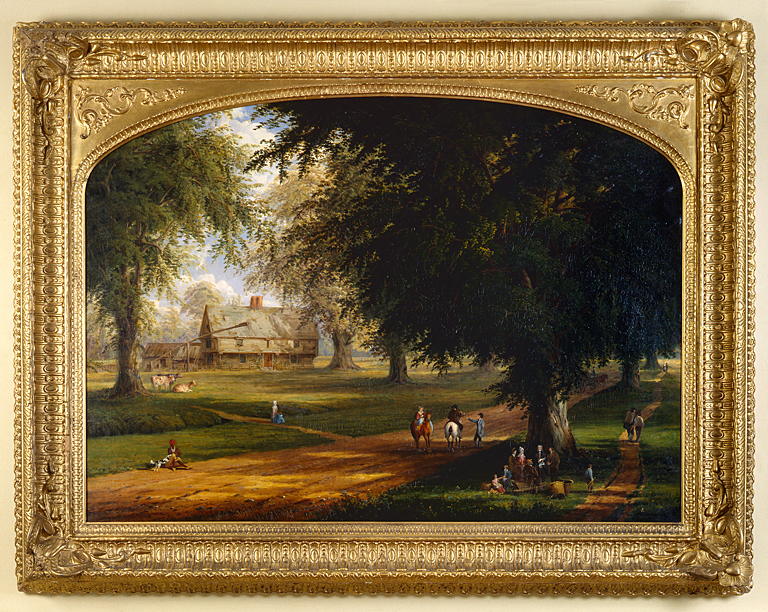
What is the relationship between objects and ideas? How do objects both individually and collectively convey patterns of everyday life? This seminar draws upon the disciplines of history, art and architectural history, landscape studies, anthropology, archaeology, and cultural geography to examine the material culture of New England from the earliest colonial settlements to the Victorian era. It introduces students to the growing body of material culture studies and the ways in which historic landscapes, architecture, archaeology, furniture, textiles, art, metals, ceramics, foodways, and domestic environments can be interpreted as cultural documents and as historical evidence. We will explore objects not only as finished products but also the processes by which they were made and the makers who produced them. NOTE: The class will meet at Historic Deerfield in the Flynt Center of Early New England Life unless otherwise noted.
Category: 2026 Spring Semester
- Instructor: Kevin Rozario
Category: Fall 2017-2018
- Instructor: Christen Mucher
Category: Spring 2018-2019
This course is an introduction to major themes in social and cultural anthropology. We will examine the concepts, methods, and theories anthropologists employ to understand the unity and diversity of human experiences across different regional contexts, with an emphasis on social, cultural, political, and economic systems of inequality.
Perhaps you are taking this course because you are interested in becoming an anthropology major. Perhaps you are considering pursuing a career in anthropological research. If this is your situation, this course is a great place to start. But for many others – maybe even a majority of you – this might be the first or only anthropology course you will take at Smith – though I hope you will be inspired to take more! By the end of this course, you will learn what it means to “think anthropologically” in ways that I hope can serve you in any career path you choose and in your everyday life, at Smith and beyond.
To “think anthropologically” is much more than a specialized course of study; it is a way of observing and understanding the diverse practices, ideas, and sentiments through which human beings build their daily lives in an ever-changing world. Thinking anthropologically is a mode of asking critical questions about what human beings share in common and what makes us distinct from each other. Thinking anthropologically means learning to pay attention to conditions, perspectives, and structures of inequality that are often taken for granted or invisible. It gives us a conceptual tool-box for analyzing deeply complex topics like culture, race, and gender in more critical and nuanced ways.
The cornerstone of anthropological research is ethnographic fieldwork, which is a qualitative method based on long-term participatory observation among particular groups of people in specific places. Such an immersive, fine-grained approach to research allows anthropologists to analyze how ordinary people experience the pressing challenges of our time, from issues of racism to histories of colonialism, to forced displacement, to climate change, to economic crisis.
Thinking anthropologically also means critically engaging with the discipline’s origins and the fraught histories of colonialism, racism, and inequality in which anthropology — like all modern academic disciplines — is embedded. In the first few weeks of the semester, we will trace anthropology’s intellectual roots in 19th- and early 20th-century debates in Europe and North America about evolution and the “scientific” study of human diversity. We will then consider how anthropological research has critically evolved in relation to this history. Throughout the course, we will ask: What texts and topics are considered the “classics” of anthropology, and what does this exclude? What aspects of the classic anthropological enterprise of documenting cultural differences should be retained, and what should be abandoned or rethought? And what does it mean to “decolonize” anthropology today?
- Instructor: China Sajadian
Category: 2022 Fall Semester
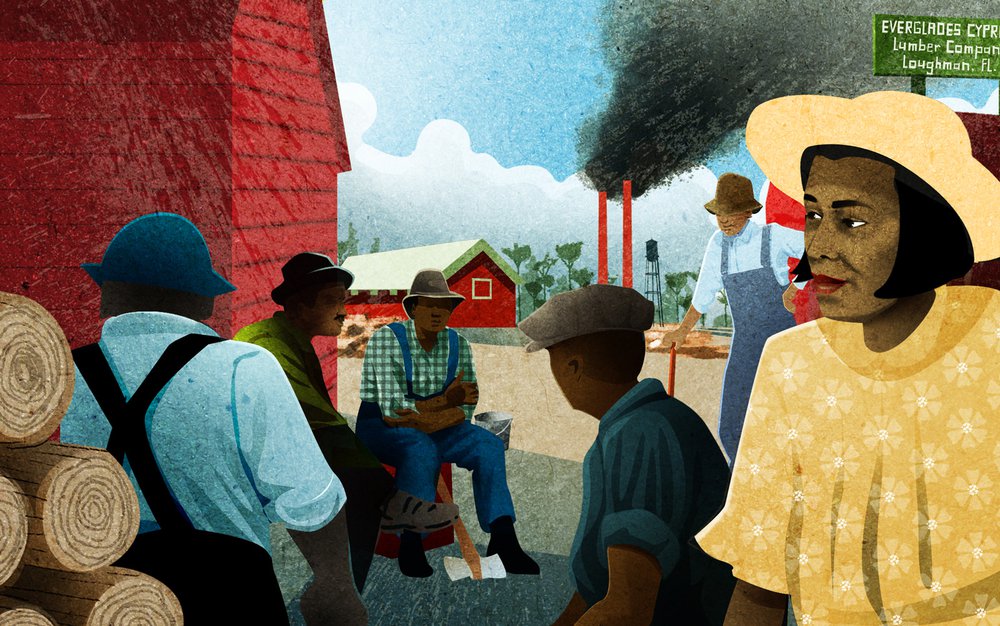
What does it mean to be human? What is culture, and how does it shape the way humans see the world? Why are some forms of cultural difference tolerated, while others are not? As the holistic study of the human experience, cultural anthropology addresses these questions in a world shaped by human migration, climate change, capitalist extraction and global inequality. This course provides an overview of the discipline’s history, its distinctive method of ethnography and the breadth of topics it addresses, including public health, race, the environment, gender, language, nationalism, software design, the body, music, cities, government and more.
- Instructor: Mary Pena
Category: 2023 Fall Semester
Final Research Project Statement
For your Thursday meeting, 9/23, you are to bring a written draft of your research proposal. I will not collect this draft - but it should contain notes, ideas, and questions. You should come prepared to discuss what topic, site, cultural area, etc. you have decided to research and write about. Our meeting time is intended to hone your ideas as you have developed them thus far; please come prepared.
The Research Statement which is due on midnight, Thursday, September 23 on Moodle, should clearly state, in one or two paragraphs (about 250 words) what you propose to research. Avoid generalizations and vague statements, be specific in what you intend to research. Focus on a specific aspect of a given site or culture area, e.g., Çatalhöyük spanned 1,100 years and so it would be important to decide what period you wanted to examine (Early, Middle or Late). Likewise, decide what aspect of life at Çatalhöyük you would you research - health and disease, diet, settlement patterns, ritual and symbolism, gender, domestic plants and/or animals, etc. The field is limitless! I suggest choosing a topic you are interested in learning more about.
I look forward to seeing you on Thursday. Please stay tuned for where our meetings will take place; I am still hoping to meet under the pagoda, with a sweater and a thermos of tea if necessary!
Thank you,
Professor Mangan
- Instructor: Patricia Mangan
Category: 2021 Fall Semester
As people around the world flee ecological, political, and economic disasters in growing numbers, it has become a basic truism to say that we are living in an age of “migration crisis.” The United Nations High Commissioner for Refugees estimated recently that over 84 million people around the world are living in conditions of forced displacement, which is the highest number on record since World War II. These numbers look much larger if we include labor migrants: between 1970 and 2012, the number of transnational migrants worldwide doubled to 232 million.
But what exactly does it mean to be displaced? Who counts as a refugee, and what makes them different from labor migrants? How have certain forms of migration come to be labeled “illegal”? Why are some forms of migration deemed “voluntary” in contrast to others? Where do these distinctions come from and how do they matter in everyday life? This course sets out to address such questions, among many others, by introducing students to the anthropological study of displacement, migration, and transnationalism. Through a close engagement with scholarly texts and visual media, we will pursue two interrelated tracks of inquiry that extend across the arc of this course.
One track is historical: we will continuously revisit the historical legacies of the 20th-century transnational migration regime, the postcolonial formation and partition of nation-states, the emergence of an uneven and globalized division of labor across the world, and how these fraught histories continue to shape the politics of transnational human mobility until today.
Our second line of inquiry is primarily ethnographic: it concerns the paradoxical conditions of displacement in everyday human experiences, such as waiting in transit, being-in-place while being displaced, making a home in exile, pursuing the “good life” in conditions of alienation, and the striking capacity of borders to seem invisible or real to the point of being deadly, depending on who or what crosses them, and how.
The course is organized into six thematic units, guided by questions such as: What kinds of social relationships and conflicts are formed through migration? How are borders governed and contested? How are classed, gendered, and racialized notions of labor, the self, and the family reconfigured by human migrations and immobilities across borders? How are the legacies of colonialism and capitalist extraction embedded in contemporary population movements and states’ efforts to manage them? And how do such histories shape the possibilities and limits of transnational solidarity today?
By the end of the semester, students will be able to:
Identify major debates, aims, and methods in the anthropological study of displacement, migration, and transnationalism
Gain new analytical tools for understanding the historical, cultural, and political significance of human migratory processes in the 20th- and 21st-century
Understand the politics of representing displacement through analysis of visual media and material culture, particularly ethnographic films
Develop empirically-grounded and theoretically rigorous critiques of many taken-for-granted assumptions about displacement, particularly the conventional dichotomy between migrants and refugees
Gain comparative knowledge of specific practices and ideas related to human migration and displacement in a range of global and regional contexts. These include, among others, the partition of the Indian subcontinent, the making of British colonial subjects into “immigrants,” women electronic factory workers in China’s Special Economic Zones, Mexican farmworkers in the United States, Palestinian refugees in Lebanon and the making of the modern humanitarian refugee regime, struggles over Central Asia’s post-Soviet borders, the politics of displacement in austerity Europe, North American indigenous politics across borders, and Black feminist practices of transnationalism
- Instructor: China Sajadian
Category: 2023 Spring Semester
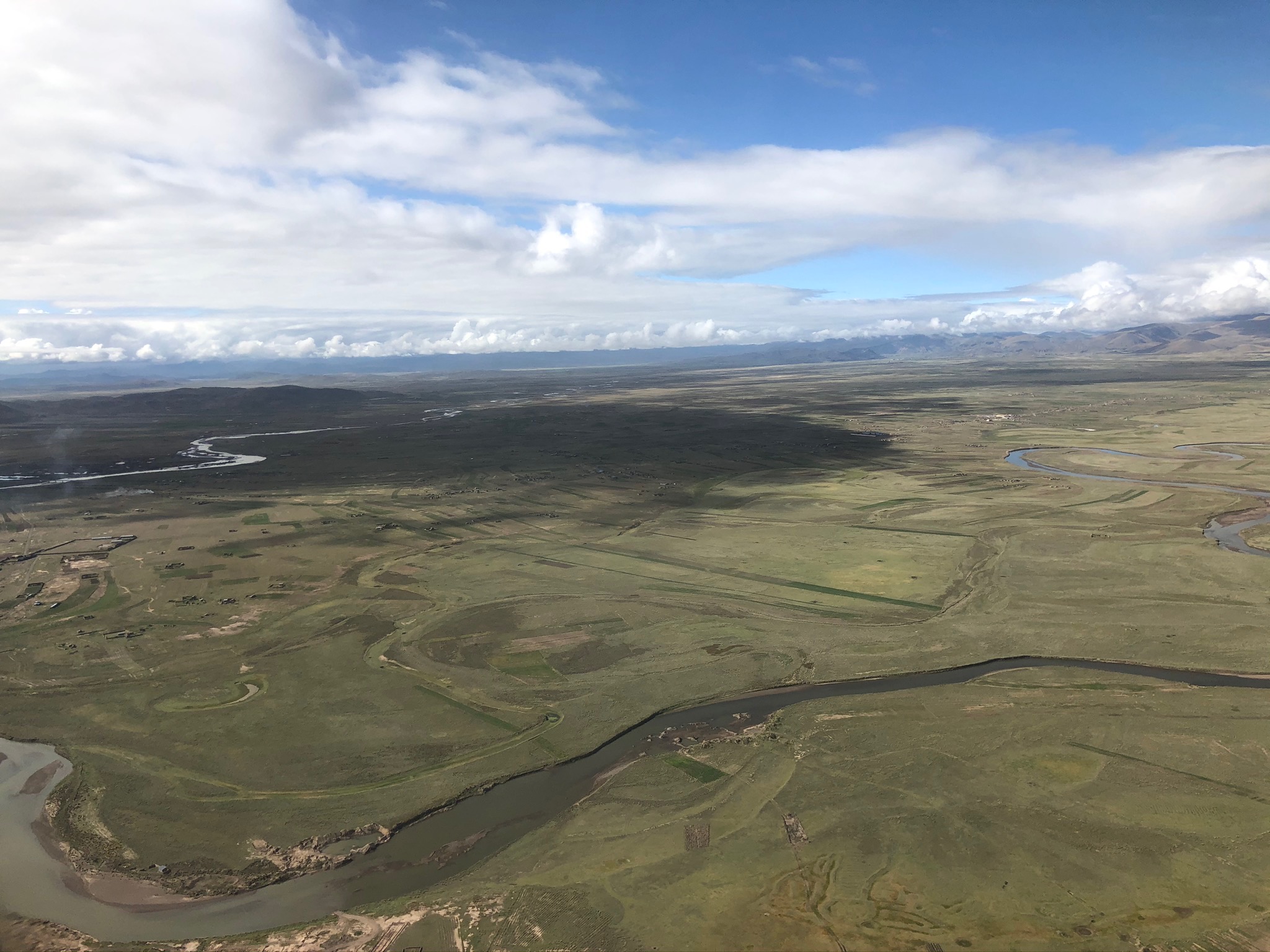
What is the archaeology of food?
This course explores how archaeologists study past foodways—from adaptive and social perspectives—and also asks students to consider the complex relationships between past, present and future food systems. This is a highly interdisciplinary field of study that integrates data sets from environmental science, botany, zoology, human anatomy, and geochemistry, among others. It is also a field that addresses a diversity of economic, political, and social issues from an explicitly anthropological perspective. In other words, what can we understand about past human behavior and lifeways by analyzing charred plant remains, abandoned cooking areas, old pottery, and ancient trash dumps? To address these questions, the course is divided into three units: (1) an overview of the archaeology of food, focusing on both methods and theory; (2) a case study on maize, examining its domestication and spread; and (3) a collaborative exploration of global plant histories, highlighting the Smith College collections.
- Instructor: Elizabeth Klarich
Category: 2022 Spring Semester
This course is an archaeological and ethnographic introduction to the history and cultures of indigenous South America, from the earliest settlements to contemporary communities. We will discuss the initial peopling of the continent, Pre-Columbian socio-political organization, native cosmologies, ecological adaptations, challenges to cultural survival, and modern indigenous mobilizations. Both continuity and dynamism of ancient and modern lifeways will be explored through readings, lectures, and films throughout the semester.
- Instructor: Elizabeth Klarich
Category: Spring 2018-2019
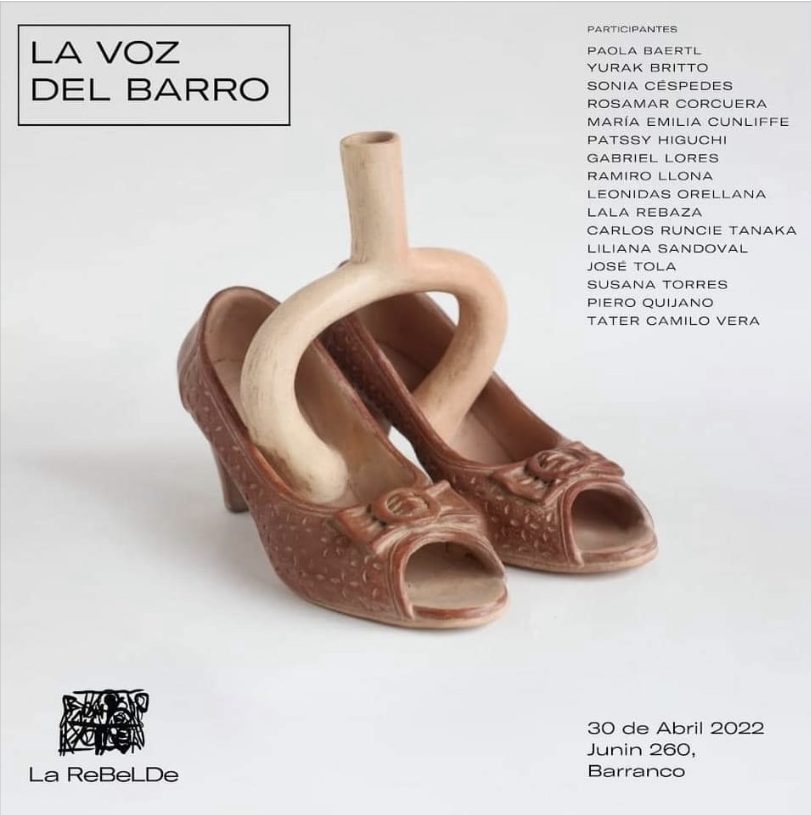
Topic: Pondering Pottery. Pottery-- both fragments and whole vessels-- is ubiquitous in the archaeological record and provides insights into technological choices, shifting styles, food-related practices, economic relationships, and many other aspects of past lifeways. In this course we will focus on how archaeologists collect, analyze, interpret, and present information about pottery from diverse contexts across the globe. Students will have the opportunity to conduct independent research on fragmentary and complete pottery vessels and we will also utilize ethnographic and historical studies of potters to expand our understanding of these practices today.
- Instructor: Elizabeth Klarich
Category: 2023 Spring Semester
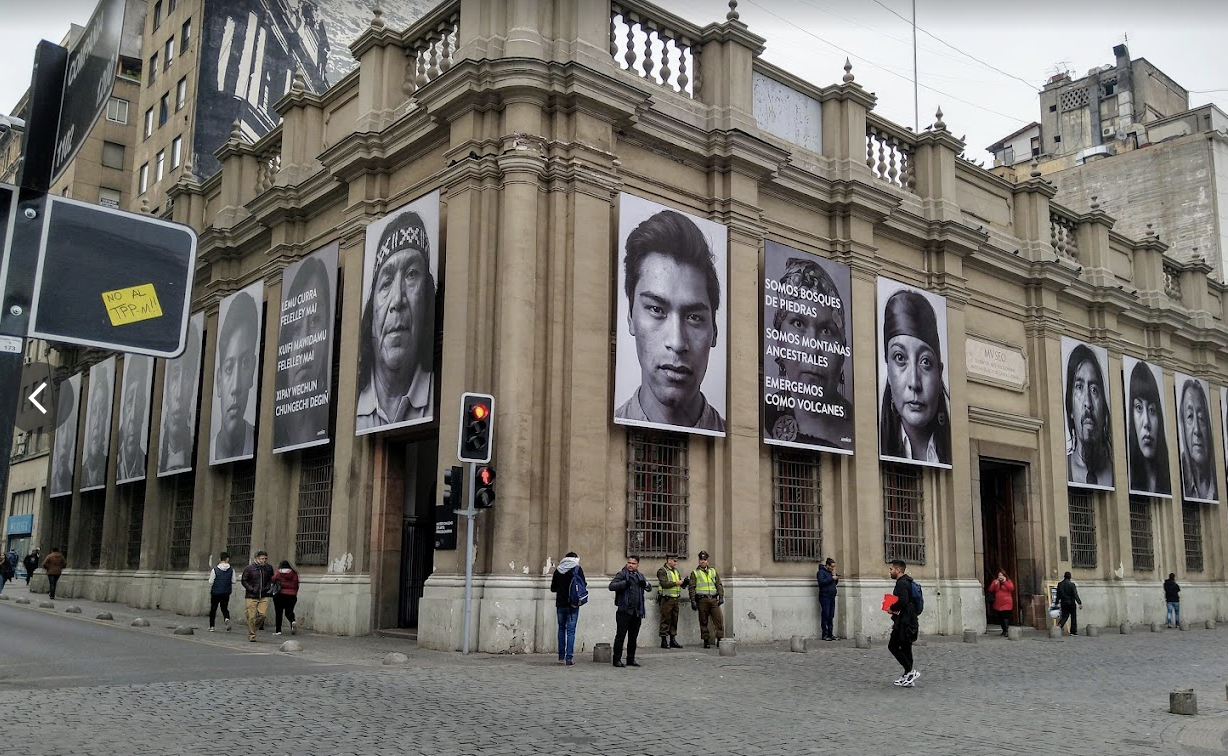
- Instructor: Dana Leibsohn
Category: 2024 Spring Semester
- Instructor: Dana Leibsohn
Category: 2024 Spring Semester
This course is designed to introduce you to the field of art history, that is, to what art historians of any specialty do when we study works of art. It broaches several topics within the history of art such as site-specific installation, the readymade, the history of commemorative sculpture, and the convergence of photography and performance art. It is not a survey but instead features a series of seminar-like explorations into particular works of art. Divided into four units, it will facilitate consideration of the ways in which artists reference and converse with-- sometimes intentionally, sometimes not-- previous art historical periods and genres, as well as cultural and visual traditions more broadly. Each unit in the course begins with and hinges on a close examination of a contemporary art piece. Subsequent weeks in each unit dive into the various topics integral to the study of those particular works. When we focus on Mickalene Thomas’s A Little Taste Outside of Love (2007), for instance, we will address the reclining female nude, the concept of the gaze, the collage aesthetic, the legacy of Orientalism and “othering,” and finally the visual rhetorics of Blackness and post-Blackness in the history of art. By the end of the course, you should have an intimate sense of some critical art historical tropes, as well as the deep investigative work of art history that incorporates related fields of social, political, and cultural history, as well as material and popular culture.
- Instructor: Clara Barnhart
Category: 2022 Spring Semester
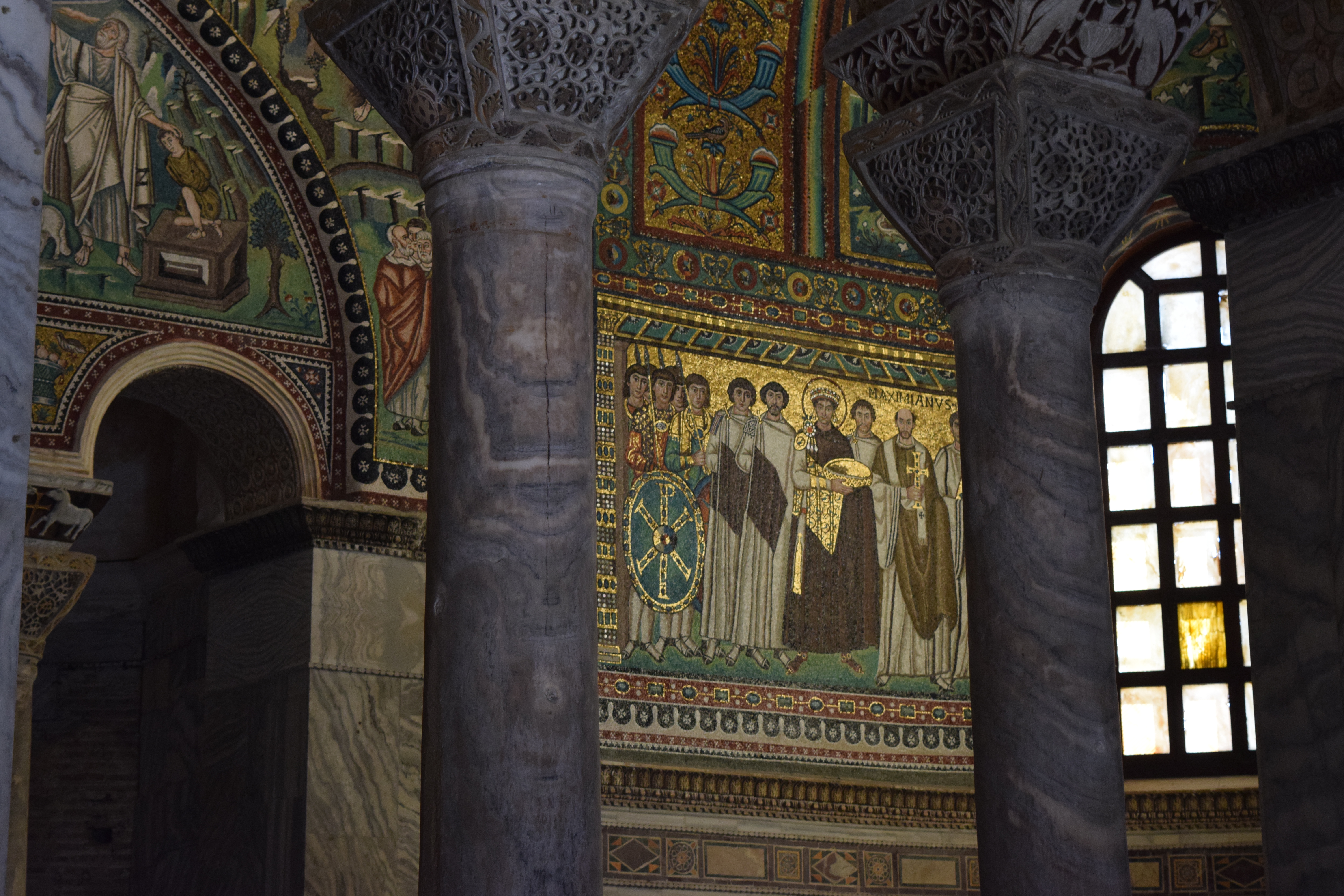
To step inside a medieval cathedral is still a profound experience. Nowadays, their majestic heights and elegant forms are objects of quiet contemplation. Yet medieval buildings were seldom still or silent, and their audiences were rarely disinterested observers. This course surveys the architecture of Europe and the Mediterranean between the fourth and the fifteenth centuries. Together, we will explore the development of the distinctive forms of medieval architecture in both the East and the West—from churches and monasteries to mosques, synagogues, cities, and palaces—and how these spaces were activated in contexts of ritual, liturgy, and performance.
- Instructor: Samuel Barber
Category: 2026 Spring Semester
- Instructor: Emma Silverman
Category: Fall 2018-2019

This course (which
is, I think, unique in a liberal arts college curriculum) is a survey of the
genre of artist’s books from its beginnings in the political and artistic
avant-garde movements of Europe at the turn of the 20th century through
contemporary American conceptual bookworks. In particular, the course will
examine the varieties of form and expression used by book artists and the
relationships between these artists and the socio-cultural, literary, and
graphic environments from which they emerged. Along the way we will also
explore the relationship of the artists book to other genres of artistic
expression, including sculpture, architecture, conceptual art, and performance
art. In so doing I hope to help you to develop critical skills – that is, how
to look at, describe, and talk about complex works of art – and to interact
with them on several levels.
- Instructor: Martin Antonetti
- Instructor: Anna Helgeson
Category: 2024 Spring Semester
- Instructor: Dana Leibsohn
Category: 2025 Spring Semester
- Instructor: Matthew Durand
- Instructor: Claire Farago
Category: 2021 Fall Semester
- Instructor: Barbara Kellum
Category: Spring 2016-2017
- Instructor: Yanlong Guo
Category: 2024 Fall Semester
This course will focus on understanding socio-ecological relationships and how that might inform different ways in making artwork. Students will learn to use research as a tool for developing projects and how research can strengthen one’s studio practice. We will focus on various themes such as waste, land, water, food, plants, trees, and biodiversity, engaging with the contemporary art practices in these themes. How are today’s artists responding to the environmental transformation?
We will discuss readings on these topics and how colonialism past and present impacts the environment and a whole ecosystems. Students will engage in critique and will be encouraged to experiment in studio making to create independent projects. These projects will be exhibited at the end of the seminar.
This course will be a combination of lectures, discussions, studio making, and critiques.
- Instructor: Naoe Suzuki
Category: 2024 Fall Semester
- Instructor: Lindsey Clark-Ryan
Category: Spring 2020-2021
- Instructor: John Gibson
Category: Spring 2016-2017
This
course will introduce students to several SSC collections of individual papers
and organization records that shed light on the fight for economic justice,
especially for American women, both white and of color. In addition to some short secondary source
readings, students will then choose pre-selected documents from 14 designated
collections and in conversation with each other, both in class and in five
written responses on Moodle, discuss the ways in which a particular individual
or organization has addressed issues of economic injustice, what worked, what
did not, what needs to happen next. (1
credit)
- Instructor: Kathleen Nutter
Category: Jan2016
- Instructor: Christen Mucher
Category: 2023 Spring Semester
- Instructor: Cornelia Pearsall
Category: 2026 Spring Semester
- Instructor: Christen Mucher
Category: 2023 Spring Semester
- Instructor: Kimberly Ward-Duong
Category: 2022 Fall Semester
- Instructor: Kimberly Ward-Duong
Category: 2024 Fall Semester
- Instructor: Kimberly Ward-Duong
Category: 2022 Fall Semester
- Instructor: Kimberly Ward-Duong
Category: 2023 Spring Semester
- Instructor: Kimberly Ward-Duong
Category: 2022 Fall Semester
- Instructor: Marney Pratt
Category: Fall 2017-2018
- Instructor: Michael Barresi
Category: Spring 2019-2020


- Instructor: Lauren Anderson
- Instructor: Christophe Golé
- Instructor: Reyes Lázaro
- Instructor: Abril Navarro
Category: Kahn Institute
- Instructor: Jay Garfield
Category: Spring 2016-2017
Category: Spring 2016-2017
Category: Spring 2015-2016

Instructor and Office hours
陳雅琳 Yalin Chen ylchen@smith.edu
Office hours: T & Th 1:30-2:30 pm (sign up here to avoid wait time), and by appointment
Office hour Zoom meeting link: https://smith.zoom.us/my/yalinchen
Chen laoshi will hold office hours on Zoom, but can also meet in person with advance notice.
- Instructor: Yalin Chen
- Instructor: Abril Navarro
Category: 2022 Spring Semester

- Instructor: Kevin Shea
Category: 2022 Fall Semester
- Instructor: Kevin Shea
Category: 2023 Spring Semester
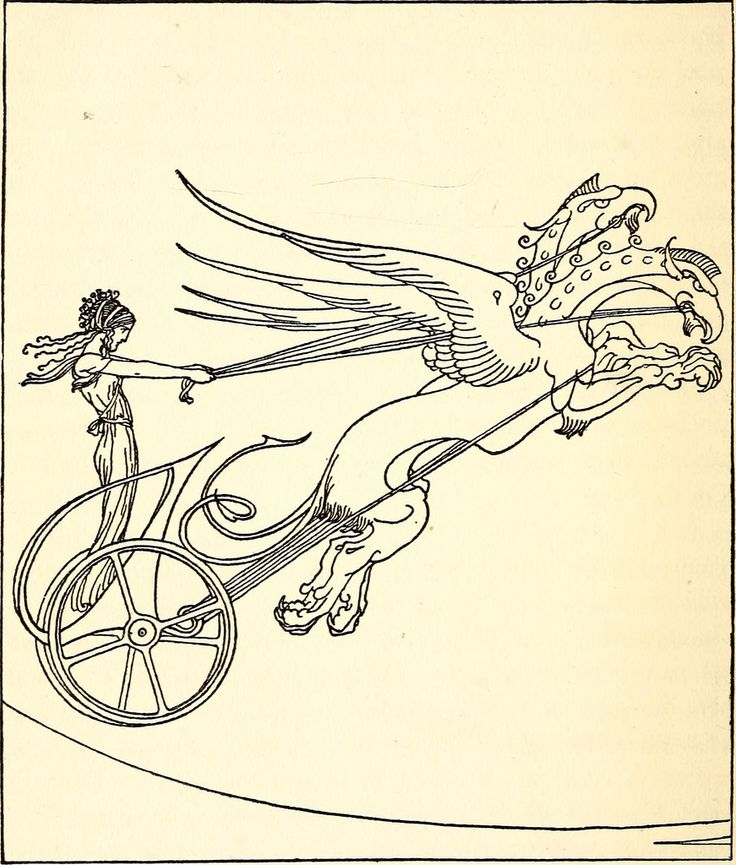
Greek and Roman mythology lies at the core of much of modern culture. For the ancients, myth was a religion, a method for addressing anxieties, a way of adding structure to the world and a means of communicating values from one generation to the next. For centuries, myth has been a favorite subject matter for authors and artists of all types. This course investigates the social, religious and historical contexts of Greco-Roman myths as they appear in ancient sources as well as the theoretical lenses we might use to interpret them. Additionally, much of class will be focused not just on ancient representations of myth, but their reception in popular culture since antiquity.
- Instructor: Colin MacCormack
Category: 2024 Fall Semester
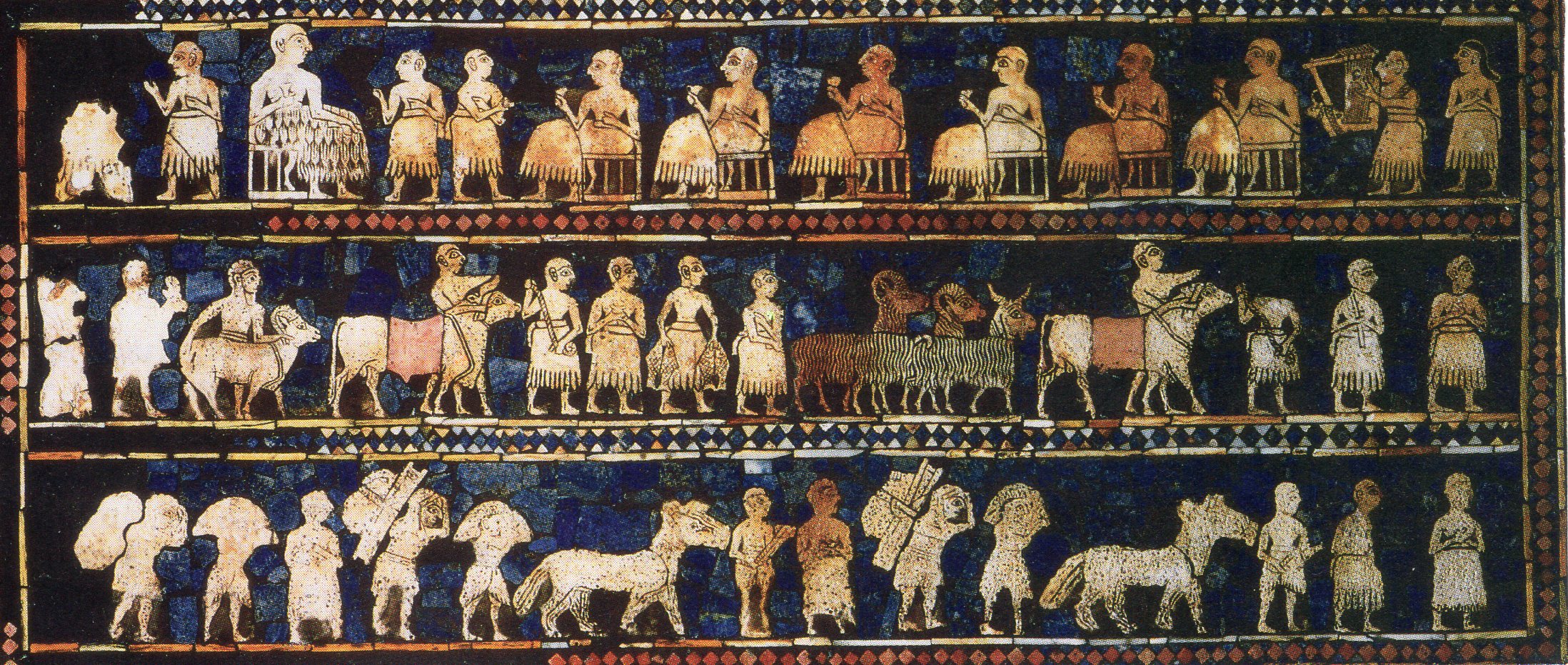
For many of us, the Mediterranean Bronze Age is associated with mythological heroes like Achilles and Hercules, or legendary events like the Trojan War. But how did the people of the Bronze Age actually live? This course surveys the archaeology of the eastern Mediterranean Bronze Age, including Egypt, Mesopotamia, Anatolia, and the Aegean, from about 3000 to 1100 BCE. We will explore not only the well-known pyramids and palaces of the period, but also the evidence for day-to-day living, from crafts production to religious ritual. We will also examine how these cultures interacted, and the Mediterranean networks that both allowed them to flourish and may have led to their downfall. Finally, we will critically consider aspects of modern archaeological work in this area and the romantic interest in the period.
The first portion of the course will cover the development of the various cultures of the eastern Mediterranean during the Early and Middle Bronze Ages (ca. 3000-1600 BCE). We will focus on the prosperous international relationships that led to a floruit in art, architecture, and material wealth for many of these groups. For the last portion of the course, we will turn our attention to the sudden collapse of these cultures at around the same time in the 12th c. BCE.
The first portion of the course will cover the development of the various cultures of the eastern Mediterranean during the Early and Middle Bronze Ages (ca. 3000-1600 BCE). We will focus on the prosperous international relationships that led to a floruit in art, architecture, and material wealth for many of these groups. For the last portion of the course, we will turn our attention to the sudden collapse of these cultures at around the same time in the 12th c. BCE.
- Instructor: Rebecca Worsham
Category: Spring 2020-2021
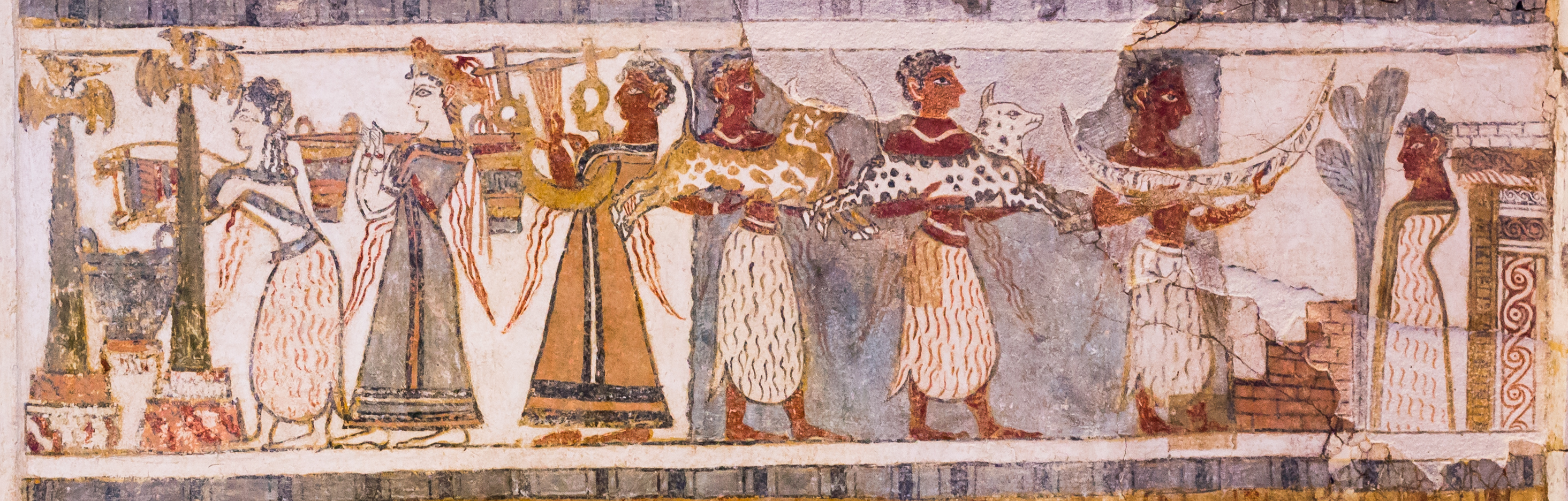
For many of us, the Mediterranean Bronze Age is associated with mythological heroes like Achilles and Hercules, or legendary events like the Trojan War. But how did the people of the Bronze Age actually live? This course surveys the archaeology of the eastern Mediterranean Bronze Age, including Egypt, Mesopotamia, Anatolia, and the Aegean, from about 3000 to 1100 BCE. We will explore not only the well-known pyramids and palaces of the period, but also the evidence for day-to-day living, from crafts production to religious ritual. We will also examine how these cultures interacted, and the Mediterranean networks that both allowed them to flourish and may have led to their downfall. Finally, we will critically consider aspects of modern archaeological work in this area and the romantic interest in the period.
The first portion of the course will cover the development of the various cultures of the eastern Mediterranean during the Early and Middle Bronze Ages (ca. 3000-1600 BCE). We will focus on the prosperous international relationships that led to a floruit in art, architecture, and material wealth for many of these groups. For the last portion of the course, we will turn our attention to the sudden collapse of these cultures at around the same time in the 12th c. BCE. Goals of the course include:
1) To gain familiarity with the art, architecture, and material culture of the eastern Mediterranean Bronze Age, and explore how modern archaeologists have romanticized these cultures.
2) To think critically about the power structures and international relationships of the period, and how these cultures cooperated or worked against each other, drawing parallels with the modern world and particularly thinking about correspondence.
3) To explore ideas about the collapse of civilizations, and the environmental and social factors that may lead to such dramatic changes.
4) To consider how archaeological narratives are constructed for popular consumption.
- Instructor: Rebecca Worsham
Category: 2025 Spring Semester
- Instructor: Thomas Roberts
Category: Fall 2018-2019
- Instructor: Thomas Roberts
Category: Fall 2017-2018
- Instructor: Rene Heavlow
- Instructor: Jennifer Kennedy
- Instructor: Andrea Lynch
- Instructor: Bre Moeller
- Instructor: Andrea St. Louis
Category: 2024 Spring Semester
- Instructor: Rene Heavlow
- Instructor: Gillian Isabelle
- Instructor: Dave Peak
- Instructor: Andrea St. Louis
Category: 2024 Fall Semester
- Instructor: Rene Heavlow
- Instructor: Jessi Kirley
- Instructor: Kristin Leutz
- Instructor: Ronald Molina-Brantley
Category: 2025 Fall Semester
This course focuses on several advanced programming techniques, with a project for each. We cover the software development cycle, including versioning, code maintenance, cross-platform development, debugging as well as iterative testing and evaluation. Techniques include object oriented programming, asynchronous and event-based programming, server-client development, data exchange via JSON, and graphical user interfaces (GUIs). Students will get familiar with the NetBeans Integrated Development Environment (IDE), learn to develop and debug interactive cross-platform apps written in the Javascript programming language, and use version control for team-based software development (see the Syllabus under http://www.science.smith.edu/fblock/teaching/csc220-advanced-programming-techniques/syllabus/ for the full course description).
- Instructor: Florian Block
Category: Fall 2015-2016
- Instructor: Johanna Brewer
- Instructor: Alicia Grubb
Category: Fall 2019-2020
- Instructor: Johanna Brewer
Category: 2024 Fall Semester
- Instructor: Johanna Brewer
- Instructor: Pablo Frank Bolton
- Instructor: Alicia Grubb
- Instructor: Ileana Streinu
Category: 2021 Fall Semester
- Instructor: Johanna Brewer
Category: 2022 Spring Semester
- Instructor: Johanna Brewer
Category: 2022 Fall Semester
- Instructor: Johanna Brewer
Category: 2023 Spring Semester
- Instructor: Johanna Brewer
Category: 2023 Fall Semester
CSC 249 is an introductory course in computer networks. Our primary focus will be on developing intuitions around the basic performance and engineering tradeoffs in the design and implementation of computer networks. Throughout the semester, we will explore the fundamental architecture of computer networks and how they function today, as well as investigate some of the history that explains why they are designed the way they are and how they are likely to evolve. We will also strive to connect concepts in the design of computer networks to more general topics in the design, implementation and operation of distributed computing systems.
We will draw the majority of our examples from perhaps the most ubiquitous computer network today: the Internet. To help make the concepts we are exploring more concrete, this course will include several hands-on programming projects involving the design and implementation of networked systems.
- Instructor: Brant Cheikes
- Instructor: Shinyoung Cho
- Instructor: R. Jordan Crouser
Category: 2023 Fall Semester
- Instructor: Alicia Grubb
Category: Spring 2020-2021
- Instructor: John Foley
Category: Spring 2018-2019
- Instructor: Alicia Grubb
Category: Fall 2020-2021
- Instructor: Alicia Grubb
Category: Fall 2020-2021
- Instructor: Joseph O'Rourke
Category: Fall 2019-2020
- Instructor: Alicia Grubb
Category: 2022 Fall Semester
- Instructor: Alicia Grubb
Category: 2024 Spring Semester
- Instructor: Alicia Grubb
Category: 2023 Spring Semester
- Instructor: Johanna Brewer
Category: 2023 Spring Semester
- Instructor: Alicia Grubb
Category: 2023 Fall Semester
- Instructor: Alicia Grubb
Category: 2025 Spring Semester
- Instructor: Johanna Brewer
Category: 2024 Fall Semester
Category: Fall 2016-2017
Category: Fall 2015-2016
This class will introduce core techniques present under the umbrella of Contemporary Dance. Through elements of jazz, ballet, modern, and postmodern dance, students will build foundational skills that support further exploration. We'll focus on how movement can arise from both internal impulses and external stimuli, while developing kinesthetic (body) awareness and exploring performance as a possibility. The skills learned here will support not just contemporary dance, but a wide range of dance and theater forms.
- Instructor: Michael Figueroa
Category: 2025 Fall Semester

- Instructor: Tara Murphy
Category: 2022 Spring Semester

- Instructor: Tara Murphy
Category: 2022 Fall Semester
- Instructor: Alpha Kaba
- Instructor: Yun Lee
Category: 2023 Fall Semester
This is an intermediate-level contemporary dance course designed to cultivate sensitive, intelligent, powerful dancing. The intention is to expand and refine not only students’ physical capacities but also their perceptual acuity, creativity, and confidence in movement and performance.
This semester, our dancing practice will also be in relationship to Ross Gay’s The Book of Delights. Short selections of his writing will serve as companions to our dance training, as well as starting points for discussions and templates for the course’s written assignments.The content of the course is eclectic. I have developed the movement material I will share with you through my own professional collaborations and ongoing training, which has been primarily within Western, postmodern contemporary dance. Engaging principles from a variety of somatic practices (including Bartenieff Fundamentals, Klein Technique, and Body-Mind Centering) in addition to yoga, release techniques, and Contact Improvisation, the course aims, on a technical level, to sharpen anatomical and kinesthetic awareness and to refine initiation and articulation within spatially complex material. By improving dynamic alignment, increasing strength and range of motion, and refining awareness, we will seek heightened aliveness in our dancing along with efficient, judicious use of energy. The importance of attention, intention, and imagination in movement will be prioritized throughout.
Why delight?
Delight is an integral facet of my ongoing research and interest. For me, a practice of being in delight—or delighting—is a practice of noticing, following, and investigating what enlivens you, awakens you, sparks your curiosity, draws you in, hypes you up, slows you down, moves you, softens you, emboldens you, connects you, distracts you, comforts you, confuses you. Delighting entails attending to details and nuance. It requires an openness to being touched, affected, and changed by what we encounter. The proposition of this class is that a dancing practice may also be a delighting practice—a way of waking up more fully to the world.
This is not to say that everything we do will be delightful—most likely, you will not resonate with everything we cover—nor does it mean we will ignore hardship and struggle. It means only that we will work to remain in relationship to our growing understanding of delight—what it is and what it does—throughout.
- Instructor: Sarah Lass
Category: 2022 Fall Semester
This lab is a graduate level seminar and writing workshop addendum to DAN 272 Dance Anthropology: Performed Identities and Embodied Cultures. The seminar situates and integrates ethnographic study with regards to the needs of the artist-scholars of the MFA in Dance program. In its focus on autoethnographic method, the lab is designed to deepen consideration of the positionality of the artist’s practice within the contemporary dance world by placing it in dialogue with current conversations in the field of dance studies alongside an excavation of personal cultural influences. In the lab we address such questions as:
What is autoethnography?
What is the positionality of my dancing/teaching/making within a broad contemporary discourse?
How might autoethnographic research influence my dancing/teaching/making and how might my dancing/teaching/making be material for autoethnography?
How is autoethnography similar to ethnography and what makes it distinct?
Which critical theories am I drawn to and how might I apply them to my work?
How might I incorporate first-person discussion of my dancing/teaching/making within my scholarly writing?
As we read about autoethnographic methods and study examples of them throughout the semester, students identify autoethnographic definitions, strategies and styles, as well as a critical lens to apply to their 15- to 20-page dance-based autoethnography (AE), due at semester’s end. This is an autoethnography, it’s about you and your process! Here is an opportunity to weave your personal and scholarly voice, and to take charge through individualized research to continue developing skills and potential approaches toward your final MFA thesis and production.
- Instructor: Melinda Buckwalter
- Instructor: Olive Demar
Category: Fall 2020-2021
- Instructor: Sujane Wu
Category: 2026 Spring Semester
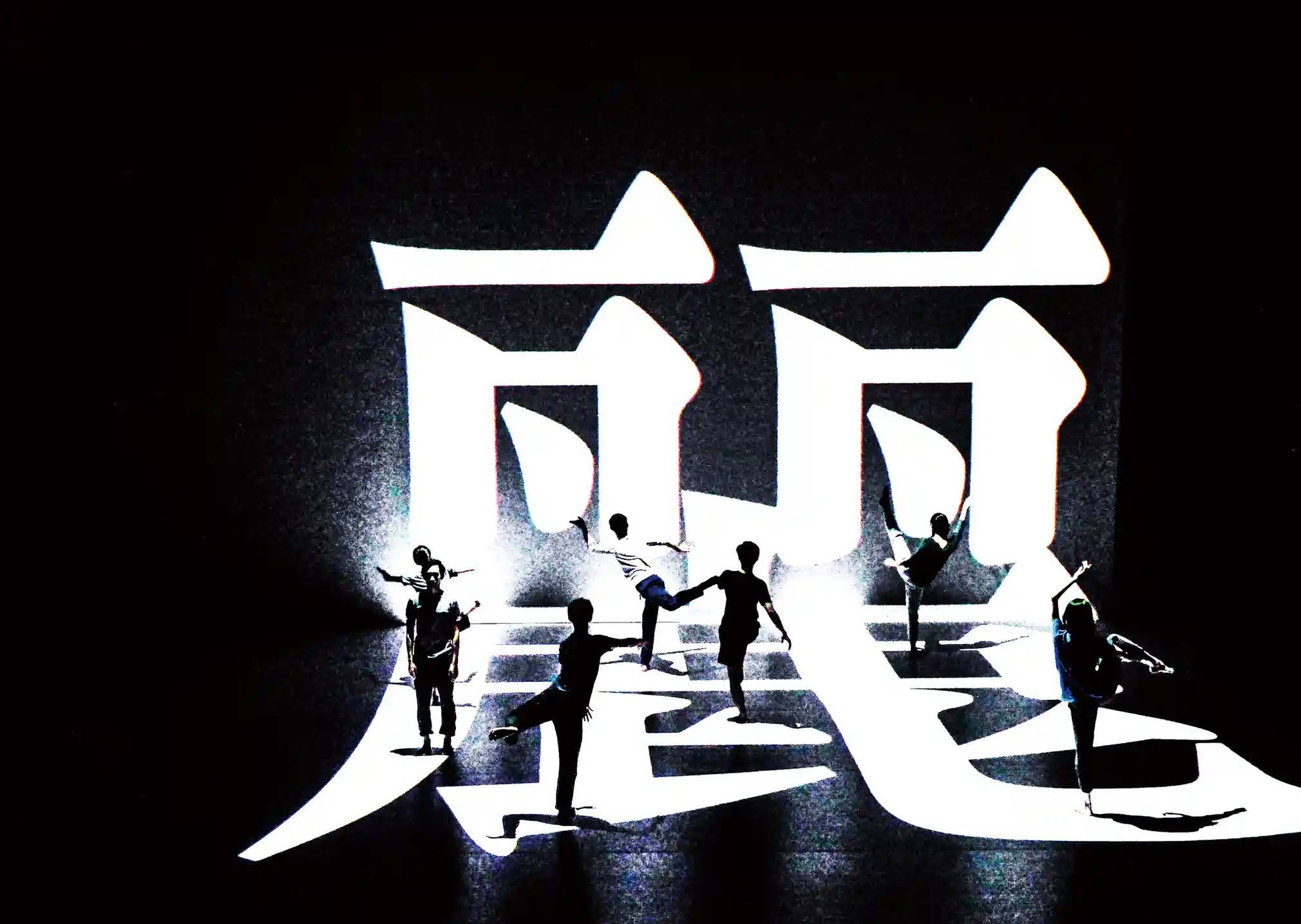
This course explores the representation and construction of Taiwanese identity through various forms of cultural expression, including literature, film, and performance arts. It aims to understand the diverse voices and perspectives present in these cultural productions. By the end of the course, students will be able to articulate their informed perspectives in response to specific questions and connect the topics discussed to their personal experiences.
- Instructor: Sujane Wu
Category: 2025 Spring Semester
- Instructor: Sujane Wu
Category: 2023 Spring Semester
This course offers a survey of the region of the Middle East and North Africa in the late 20th and early 21st centuries, examining economic growth, crisis and structural change in relation to shifting social dynamics and political regimes. Examples from the diverse array of countries across the region illustrate the following themes: interaction with Western capitalism and the global economy; demographic shifts and class transformation; human development, employment, unemployment and the migration of labor; hydrocarbon exports and capital flows; natural resource constraints, agriculture and the environment; state-led development and the shift toward liberalization and privatization; Islamic economics; the economic impact of wars and conflict; and the material underpinnings of the “Arab Spring.”
- Instructor: Karen Pfeifer
Category: Fall 2015-2016
- Instructor: Charles Staelin
Category: Fall 2017-2018
The course EDC 110-01 is an introduction to and study of the American teaching profession. The students will explore their own attitudes towards learning and teaching as well as many of the essential issues and questions of the American education throughout history and in the present moment. Participation is essential, as we’ll be using and modeling many effective strategies and practices in education. Also, teacher panels, visits to a local elementary school, documentary films, the opportunity to volunteer at a local high school, and interviewing a teacher will bring forth an additional practical dimension to the course. The course is a work-in-progress: some assignments may change according to the students’ interests and the needs of our classroom community.
- Instructor: Renata Pienkawa
Category: 2023 Fall Semester
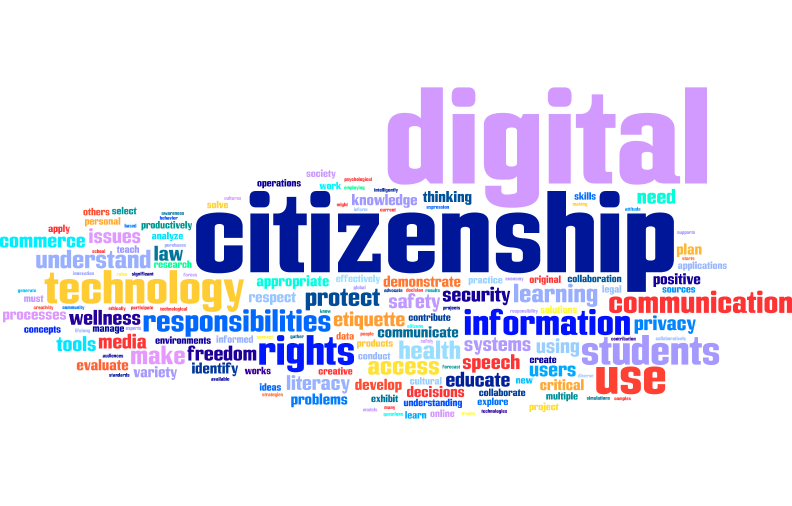
This course was developed to better prepare future educators for the responsibility of orienting students to the responsibilities of digital citizenship as well as the skills for effectively navigating in a world of increasing reliance on digital tools. It is informed by the Digital Literacy Frameworks of the Massachusetts Department of Elementary and Secondary Education (DESE).
- Instructor: Lynn Dole
Category: 2024 Fall Semester
EDC 311 Rethinking Equity and Teaching for English Language Learners
Students who speak languages other than English are a growing presence in U.S. schools. These students need assistance in learning academic content in English as well as in developing proficiency in English. This course is designed to provide an understanding of the instructional needs and challenges of students who are learning English in the United States. This course explores a variety of theories, issues, procedures, methods and approaches for use in bilingual, English as a second language, and other learning environments. It also provides an overview of the historic and current trends and social issues affecting the education of English language learners. Enrollment limited to 35. Priority given to students either enrolled in or planning to enroll in the student teaching program. Credits: 4
Renata Pienkawa
Normally offered each spring
Students who speak languages other than English are a growing presence in U.S. schools. These students need assistance in learning academic content in English as well as in developing proficiency in English. This course is designed to provide an understanding of the instructional needs and challenges of students who are learning English in the United States. This course explores a variety of theories, issues, procedures, methods and approaches for use in bilingual, English as a second language, and other learning environments. It also provides an overview of the historic and current trends and social issues affecting the education of English language learners. Enrollment limited to 35. Priority given to students either enrolled in or planning to enroll in the student teaching program. Credits: 4
Renata Pienkawa
Normally offered each spring
- Instructor: Renata Pienkawa
Category: Spring 2017-2018
EDC 311 Rethinking Equity and Teaching for English Learners
Students who speak languages other than English are a growing presence in U.S. schools. These students need assistance in learning academic content in English as well as in developing proficiency in English. This course is designed to provide an understanding of the instructional needs and challenges of students who are learning English in the United States. This course explores a variety of theories, issues, procedures, methods and approaches for use in English as a second language, bilingual, and other learning environments. It also provides an overview of the historic and current trends and social issues affecting the education of English Learners. Enrollment limited to 35. Priority given to students either enrolled in or planning to enroll in the student teaching program. Through this course, participants will gain
knowledge and skills to effectively instruct multilingual learners K-12. Successful
completion of the course qualifies an educator for the SEI (Sheltered English
Instruction) endorsement required for teacher licensure or re-licensure in
Massachusetts. Credits: 4 Renata Pienkawa
Normally offered each spring- Instructor: Renata Pienkawa
Category: 2024 Spring Semester
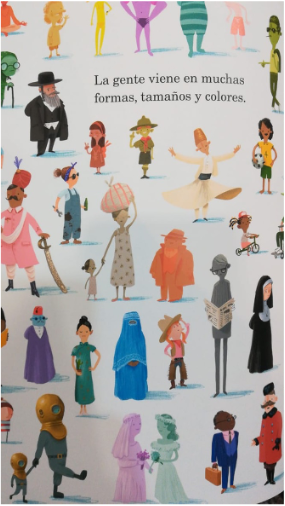
Today education is a global phenomenon with widespread implications for individuals and communities. In this seminar, we will study education as a social construct through interdisciplinary and qualitative research approaches. To do so, we will engage with current theoretical and historical perspectives of research as well as practical research exercises. Across engagements students will be asked to examine how research can reproduce or disrupt current structural inequalities and power imbalances in ways that advance social justice. By weaving opportunities to learn and deconstruct the theories shaping research and its practices, this course is designed to support students as they critically examine education across contexts, understand the complexity and plurality that currently characterizes research, and gain familiarity with its practice.
Course Acknowledgements
The knowledge, spirit, and work of many others have significantly contributed to the learning outlined in this syllabus. I explicitly would like to acknowledge the work of Professor Melissa Freeman and the Qualitative Research Program at the University of Georgia.
- Instructor: Cristina Valencia Mazzanti
Category: 2022 Spring Semester
Welcome! This course supports the Pre-Practicum experience for students pursuing Initial Licensure.
The course meets weekly on Monday afternoons.
| Credits: 1 | Max Enrollment: 0 |
| Course Type: Laboratory | Section Enrollment: 11 |
| Grade Mode: Credit/Non Credit | Waitlist Count: 0 |
| Reserved Seats: No | |
| Coreq: EDC 345D - Elementary Curric & Methods | |
| Time/Location: Monday | 3:05 PM - 4:20 PM / Seelye 105 | Instructional Method: In-Person |
This lab accompanies the elementary student teaching internship course EDC 345D. The focus of the lab will be the examination of student teaching dilemmas for discussion and reflection. Student teachers will be introduced to key topics germane to their internship while examining the student teaching experience. The course will bring together content knowledge, professional dispositions/caring, instructional methods, assessment strategies, collaboration, diversity, classroom management, and technology. In this lab, student teachers will also reflect on teaching and their plans for future learning, and work on building the portfolio of teaching required for state licensure. Only open to students in Smith's teacher education program. Corequisite: EDC 345D. S/U only. (E) | |
- Instructor: Lynn Dole
- Instructor: Hannah Lord
Category: 2022 Fall Semester
- Instructor: Shannon Audley
Category: 2025 Spring Semester
- Instructor: Sue Froehlich
- Instructor: Andrew Guswa
Category: Spring 2018-2019
- Instructor: Sue Froehlich
- Instructor: Andrew Guswa
Category: Spring 2017-2018
- Instructor: Sue Froehlich
- Instructor: Andrew Guswa
- Instructor: Dale Renfrow
Category: Spring 2020-2021
- Instructor: Sue Froehlich
- Instructor: Andrew Guswa
- Instructor: Sara Kacmoli
Category: Fall 2016-2017
- Instructor: Andrew Guswa
- Instructor: Sarah Moore
Category: Spring 2019-2020
- Instructor: Sue Froehlich
- Instructor: Andrew Guswa
- Instructor: Dale Renfrow
Category: Fall 2020-2021
- Instructor: Andrew Guswa
Category: Spring 2018-2019
- Instructor: Andrew Guswa
Category: Spring 2017-2018
- Instructor: Andrew Guswa
Category: Spring 2020-2021
- Instructor: Andrew Guswa
Category: Fall 2020-2021
- Instructor: Sue Froehlich
- Instructor: Andrew Guswa
- Instructor: Niveen Ismail
- Instructor: Eric Jensen
- Instructor: Sarah Moore
- Instructor: Dale Renfrow
Category: 2022 Spring Semester
- Instructor: Judith Cardell
- Instructor: Sue Froehlich
- Instructor: Andrew Guswa
- Instructor: Niveen Ismail
- Instructor: Eric Jensen
- Instructor: Denise McKahn
- Instructor: Dale Renfrow
Category: 2023 Spring Semester
- Instructor: Niveen Ismail
- Instructor: R Koh
Category: 2026 Spring Semester
- Instructor: Niveen Ismail
- Instructor: R Koh
Category: 2025 Fall Semester
- Instructor: Sue Froehlich
- Instructor: Andrew Guswa
- Instructor: Niveen Ismail
- Instructor: Dale Renfrow
Category: 2021 Fall Semester
- Instructor: Andrew Guswa
Category: 2022 Spring Semester
- Instructor: Andrew Guswa
Category: 2023 Spring Semester
- Instructor: Andrew Guswa
Category: 2021 Fall Semester
- Instructor: Niveen Ismail
Category: 2025 Spring Semester
Category: 2025 Spring Semester
- Instructor: Niveen Ismail
Category: Fall 2018-2019
- Instructor: Susan Voss
Category: Spring 2018-2019
- Instructor: Susan Voss
Category: Fall 2016-2017
- Instructor: Niveen Ismail
Category: Spring 2017-2018
- Instructor: Niveen Ismail
Category: Spring 2017-2018
- Instructor: Niveen Ismail
Category: Spring 2018-2019
- Instructor: Niveen Ismail
Category: Spring 2019-2020
- Instructor: Niveen Ismail
Category: Spring 2017-2018
- Instructor: Niveen Ismail
Category: Spring 2016-2017
- Instructor: Niveen Ismail
Category: Spring 2019-2020
- Instructor: Niveen Ismail
Category: Fall 2017-2018
- Instructor: Susan Voss
Category: Fall 2018-2019
- Instructor: Niveen Ismail
Category: Fall 2016-2017
- Instructor: Niveen Ismail
Category: Spring 2016-2017
- Instructor: Denise McKahn
Category: Spring 2017-2018
- Instructor: Niveen Ismail
Category: Fall 2016-2017
- Instructor: Niveen Ismail
Category: Spring 2016-2017
- Instructor: Niveen Ismail
Category: Fall 2016-2017
- Instructor: Susan Voss
Category: 2024 Fall Semester
- Instructor: Judith Cardell
Category: 2025 Fall Semester
- Instructor: Judith Cardell
Category: 2025 Fall Semester
- Instructor: Naila Moreira
Category: Spring 2018-2019
- Instructor: Naila Moreira
Category: Fall 2017-2018

Welcome to English 118!
This is a writing intensive course that focuses on the way in which we are persuaded and the ways in which we can persuade others.
We'll spend time refine our own arguments, examining the use of hope and fear in political rhetoric, and in advertising, and we'll write a lot. It should be fun.
This is a writing intensive course that focuses on the way in which we are persuaded and the ways in which we can persuade others.
We'll spend time refine our own arguments, examining the use of hope and fear in political rhetoric, and in advertising, and we'll write a lot. It should be fun.
- Instructor: Morgan Sheehan Bubla
Category: Spring 2020-2021
- Instructor: Naila Moreira
Category: Fall 2015-2016
- Instructor: Patricia Stacey
Category: Fall 2019-2020
Homework for Thursday March 22
1. Read, annotate and come prepared to discuss: "The Black Family and Feminism: A conversation with Eleanor Holmes Norton," by Cellestine Ware, pp. 54-55 in our reader.
2. Read, annotate and come prepared to discuss "A Bunny's Tale" by Gloria Steinem, pp. 57-62 in our reader.
3. IMPORTANT: Due on Friday Night: We will be doing peer critiques of each other's final draft of the analytical paper. For directions on how to do the peer critique, go to the assignment named "Peer Critique" in Moodle for this week.
4. Once you have turned in your Analytical Paper Version II, please cut and paste it into our course google document, below: Put it on top of the document. You will be critiquing the essay directly below yours. Leave your name on your paper. They are all distinctive and worthy of sharing!
https://docs.google.com/document/d/1R04n-x2twurdTPOtVF4y93bHezRmc3bt7Fh-lZBcsDc/edit?usp=sharing
5. Due by Monday Midnight: Resubmit your edited draft of the paper. If it has already been graded, you will have a chance to improve your grade! If it hasn't been graded, you still will be advancing your grade by improving what you turn in.
- Instructor: Patricia Stacey
Category: 2022 Spring Semester
- Instructor: Naila Moreira
Category: 2021 Fall Semester
- Instructor: Lily Gurton-Wachter
Category: Spring 2016-2017

This creative writing course gives us opportunities to experiment with multiple genres of writing. We will read, write, and discuss poetry, fiction, and creative nonfiction from a writer's point of view. This means we’ll immerse ourselves in the process of generating new work in most classes and practice strategies that will structure the ideas and feelings you’ll want to bring to the page.
At this early stage, you don’t have to worry about whether you’re a poet, novelist, essayist, and so on. This course introduces you to creative writing through the practice of mindfulness—learning how you can closely observe the 7 senses (yes, 7!) and draft unique writing from them—writing that reflects your unique sensibilities rather than cliches. Through poetry, fiction, and nonfiction, we will focus on the beginnings of short drafts you can continue expanding and revising after our class ends. We’ll emphasize the powers of observation, experimentation, and revision as core creative practices. Complete each prompt and assignment to the best of your ability.
- Instructor: Yona Harvey
Category: 2026 Spring Semester
Sight, sound, touch, smell, taste: All our reality as we know it comes to us through our senses. We share a world filtered and perceived through a million sensibilities, and finding the words to convey what we hear, see, smell, taste, and feel is one of the most fundamental skills a writer can develop. In this class we will hone our descriptive powers to go beyond the obvious and clichéd and uncover language that delights and surprises us even in the act of writing. We will learn to use one sense to write about another, and to combine them in powerful metaphors. We will explore how our senses drive us and how they shape narrative.
In terms of subject matter, we'll be writing about art, music, perfume, fashion, and especially food. In the first weeks of the class we'll work on the mechanics of description and style. In the latter weeks, we'll apply those skills by availing ourselves of campus resources - the museum of art, the botanic garden, places to eat, to test our skills against real life source materials.
While we will be reading texts from writers who are masters of sense description each week, our real emphasis will be on practice. We'll build skills with exercises and short assignments in class and out of it, remembering always that simply by being alive we have the tools we need to build powerful stories and memorable worlds.
In terms of subject matter, we'll be writing about art, music, perfume, fashion, and especially food. In the first weeks of the class we'll work on the mechanics of description and style. In the latter weeks, we'll apply those skills by availing ourselves of campus resources - the museum of art, the botanic garden, places to eat, to test our skills against real life source materials.
While we will be reading texts from writers who are masters of sense description each week, our real emphasis will be on practice. We'll build skills with exercises and short assignments in class and out of it, remembering always that simply by being alive we have the tools we need to build powerful stories and memorable worlds.
- Instructor: T. Chang
Category: Spring 2016-2017
“Europe at that time was thrilled with joy, / France standing on the top of golden hours, / And human nature seeming born again.” (William Wordsworth)
“It is time to effect a revolution in female manners - time to restore to them their lost dignity - and make them, as a part of the human species, labour by reforming themselves to reform the world.” (Mary Wollstonecraft)
Inspired by the ideals of the French Revolution, a young William Wordsworth and his like-minded British contemporaries envisioned an egalitarian society emerging from the ruins of the old order. Yet as Mary Wollstonecraft pointedly observed in her Vindication of the Rights of Woman, the values of “liberty, fraternity, and equality” were flawed insofar as they did not extend to women. Amid political and social turmoil, rapid industrialization, and eventual Napoleonic world war, a range of British intellectuals politicized the subjection of women. Redefining the construct of femininity was, for these writers, central to the precarious project of “reforming… the world.”
We begin by examining the literary contexts that motivated Wollstonecraft to write her Vindication of the Rights of Woman, a work that represents a landmark in the history of feminist thought. The close collaboration between William and Dorothy Wordsworth will also serve as a touchstone for considering the gender politics of Romantic literary production. From there, we will read Lord Byron and Felicia Hemans, the two most popular authors from the “second generation” of Romantics, who espoused even as they undermined traditional gender roles. We conclude with Jane Austen’s Mansfield Park, a novel that puts pressure on Wollstonecraft’s provocative characterization of women as slaves to patriarchy.
I envision the class as a discussion-based seminar that relies on student input to fuel the conversation. The assignments will include four papers, regular discussion questions, and active class participation.
“It is time to effect a revolution in female manners - time to restore to them their lost dignity - and make them, as a part of the human species, labour by reforming themselves to reform the world.” (Mary Wollstonecraft)
Inspired by the ideals of the French Revolution, a young William Wordsworth and his like-minded British contemporaries envisioned an egalitarian society emerging from the ruins of the old order. Yet as Mary Wollstonecraft pointedly observed in her Vindication of the Rights of Woman, the values of “liberty, fraternity, and equality” were flawed insofar as they did not extend to women. Amid political and social turmoil, rapid industrialization, and eventual Napoleonic world war, a range of British intellectuals politicized the subjection of women. Redefining the construct of femininity was, for these writers, central to the precarious project of “reforming… the world.”
We begin by examining the literary contexts that motivated Wollstonecraft to write her Vindication of the Rights of Woman, a work that represents a landmark in the history of feminist thought. The close collaboration between William and Dorothy Wordsworth will also serve as a touchstone for considering the gender politics of Romantic literary production. From there, we will read Lord Byron and Felicia Hemans, the two most popular authors from the “second generation” of Romantics, who espoused even as they undermined traditional gender roles. We conclude with Jane Austen’s Mansfield Park, a novel that puts pressure on Wollstonecraft’s provocative characterization of women as slaves to patriarchy.
I envision the class as a discussion-based seminar that relies on student input to fuel the conversation. The assignments will include four papers, regular discussion questions, and active class participation.
- Instructor: Daniel Block
Category: Spring 2015-2016
- Instructor: Cornelia Pearsall
Category: Spring 2020-2021
ENG 299 course description
Literary research starts with choosing the lens to investigate a passion –
telescope or microscope?
Do you want to explore constellations (an array of texts), or atoms (words/themes in a single text)?
English 299 offers advanced literature majors hands-on experience supporting the development of a research project of your choice, including question definition, choice of methodology and critical framework, and evidence evaluation. Potential projects might include developing a special studies or thesis proposal. This is the chance to identify and explore a chosen topic in depth, while mastering widely useful research skills. Prerequisites: ENG 199, ENG 200 and two 200-level literature courses.
Literary research starts with choosing the lens to investigate a passion –
telescope or microscope?
Do you want to explore constellations (an array of texts), or atoms (words/themes in a single text)?
English 299 offers advanced literature majors hands-on experience supporting the development of a research project of your choice, including question definition, choice of methodology and critical framework, and evidence evaluation. Potential projects might include developing a special studies or thesis proposal. This is the chance to identify and explore a chosen topic in depth, while mastering widely useful research skills. Prerequisites: ENG 199, ENG 200 and two 200-level literature courses.
- Instructor: Naomi Miller
Category: Fall 2019-2020
- Instructor: Douglas Patey
Category: Spring 2020-2021
- Instructor: Douglas Patey
Category: Fall 2017-2018
- Instructor: Richard Millington
- Instructor: Michael Thurston
Category: 2022 Spring Semester
- Instructor: Cornelia Pearsall
Category: Spring 2016-2017
- Instructor: Cornelia Pearsall
Category: Fall 2018-2019
- Instructor: Gillian Kendall
Category: Fall 2019-2020
- Instructor: Floyd Cheung
Category: Fall 2016-2017
- Instructor: Denise McKahn
Category: Spring 2018-2019
- Instructor: Alexander Barron
Category: Fall 2019-2020
- Instructor: Niveen Ismail
Category: Spring 2017-2018
- Instructor: Niveen Ismail
Category: Fall 2017-2018
- Instructor: Camille Washington-Ottombre
Category: Spring 2016-2017
- Instructor: Denise McKahn
Category: Spring 2018-2019
- Instructor: Paulette Peckol
Category: 2023 Fall Semester
- Instructor: Denise McKahn
Category: Fall 2018-2019
Hello all!
We are going to put the book on reserve in the library sometime today. It will be one that you cannot check out so that we make sure it is always there for someone to use. Our preferred method of collecting assignments is going to be a separate sheet than the workbook.. whether that's in an email, google doc, bring it into class, or even take a picture of what you did in the workbook and email it to us. If you are not going to have the book in time for the next class please let us know and we will figure out a solution.
Thank you! Let's have a great semester!
- Instructor: Sarah Burnell
- Instructor: Erin Miller
Category: Fall 2018-2019
The physical and psychological components of stress, identification of personal stress response patterns, and techniques for daily stress management. In this course, we will learn about things that contribute to stress for college students and ways to recognize and deal with stress more
- Instructor: Becky Shaw
Category: 2025 Fall Semester
- Instructor: Stephanie Jones
Category: 2024 Spring Semester
- Instructor: Stephanie Jones
Category: 2025 Spring Semester
- Instructor: Stephanie Jones
Category: 2024 Fall Semester
- Instructor: Stephanie Jones
Category: 2024 Spring Semester
- Instructor: Stephanie Jones
Category: 2024 Fall Semester
- Instructor: Craig Collins
Category: Spring 2018-2019
- Instructor: Craig Collins
Category: Spring 2017-2018
- Instructor: Craig Collins
Category: Spring 2019-2020
- Instructor: Craig Collins
Category: Spring 2016-2017
- Instructor: Craig Collins
Category: Spring 2015-2016
- Instructor: Kim Bierwert
Category: 2022 Spring Semester
- Instructor: Scott Johnson
Category: Spring 2018-2019
- Instructor: Sara Dorsey
Category: Spring 2015-2016
- Instructor: Scott Johnson
Category: Spring 2016-2017
- Instructor: Scott Johnson
Category: Spring 2018-2019
- Instructor: Frank Grindrod
Category: Fall 2017-2018
- Instructor: Scott Johnson
Category: Spring 2017-2018
- Instructor: Frank Grindrod
Category: Fall 2016-2017
- Instructor: Frank Grindrod
Category: Fall 2015-2016
- Instructor: Scott Johnson
Category: Spring 2015-2016
- Instructor: Scott Johnson
Category: Spring 2016-2017
- Instructor: Scott Johnson
Category: Spring 2017-2018
- Instructor: Scott Johnson
Category: Fall 2019-2020
- Instructor: Scott Johnson
Category: Fall 2018-2019
- Instructor: Scott Johnson
Category: Fall 2017-2018
- Instructor: Scott Johnson
Category: Fall 2016-2017
- Instructor: Scott Johnson
Category: 2022 Spring Semester
- Instructor: Scott Johnson
Category: 2022 Spring Semester
- Instructor: Scott Johnson
- Instructor: Serena Pisacano
Category: 2022 Fall Semester
- Instructor: Scott Johnson
Category: 2021 Fall Semester
This semester all rowing will occur indoors on the ergometer. Instruction will focus on developing basic rowing proficiencies related both to using the ergometer as well as those that would be transferable to water rowing. In addition, we will cover how to use the ergometer as a general fitness tool, and a general overview of the sport of rowing.
- Instructor: Graham Marks
- Instructor: Sofia Trotta
Category: 2024 Spring Semester
This course will introduce students to the Iyengar method focusing on balancing and aligning the mind while developing strength, flexibility, endurance, and optimal structural alignment. The method also develops self-awareness, intelligent evaluation, confidence, and inward evaluation. Students will be introduced to a variety of poses (asanas) and breathing techniques (pranayama) that will allow the students to explore their own unique yoga practice in addition to learning how yoga can relieve stress, fatigue, and physical pain.
- Instructor: Katie Moore
- Instructor: Charlie Myran
Category: Fall 2020-2021
Given the impact and significance of the Flint, MI water crisis, the Center for the Environment, Ecological Design, and Sustainability and the Center for Community Collaboration, together with the Environmental Science and Policy Program, invite you to join a learning community on this topic. With this venture, we hope to bring together faculty from a wide range of disciplines to learn about and discuss the failure, response, impact, repair, and remediation in the city of Flint. Many of you may already be thinking that you would like to incorporate elements of this unfolding story into your teaching, and we envision that through this community we can support each other in these efforts.
What will this be?
We imagine starting this spring with a series of conversations around shared readings, with CEEDS and the CCC providing lunch. Moving from a common understanding of the events, participants may then delve more deeply into particular aspects of the situation and return as a group to share their insights. We are especially interested in encouraging faculty to engage students in their classes in this discussion, and we hope to learn from each others’ experiences in the classroom. Ultimately, we intend for this learning community to be driven by the faculty participants, and the form and approach is flexible.
- Instructor: Marc Anderson
- Instructor: Elisabeth Armstrong
- Instructor: Alexander Barron
- Instructor: Joanne Benkley
- Instructor: Carol Berner
- Instructor: Maria Bickar
- Instructor: Denys Candy
- Instructor: Sue Froehlich
- Instructor: Sarah Hines
- Instructor: Niveen Ismail
- Instructor: Elizabeth Jamieson
- Instructor: Valerie Joseph
- Instructor: Mona Kulp
- Instructor: Ann Leone
- Instructor: Naila Moreira
- Instructor: Albert Mosley
- Instructor: Katwiwa Mule
- Instructor: Lucy Mule
- Instructor: Robert Newton
- Instructor: Paramjeet Pati
- Instructor: Phil Peake
- Instructor: Amy Rhodes
- Instructor: Cristina Suarez
- Instructor: Camille Washington-Ottombre
- Instructor: Dano Weisbord
- Instructor: Paul Wetzel
Category: Faculty Projects
Category: Spring 2015-2016
Category: Fall 2015-2016
Category: Spring 2016-2017
Category: Fall 2016-2017
Category: Spring 2017-2018
Category: Fall 2019-2020
Category: Fall 2016-2017
Category: Spring 2015-2016
Category: Spring 2016-2017
Category: Fall 2015-2016
Category: Fall 2017-2018
Category: Fall 2019-2020
Category: Spring 2018-2019
Category: Fall 2015-2016
Category: Spring 2015-2016
Category: Fall 2016-2017
Category: Spring 2016-2017
Category: Fall 2019-2020
Category: Fall 2017-2018
Category: Spring 2018-2019
Category: Fall 2015-2016
Category: Spring 2015-2016
Category: Spring 2016-2017
Category: Fall 2016-2017
Category: Fall 2019-2020
Category: Spring 2017-2018
Category: Fall 2015-2016
Category: Fall 2016-2017
Category: Spring 2019-2020
Category: Spring 2015-2016
Category: Spring 2016-2017
Category: Fall 2016-2017
Category: Fall 2015-2016
Category: Spring 2019-2020
Category: Spring 2016-2017
Category: Spring 2015-2016
Category: Fall 2016-2017
Category: Fall 2015-2016
In this class, we will take the skills and insights gained in introductory production courses and develop them over the length of the semester through the creation of one short project, 10 minutes long. You may work individually or in pairs.
We will learn by making work as well as by researching, reading, and watching films related to our projects. We may take this opportunity to delve into and learn the conventions of our chosen form. Or we may decide that our content demands formal experimentation and risk-taking.
The course will be structured by the projects each student brings to it. We will begin the semester with brainstorming, research, script/documentary proposal writing, and pre-production. Each student will develop a script or in-depth proposal to begin with. As we move into production, we will review and deepen our knowledge of camera, lighting (available & set), sound (location & studio), and editing principles and techniques. We will move between production and post-production in the second half of the semester, first developing sequences, then rough assemblies, rough cuts, and fine cuts, before ultimately completing our final cut.
We will learn by making work as well as by researching, reading, and watching films related to our projects. We may take this opportunity to delve into and learn the conventions of our chosen form. Or we may decide that our content demands formal experimentation and risk-taking.
The course will be structured by the projects each student brings to it. We will begin the semester with brainstorming, research, script/documentary proposal writing, and pre-production. Each student will develop a script or in-depth proposal to begin with. As we move into production, we will review and deepen our knowledge of camera, lighting (available & set), sound (location & studio), and editing principles and techniques. We will move between production and post-production in the second half of the semester, first developing sequences, then rough assemblies, rough cuts, and fine cuts, before ultimately completing our final cut.
- Instructor: EE Miller
Category: Fall 2016-2017
Category: Fall 2016-2017
Category: Fall 2015-2016
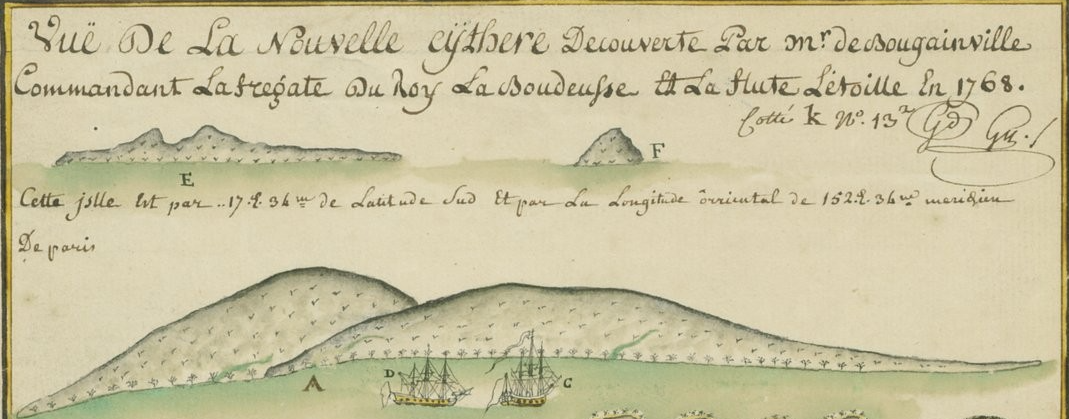
“Je me croyais transporté dans le jardin d’Eden”: the explorer Bougainville’s 1771 description of the abundance and beauty of “Taïti” set the tone for two centuries of exoticism in French literature and art. This course will explore legacies of Enlightenment, colonialism, feminism, and postcolonialism through the shifting representations of this so-called island paradise. Readings include travel narratives, philosophical texts, poetry, and novels by Rousseau, Diderot, Josephine de Monbart, Charles Baudelaire, Pierre Loti, and Chantal Spitz. Works will be approached in historical context, drawing connections with visual culture, global developments, and contemporary debates.
French 230 functions as a gateway to more advanced courses in literary and cultural studies (French 250 and above). Class discussions and course assignments are designed to help students develop skills in expository writing and critical thinking in French. Students will learn to move from comprehension to interpretation in their reading and from the descriptive mode to the analytical mode in their writing and speaking. In addition to class meetings (twice-weekly meetings of 75 minutes, three hours per week), the course requires an average of nine hours per week of reading (40-70 pages per week; in general there is slightly more reading for Monday than for Wednesday), writing, and preparation throughout the semester. Daily contribution to class discussions is expected.
Students entering this course should have acquired a low to mid-B1 level (utilisateur indépendant) in French as defined by the CEFR (Common European Framework of Reference) guidelines, and should aim to attain the mid- to high B1 level by completion of the course.
- Instructor: Maureen DeNino
Category: 2021 Fall Semester
In this seminar, we look at films that make a deliberate and often caricatural use of stereotypes and anti-stereotypes in order to make a statement, whether it is to provoke, examine, question, or simply illustrate some aspects of French culture or national consciousness. Among the stereotypes and anti-stereotypes we consider are: tradition versus modernity, ‘Frenchness’ and 'Parisianism', gender roles, racial identity. In doing so, we pay particular attention to the way these stereotypes and anti-stereotypes are staged, what their modes of inquiry are, and what conversations, if any, they promote. Films by Renoir, Tati, Buñuel, Jeunet, Ozon, and Sciamma among others. Weekly or bi-weekly film viewings. Readings in film criticism and relevant fields. In French.{A}{F}
Credits : 4
Martine Gantrel-Ford
Offered online Fall 2020
Thursdays 1:40 - 4:30 p.m.
Credits : 4
Martine Gantrel-Ford
Offered online Fall 2020
Thursdays 1:40 - 4:30 p.m.
- Instructor: Dawn Fulton
- Instructor: Martine Gantrel-Ford
Category: Fall 2020-2021
- Instructor: Sarah Hines
Category: Fall 2016-2017
- Instructor: Michael Gorra
Category: Fall 2020-2021
Gender, Sex, and Sexuality in Russian Culture
Ruth Averbach
Pierce Hall, Room 104
Course Description
In June 2013, President Vladimir Putin signed into law a ban on ‘propaganda’ that advocates for non-traditional sexual relationships, homosexuality, and transgenderism. Despite this, Russia has at times in its history been a bastion of gender and sexual diversity. Nevertheless, Russia’s queer and trans heritage is often neglected in scholarly and popular conceptions of the country. Students in this course examine Russia’s queer and trans history through literature, visual arts, and music. Topics include the history of “homosexuality” and “heterosexuality,” the medical history of transsexuality, gay and lesbian subjectivities, trans autobiography and fiction, and the ethics of queer scholarship.
Course Objectives
This seminar is designed to achieve several goals. First, this course develops students’ critical thinking and writing skills. Students will learn how to outline, draft, and revise papers, effectively summarize literary texts, analyze specific themes in a work, contextualize artistic works in a proper cultural and historical context, understand and respond to critical works, and construct a short research paper with a coherent thesis and clear line of argumentation. Second, students will gain a broad overview of Queer and Trans Russian history and culture and engage with understudied source materials, perspectives and experiences concerning gender, sex, and sexuality.
Course Requirements
Assignments
Weekly reading responses (appx. 250 words)
First Paper: Summary of a Literary Text (3 pages)
Second Paper: Thematic Analysis (5 pages)
Third Paper: Research and Argumentation (7 pages)
Draft paper due one week before final version
Students will read and respond to a classmate’s paper within a week of turning in final drafts
Revisions will be turned in a week after receiving their peer review and instructor feedback
Due dates for all assignments are listed in the reading schedule
Grading Rubric
Attendance and Participation – 20%
Reading Responses – 20%
First Paper – 15%
Second Paper – 15%
Third Paper Presentation – 10%
Third Paper – 20%
Course Expectations
It is essential for students to complete assigned readings, attend course meetings, and contribute to class discussions. Feel welcome to use electronic devices, but do not let them distract others or yourself from the lesson. Please let Ruth know as soon as possible if you are ill or must miss class for any reason.
Academic Integrity
Students are expected to uphold all Smith College policies on academic integrity. AI is only acceptable for proofreading for grammar, punctuation, and spelling. All outside sources used in written assignments must be cited properly.
Accommodations
If you need any accommodations to participate in and complete the course, please contact the Accessibility Resource Center (College Hall 104; arc@smith.edu; 413-585-2071) and let Ruth know how she can best serve your needs.
COURSE READING SCHEDULE
Week II: Sexuality and Russian Civilization
M: (De)legalize Gay
Igor Kon, The Sexual Revolution in Russia (11-38)
Foucault, “The Birth of Homosexuality” from The History of Sexuality, vol. II
Olearius, The Travels of Olearius in 17th Century Russia
W: Is Gender, Sex, and Sexuality Universal?
Xenia the Servant of God, or Andrei Fyodorovich the Holy Fool
Benjamin, excerpts from The Transsexual Phenomenon
Mayhew, “Holy Foolishness and Gender Transgression in Russian Hagiography” (optional)
Week III: Is Homosexuality a Psychological Complex?
M: The Endless Anxieties of Nikolai Gogol
Gogol, “The Nose”
Gogol, “Ivan Fyodorovich Shponka and His Aunt”
Freud, excerpts of “Certain Neurotic Mechanisms in Jealousy, Paranoia, and Homosexuality”
Freud, letter to father of a homosexual boy
W: H-o-t t-o Gogol: Gay Iconography
Gogol, The Overcoat
Gogol, “Nevsky Prospect”
Gogol, “Woman”
First Paper Draft Due Sunday
Week IV: Aleksandr Aleksandrov: Russia’s First Transsexual Writer
M: Conceptualizing Transsexual Autobiography
Aleksandrov, The Cavalry Maiden, Chapters I-VI
Zirin, “Introduction” to English translation of The Cavalry Maiden
W: The Unmaking of a Man
Aleksandrov, The Cavalry Maiden, Chapters VII-XIII
First Paper Due Sunday
Week V: Aleksandrov’s Fiction
M: Trans Men and Misogyny
Aleksandrov, Nurmeka
Zazanis, “On Hating Men (and Becoming One Anyway)”
W: Colonialism and the Transsexual Empire
Aleksandrov, Nurmeka
Puar, excerpts from Terrorist Assemblages (optional, Ruth will summarize)
First Paper Peer Review Notes Due
Week VI: Between Sex and Sexuality
M: Compulsory Heterosexuality
Gan, “The Ideal”
Rich, “Compulsory Heterosexuality and Lesbian Existence”
W: Compulsory Homosexuality
Pomialovsky, Seminary Sketches
First Paper Revisions Due Sunday
Week VII: Becoming ‘Gay’
M: Homosexual or Gay?
Kuzmin, selected poems
Kuzmin, Wings
Somov, selected paintings
W: Is Sexuality an Identity or a Behavior?
Kuzmin, Wings (finish)
Rozanov, excerpts from “People of the Moonlight”
Week VIII: Becoming ‘Gay’ (Cont’d); Lesbianism and Gender Expression
M: Lesbian Gender and Sexuality
Zinovieva-Annibal, The Tragic Menagerie
W: Lesbian Gender and Sexuality (cont’d)
Zinovieva-Annibal, The Tragic Menagerie (continue)
Second Paper Draft Due
Week IX: Lesbianism and Gender Expression (Cont’d)
M: What is the Difference Between Lesbians and (Trans) Men?
Zinovieva-Annibal, The Tragic Menagerie (finish)
Shrier, excerpts from Irreversible Damage
Wittig, excerpts from The Straight Mind (optional, Ruth will summarize)
W: Sapphic Verse
Gippius, selected poems
Parnok, selected poems
Tsvetaeva, selected poems
Sappho, selected poems
Second Paper Due
Week X: Pre-Revolutionary and Revolutionary Sexuality
M: Is Male Heterosexuality Gay?
Gorky, “26 Men and a Girl”
Mulvey, excerpts from Visual Pleasure
W: Is Homosexuality Communist?
Trifonov, selected poems
Kharitonov, “One Boy’s Story” and “Alyosha-Serezha”
Harry Whyte, letter to Stalin
Second Paper Peer Review Notes Due
Week XI: Transsexuality, Soviet Style
M: Transsexuality and Medicine
Gill-Peterson, excerpts from Histories of the Transgender Child
Benjamin, The Transsexual Phenomenon
Blanchard, excerpts from articles on transsexual etiology
Kalnberz, excerpts from My Time
W: Is Gender a Social Duty?
Hammer & Sickle (1994)
Bogdan Popa, Decentering Queer Theory
Second Paper Revisions Due
Week XII: Late and Post-Soviet Sexuality
M: Late Soviet Sexuality
Past, “No Offense in Love”
Rybikov, “The Lay of the Gay Slavs”
Fiks, selected poems and photographs
W: Post-Soviet Tolerance and Intolerance in Popular Culture
t.A.t.U, 200km/h in the Wrong Lane
Strykalo, “vse resheno”
2013 Anti-Gay Propaganda bill
Selections of recent American anti-gay and trans bills
Third Paper Outlines Due
Week XIII: Trans Art in an Age of Reaction
M: Between Homosexuality and Transsexuality
Outlaw (2019)
W: Being Trans When Being Trans is Illegal
Letter, A City Flower
Selections, What Is a Woman?
Dugin, selections from The Fourth Political Theory and interview with Tucker Carlson
Third Paper Drafts Due Sunday
Week XIV: Conclusion and Presentations
M: Student Presentations
Students will present their final projects in progress in a conference format
W: Conclusion
Student presentations will continue
Concluding lecture
Third Papers Due (one week after final date)
- Instructor: Ruth Averbach
Category: 2025 Fall Semester
The recent pandemic
has done many things to our society, one of which was to place science on the
doorstep of every human on this planet. The relevance and importance science
plays in the health of human life and of this planet has never been more urgent than
today. In fact, whether its artificial intelligence or embryos derived from
isolated stem cells, science is literally making “life!” It is this question of
when life begins that is at the center of the legal battles over abortion. Unfortunately,
the complex language of science has made its presumed accuracy a weapon against
those less accustomed to interpreting scientific truths. In this first-year seminar, we will explore
four main areas where science and society meet and investigate what the current
data is and how society has interpreted it for better or worse. Students will read, analyze, and write about 1)
the artificial nature of created intelligence and created embryos, 2)
the science surrounding abortion policies, 3) the science of climate
change, and 4) the science of the neural diversity. In this first year seminar, we will not hide from
the hard science underling these topics nor ignore some of the difficult
societal tensions around our bodies, religion, and politics. Students should be
prepared to discuss these topics openly and respectfully in this course.
Students will maintain a personal journal, generate several written pieces of
diverse styles targeting different audiences, and use and analyze quantitative
information.
- Instructor: Michael Barresi
Category: 2023 Fall Semester
Food and dining have formed some of the most
fundamental expressions of cultural identity throughout history—in a very real
sense, we are what we eat, and how we eat. This cross-cultural examination of
the topic will begin by exploring the various roles that feasting played in the
world of the ancient Mediterranean, particularly the cultures of Greece and
Rome. We will also move through time to examine comparative material from
contemporary societies. How has food defined us, and how does it create
relationships with others, whether individuals or entire cultures? How are food
and dining used to express and maintain power? During this semester, we
will focus especially on how food spaces—like dining and storage areas, as
well as kitchens—are designed and experienced. Though these are the main
questions for the course, diverse topics related to cultural practices around
food will be tackled using primary literature, anthropological studies, and
archaeological material, along with hands-on approaches. In addition to
achieving an understanding of the complexities and nuances of foodways, we will
explore the mechanics and principles of writing for academic and popular
audiences.
- Instructor: Rebecca Worsham
Category: 2023 Fall Semester
Food and dining have formed some of the most fundamental expressions of cultural identity throughout history—in a very real sense, we are what we eat, and how we eat. This cross-cultural examination of the topic will begin by exploring the various roles that feasting played in the world of the ancient Mediterranean, particularly the cultures of Greece and Rome. We will also move through time to examine comparative material from contemporary societies. How has food defined us, and how does it create relationships with others, whether individuals or entire cultures? How is food used to express and maintain power? Though these are the main questions for the course, diverse topics related to food and dining will be tackled using primary literature, anthropological studies, and archaeological material, along with hands-on approaches. In addition to achieving an understanding of the complexities and nuances of foodways, we will explore the mechanics and principles of writing for academic and popular audiences.
- Instructor: Rebecca Worsham
Category: 2021 Fall Semester
Welcome to FYS 150: Writing and Power in China! In this course, you will learn about the ways writing has been used throughout the ages in China to gain, maintain, and overturn power--from Zhou propaganda about the conquest of the Shang dynasty circa 1000 B.C.E., to the aesthetic and social power of Tang poetry, to Internet activism and censorship today. You will also gain expertise as an academic writer, learning to engage deeply with the ideas of others and respond with clear and powerful arguments of your own.
- Instructor: Jessica Moyer
Category: Fall 2020-2021
- Instructor: Lily Gurton-Wachter
Category: Fall 2017-2018
This course examines the stereotype of the “ecological Indian”—a racial trope that has perpetuated the idea that Native North Americans are naturally closer to nature or are natural conservationists. The class looks at how this stereotype has shaped non-Native ideas about Indigenous peoples in what is now the United States and has affected Indigenous sovereignty and self-determination. This course also examines the varied ways Indigenous peoples have thought about ecological relationships and the strategies they developed to live in relation with the environment. The class critically examines the relationship between settler colonialism and the environment and considers contemporary and historical case studies in which Indigenous peoples have fought to protect and care for their lands and waters in the face of the ongoing violence of settler colonialism.
- Instructor: Kaden Jelsing
Category: 2023 Fall Semester

Weekly Office Hours: Monday 4-5:30pm in Sabin Reed 122. (It's in the hallway that connects Sabin Reed and Burton, across from Burton 110.)
- Instructor: Sarah Mazza
Category: 2024 Fall Semester
Category: Spring 2015-2016
Category: Spring 2016-2017
- Instructor: Brian Yellen
Category: Spring 2015-2016
- Instructor: Robert Newton
- Instructor: Amy Rhodes
- Instructor: Tracy Tien
Category: Fall 2019-2020
- Instructor: Robert Newton
Category: Fall 2019-2020
- Instructor: Amy Rhodes
Category: Spring 2018-2019
- Instructor: Mark Brandriss
Category: Fall 2017-2018
- Instructor: Sarah Mazza
Category: 2024 Fall Semester
- Instructor: Amy Rhodes
Category: 2023 Spring Semester
- Instructor: Sarah Mazza
Category: 2025 Spring Semester
- Instructor: Amy Rhodes
Category: 2022 Fall Semester
COURSE DESCRIPTION
The Practicum Course combines an experiential element with a classroom component. The experiential element can one of the following:
- an internship (with internship placement, customized to students´ academic background, professional goals and previous knowledge and experience, in consultation with Cultural Vistas).
- a community-based service-learning experience (placement at a community service institution, again customized to students´ academic background, professional goals and previous knowledge and experience, in consultation with Cultural Vistas or one of the local volunteer centers and NGO organizations in Hamburg).
- or a self-designed classroom research
project (project-based, applied learning
option in which students describe a challenging problem and
analyze and discuss potential solutions, to be drafted by the student in
consultation with the instructor and local experts in the respective
field.)
Students share the
classroom component which provides theoretical background to, and room for
reflection on, the experiential learning experience.
While this section serves
as the backbone of the classroom component, a second section offers an
introduction to the host city / country and some of the social challenges it is
facing, thus aiming at deepening students´ observations and putting them into
perspective.
All students work towards a final project which will present the
outcome of their practicum experiences.
- Instructor: Jutta Gutzeit
- Instructor: Kim Ochs
Category: Hamburg
COURSE DESCRIPTION
The Practicum Course combines an experiential element with a classroom component. The experiential element can one of the following:
- an internship (with internship placement, customized to students´ academic background, professional goals and previous knowledge and experience, in consultation with Cultural Vistas).
- a community-based service-learning experience (placement at a community service institution, again customized to students´ academic background, professional goals and previous knowledge and experience, in consultation with Cultural Vistas or one of the local volunteer centers and NGO organizations in Hamburg).
- or a self-designed classroom research project (project-based, applied learning option in which students describe a challenging problem and analyze and discuss potential solutions, to be drafted by the student in consultation with the instructor and local experts in the respective field.)
Students share the classroom component which provides theoretical background to, and room for reflection on, the experiential learning experience.
While this section serves as the backbone of the classroom component, a second section offers an introduction to the host city / country and some of the social challenges it is facing, thus aiming at deepening students´ observations and putting them into perspective.
All students work towards a final project which will present the outcome of their practicum experiences.
- Instructor: Jutta Gutzeit
- Instructor: Kim Ochs
Category: JYA Hamburg 2024-2025
- Instructor: Joseph McVeigh
Category: Fall 2017-2018
- Instructor: Judith Keyler-Mayer
Category: Fall 2016-2017
GFX100 is the gateway course for the Global Financial Institutions Concentration (GFIC). This course is designed to provide an overview of the structure of the financial system and its role in the global economy. Faculty, industry professionals and leading scholars in the field will deliver weekly lectures.
- Instructor: Rene Heavlow
- Instructor: Mahnaz Mahdavi
- Instructor: Roisin O'Sullivan
Category: Fall 2017-2018

This course provides comparative analysis of the politics and socio-economic issues of Southeast Asian states while recognizing both the patterns and diversity of the region. As a region of the world, Southeast Asia is often overlooked existing in the shadow of larger actors in the Asia-Pacific region. However, this region has been a historically contested by the major powers of the world and has exerted important influences on global politics. Southeast Asian countries experienced centuries of colonial rule both directly and indirectly. In the early twentieth century, decolonization, the rise of nationalism, and communism transformed the region’s political systems in fundamental ways. The Cold War, during which the United States and the Soviet Union competed on a global scale, also divided the region along political lines which shaped the social and political development of the states in the region that still resonate to this day.
Furthermore, industrialization and rapid economic growth transformed many countries from peasant societies to modern, urban, and industrial countries. Yet the vast political and economic changes occurred unevenly both across the region, as well as within the countries themselves, resulting in various modes of contention from protest to civil war, some of which are still ongoing. All these forces of change have greatly influenced the political systems in the region, the ways that groups and individuals participate in politics, and the function of political institutions.
- Instructor: Cheng Xu
Category: 2024 Fall Semester

Since the end of the Second World War, there has been an enormous growth in the number of NGOs active globally, some working across borders on issues as diverse as poverty, health, women’s rights, and emergency relief. Both international and national NGOs have taken on new roles in areas once considered the domain of the government. NGOs are seen as the best way of promoting human/civil/minority rights and even socio-economic development in a post-Cold War era. They have become one of the hallmarks of post-Cold War international relations. This course elaborates on how NGOs became crucial actors in world politics and examines their growing and changing role.
The course has three parts. In the first part, we will explore the definition and purpose of NGOs and their history. In the second part, we will focus on NGOs’ authority, funding, and the critiques leveled at them: Do they do more harm than good? Are they impinging on the state’s ability to do its job? What is their role as civic advocates and service providers? Do they undermine local and political struggles for social justice? The last part will be devoted to case studies of NGOs from different parts of the world to understand the relationship between the contexts, networks, and strategies they use to foster their role in world politics.
- Instructor: Zümray Kutlu
Category: 2024 Spring Semester
GOV 257
COLLOQUIUM: REFUGEE POLITICS
In this course, we will examine the political dynamics of refugees and the changing nature of forced migration. Millions of people have been forced to move from their homes due to different factors including persecution, armed conflict, natural disasters, socioeconomic deprivation, and development projects. By exploring the nature, causes, and consequences of contemporary forced migration waves, this course will examine the relationship between forced migration and politics in the modern international system. The course provides a foundational understanding of and critical engagement with key theories, concepts, issues, and debates in refugee studies. In addition to international relations theory, we will also focus on historical studies, international law, migration and refugee studies, and anthropological approaches to displacement. Participants will engage in academic debates and watch documentaries/films on forced migration. Although special attention is devoted to the Middle East, other cases from different parts of the world will also be examined.
COLLOQUIUM: REFUGEE POLITICS
In this course, we will examine the political dynamics of refugees and the changing nature of forced migration. Millions of people have been forced to move from their homes due to different factors including persecution, armed conflict, natural disasters, socioeconomic deprivation, and development projects. By exploring the nature, causes, and consequences of contemporary forced migration waves, this course will examine the relationship between forced migration and politics in the modern international system. The course provides a foundational understanding of and critical engagement with key theories, concepts, issues, and debates in refugee studies. In addition to international relations theory, we will also focus on historical studies, international law, migration and refugee studies, and anthropological approaches to displacement. Participants will engage in academic debates and watch documentaries/films on forced migration. Although special attention is devoted to the Middle East, other cases from different parts of the world will also be examined.
- Instructor: Zümray Kutlu
Category: Fall 2020-2021
The political thought of the 19th century was directed towards understanding and shaping the clashing waves of human emancipation and reaction that defined the era. From the republican revolutions at the end of the 18th century to the struggles over labor at the end of the 19th, powerful forces both receded in the face of struggles for freedom and subsequently overwhelmingly flowed against them. All the while, political thinkers – themselves often engaged in these struggles – attempted to describe and shape these clashes to their own ends. For them, this era brought forth a “world that is totally new” (Tocqueville) and a condition in which the human “spirit has broken with the world it has hitherto inhabited and imagined” (Hegel). Accordingly, 19th century political theorists took it as their task to develop a new, modern understanding of political life, which would not “draw its poetry from the past, but only from the future” (Marx). Struggles for freedom opened the 19th century, but what would be the meaning and extent of that freedom?
In this course, we will read classic texts by some of these thinkers from the European and American contexts by focusing on four major themes which define the four parts of the course. The first part of the course will read three theorists who respectively celebrated, rejected, or reconciled themselves to the new political world which followed the French Revolution. The next part will turn our attention to the American context. After two short pieces by European theorists that attempt to define the spirit of modernity, we will read political texts from three figures of the Transcendentalist movement who each attempted to understand the spiritual life of the individual in modern politics. The third part of the course will analyze the tensions of freedom and slavery in 19th century America, one of the most important settings for the struggle over the meaning of modern freedom. Finally, the last part will take up texts that consider the meaning and possible extent of emancipation, particularly with respect to labor and gender. During each of these parts we will be concerned with the same set of questions that beguiled the 19th century, but with different priority given in each module. What is the spirit of revolution? What is the meaning of modernity? What is the full experience of freedom and why do some claim that it requires the unfreedom of others? And how would it be possible to bring about a full, complete form of human emancipation? These questions are not be merely antiquarian but are also aimed towards gaining a better understanding of the tensions of freedom and unfreedom which still persist in our own world today.
Finally, the assignment structure for this course will include regular participation, four short reflective essays, and a research paper. Please see the tentative syllabus uploaded here for more details.
- Instructor: Kye Barker
Category: 2021 Fall Semester
- Instructor: Sara Newland
Category: Spring 2019-2020
- Instructor: Sara Newland
Category: 2023 Fall Semester
COURSE OVERVIEW
The idea that citizens are obliged to obey the laws under which they live is an old one, but it is not clear on what basis this obligation rests or if it ever obtains in the real world conditions of complex societies, imperfect regimes, and unintended consequences – let alone systemic injustice, social inequality, political domination, and other forms of oppression. Indeed, the practices of dissent, protest, disobedience, and resistance are at least as old – and are arguably no less foundational than obligation to concepts of political authority, legitimacy, and democracy. Moreover, examining the history of democracy seems to reveal that illegal, disruptive, and sometimes violent movements have played a significant role in contesting injustice, confronting inequality, and democratizing institutions. On the other hand, history also reveals to us the way that the upheaval of collective resistance can also give way to brutality, bloodshed, and chaotic destabilization.
How do we make sense of the idea of political obligation in the face of injustice? What role does disobedience play in political society? How do we make room for dissent, disobedience, and resistance while remaining attentive to the political, ethical, and moral risks that such actions carry? What are the political and ethical obligations to which we might be subject as citizens of a polity? What is the depth of obedience and what are the bounds of dissent? What is the nature of injustice, and what kinds of injustices demand dissenting action?
This course will take up these questions through an examination and discussion of core texts in political theory alongside works written by (and about) some of the most influential historical practitioners of civil disobedience: Henry David Thoreau on the subject of conscience in the face of chattel slavery; MK Gandhi on nonviolence in the fight for Indian independence; and Martin Luther King on segregation, law, and racial injustice. Throughout the semester we will consider the ethical and tactical problems posed by disobedience, protest, resistance, and action – and how theorists’ and practitioners’ views of injustice, responsibility, law, action, and ethics relate to their ideas about obligation, injustice, and disobedience. We will end the course by discussing the ethical and political stakes of civility, as well as violence and nonviolence.
The idea that citizens are obliged to obey the laws under which they live is an old one, but it is not clear on what basis this obligation rests or if it ever obtains in the real world conditions of complex societies, imperfect regimes, and unintended consequences – let alone systemic injustice, social inequality, political domination, and other forms of oppression. Indeed, the practices of dissent, protest, disobedience, and resistance are at least as old – and are arguably no less foundational than obligation to concepts of political authority, legitimacy, and democracy. Moreover, examining the history of democracy seems to reveal that illegal, disruptive, and sometimes violent movements have played a significant role in contesting injustice, confronting inequality, and democratizing institutions. On the other hand, history also reveals to us the way that the upheaval of collective resistance can also give way to brutality, bloodshed, and chaotic destabilization.
How do we make sense of the idea of political obligation in the face of injustice? What role does disobedience play in political society? How do we make room for dissent, disobedience, and resistance while remaining attentive to the political, ethical, and moral risks that such actions carry? What are the political and ethical obligations to which we might be subject as citizens of a polity? What is the depth of obedience and what are the bounds of dissent? What is the nature of injustice, and what kinds of injustices demand dissenting action?
This course will take up these questions through an examination and discussion of core texts in political theory alongside works written by (and about) some of the most influential historical practitioners of civil disobedience: Henry David Thoreau on the subject of conscience in the face of chattel slavery; MK Gandhi on nonviolence in the fight for Indian independence; and Martin Luther King on segregation, law, and racial injustice. Throughout the semester we will consider the ethical and tactical problems posed by disobedience, protest, resistance, and action – and how theorists’ and practitioners’ views of injustice, responsibility, law, action, and ethics relate to their ideas about obligation, injustice, and disobedience. We will end the course by discussing the ethical and political stakes of civility, as well as violence and nonviolence.
- Instructor: Erin Pineda
Category: Fall 2017-2018
Category: Fall 2016-2017
- Instructor: Sara Newland
Category: Fall 2019-2020
- Instructor: Alice Hearst
Category: Fall 2016-2017
- Instructor: Alice Hearst
Category: Spring 2015-2016
- Instructor: Gregory White
Category: Fall 2018-2019
- Instructor: Kye Barker
Category: 2024 Fall Semester
- Instructor: Dennis Yasutomo
Category: Fall 2018-2019
- Instructor: Brent Durbin
Category: 2026 Spring Semester
- Instructor: Brent Durbin
- Instructor: Howard Gold
- Instructor: Claire Leavitt
- Instructor: Bozena Welborne
Category: 2025 Spring Semester
- Instructor: Molly Reynolds
Category: 2025 Fall Semester
- Instructor: Molly Reynolds
Category: 2023 Fall Semester
- Instructor: Molly Reynolds
Category: 2021 Fall Semester
- Instructor: Molly Reynolds
Category: 2022 Fall Semester
- Instructor: Molly Reynolds
Category: 2024 Fall Semester
- Instructor: Brent Durbin
Category: Fall 2020-2021
- Instructor: Varun Piplani
Category: Fall 2018-2019
- Instructor: Brent Durbin
Category: Fall 2016-2017
- Instructor: Donald Baumer
- Instructor: Brent Durbin
Category: Fall 2017-2018
- Instructor: Brent Durbin
Category: Fall 2015-2016
- Instructor: Donald Baumer
Category: Fall 2019-2020
- Instructor: Brent Durbin
- Instructor: Claire Leavitt
Category: 2025 Fall Semester
- Instructor: Brent Durbin
Category: 2022 Fall Semester
- Instructor: Brent Durbin
Category: 2021 Fall Semester
- Instructor: Brent Durbin
Category: 2024 Fall Semester
- Instructor: Steven Heydemann
Category: 2023 Fall Semester
Category: 2022 Spring Semester
- Instructor: Molly Reynolds
Category: 2021 Fall Semester
- Instructor: Molly Reynolds
Category: 2024 Fall Semester
- Instructor: Molly Reynolds
Category: 2023 Fall Semester
- Instructor: Molly Reynolds
Category: 2025 Fall Semester
- Instructor: Molly Reynolds
Category: 2022 Fall Semester
Category: Spring 2015-2016
Category: Spring 2016-2017
Category: Spring 2016-2017
- Instructor: Marnie Anderson
Category: 2025 Fall Semester
- Instructor: Marnie Anderson
Category: 2023 Spring Semester
- Instructor: Serguei Glebov
Category: Fall 2016-2017
Much of the second half of the 20th century passed in the shadow of the Cold War. Nuclear fears, arms race, global competition, stories of international spies were normal part of people’s lives. Although we hear a lot about the Cuban missile crisis or the blockade of West Berlin, we rarely get a chance to learn about what was happening in the US’ main adversary in the Cold War, the Union of Soviet Socialist Republics, and how these processes shaped the world that we live in today. This class will focus on the history of the Soviet Union during the “greater Cold War,” that is, between WWII and the disintegration of the USSR. While we will touch on foreign policy developments, our main focus will be on the social, political and economic processes and cultural developments inside the USSR itself. To explore Soviet history in the second half of the 20th century, we will use historical works and a range of primary sources.
- Instructor: Serguei Glebov
Category: Spring 2020-2021
- Instructor: Serguei Glebov
Category: Spring 2018-2019
- Instructor: Serguei Glebov
Category: 2022 Fall Semester
- Instructor: Serguei Glebov
Category: 2025 Spring Semester
- Instructor: Serguei Glebov
Category: 2024 Spring Semester
- Instructor: Paula Tarankow
Category: Spring 2019-2020
Category: Fall 2016-2017
Category: Fall 2015-2016
- Instructor: Marnie Anderson
Category: 2024 Spring Semester
- Instructor: Marnie Anderson
Category: 2022 Spring Semester
Category: Spring 2015-2016
Category: Fall 2016-2017
Category: Spring 2016-2017
Category: Fall 2015-2016
- Instructor: Darcy Buerkle
Category: Spring 2019-2020
- Instructor: Darcy Buerkle
Category: 2025 Fall Semester
- Instructor: Darcy Buerkle
Category: 2022 Fall Semester
This course is designed to help give future history educators the confidence and skills to build effective, engaging and inclusive learning communities for their students. We will spend the semester exploring how we can help history students think critically about the world they live in. This course connects future instructors with resources for teaching in middle school, high school, and college-level history classrooms. Over the course of the semester, you will receive an introduction to crafting inclusive, culturally responsive, and evidence-based lesson plans. We will explore foundations in history pedagogy as well as lesson planning. We will hold workshops during class meetings that provide time to work toward the capstone assessments: a statement of teaching philosophy, a detailed formal lesson plan, and one unit on a topic of your choosing. Outside of class, you will listen to history podcasts and brainstorm ways to integrate what you learn into lessons. Expect weekly readings and written reflections. Wide-ranging examples of history lesson plans will guide you to tailor lecture content, readings, primary sources, activities, and assessments according to the age level of the grade that you would ideally like to teach.
- Instructor: Kate Todhunter
Category: 2023 Fall Semester
This course is designed to help give future history educators the confidence and skills to build effective, engaging and inclusive learning communities for their students. We will spend the semester exploring how we can help history students think critically about the world they live in. This course connects future instructors with resources for teaching in middle school, high school, and college-level history classrooms. Over the course of the semester, you will receive an introduction to crafting inclusive, culturally responsive, and evidence-based lesson plans. We will explore foundations in history pedagogy as well as lesson planning. We will hold workshops during class meetings that provide time to work toward the capstone assessments: a statement of teaching philosophy and detailed formal lesson plans. Outside of class, you will listen to history podcasts and view videos in order to brainstorm ways to integrate what you learn into lessons. Expect weekly readings and written reflections. Wide-ranging examples of history lesson plans will guide you to tailor lecture content, readings, primary sources, activities, and assessments according to the age level of the grade that you would ideally like to teach. Once during the semester you will visit a history classroom at Northampton High School.
- Instructor: Kate Todhunter
Category: 2024 Fall Semester
- Instructor: Marnie Anderson
Category: 2024 Fall Semester
- Instructor: Jeffrey Ahlman
Category: Spring 2019-2020
Hello and welcome!
It's great to have you here.
You will notice that there is not much here in Moodle -- that's because most of our communication will occur via our syllabus, which will be posted tomorrow/Friday. I look forward to seeing you soon, in Wright 238.
See you soon!
-Kelly
- Instructor: Kelly Vogel
Category: 2023 Spring Semester
Welcome to IDP 136: Learning Strategies! I am so glad you have decided to support yourself by taking this course. Below are the communication guidelines we created together in our first meeting; if you think of others, please feel free to share them during class.
-Whatever gets discussed in the classroom, stays in the classroom. ("The Las Vegas rule")
-Be non-judgmental
-Be kind
-Be aware of how much space you take in the classroom; leave room for everyone to share space equally.
-Have an open mind
-Refrain from interrupting
-Be aware of others' sensitivities; allow others space to air disagreements and/or grievances
-Be supportive of each other
-It is ok to share a partially-formed thought
-Whatever gets discussed in the classroom, stays in the classroom. ("The Las Vegas rule")
-Be non-judgmental
-Be kind
-Be aware of how much space you take in the classroom; leave room for everyone to share space equally.
-Have an open mind
-Refrain from interrupting
-Be aware of others' sensitivities; allow others space to air disagreements and/or grievances
-Be supportive of each other
-It is ok to share a partially-formed thought
- Instructor: Kelly Vogel
Category: Spring 2018-2019
- Instructor: Eric Jensen
Category: Interterm 2020-2021
- Instructor: Eric Jensen
Category: 2022 Interterm Semester
- Instructor: Eric Jensen
Category: 2025 Interterm Semester
- Instructor: Eric Jensen
Category: 2023 Interterm Semester
- Instructor: Eric Jensen
Category: 2026 Interterm Semester
- Instructor: Eric Jensen
Category: 2024 Interterm Semester
- Instructor: Emily Norton
Category: Fall 2019-2020
- Instructor: Emily Norton
Category: Spring 2019-2020
Intermediate Korean I is the first half of a two-semester intermediate course in spoken and written Korean for students who already have a basic knowledge of Korean and who want to improve their competence to a higher level. This course reinforces and increases students' facility with Korean in four language areas: speaking, listening, reading, and writing. Students are encouraged to expand their knowledge and take confidence-inspiring risks through such activities as expanding knowledge of vocabulary, role play in authentic contexts, in-depth study of grammar, mini-presentations, various types of writing, Korean film reviews, skits, and Korean film making.
Prerequisite: KOR 102 or permission of the instructor.
Prerequisite: KOR 102 or permission of the instructor.
- Instructor: Shihyun Kim
Category: Fall 2020-2021
LAS 150 is a multidisciplinary, thematically organized introduction to the cultures and societies of Latin America and serves as a primary gateway to the Latin American Studies major. This course surveys a variety of topics in culture, geography, politics, history, literature, language, and the arts through readings, films, discussions and guest lectures. The course is required for all majors in Latin American Studies.
Learning Goals:
Learning Goals:
- To introduce students to Latin America through the study of key cultural, political, environmental, economic and social issues.
- To familiarize students with the histories and geography of Latin America, the Caribbean, and Latino/a communities in the United States.
- To develop awareness of global and hemispheric interdependencies and connections across borders of politics, culture, economics, ecologies, ideas and power.
- To cultivate an awareness and appreciation of the diversity of perspectives in fields and disciplines engaged in the study of Latin America, the Caribbean and the Latino/a U.S.
- To introduce students to Latin American and Latino/a Studies faculty at Smith through their areas of teaching and research.
- Instructor: Verónica Dávila Ellis (they/them)
Category: Fall 2020-2021
- Instructor: Javier Puente
Category: Spring 2020-2021
- Instructor: Javier Puente
Category: 2023 Spring Semester
- Instructor: Javier Puente
Category: 2025 Spring Semester
- Instructor: Velma García
Category: Fall 2020-2021
- Instructor: Javier Puente
Category: Fall 2020-2021
The objectives of this portion of the course will be to complete the study of Latin grammar begun in the Fall semester and to explore more deeply at Roman cultural and social values and mores as they are embedded in Latin literature. To this end, toward the end of the course, we will begin to comment on style and literary and rhetorical techniques in selected passages of Latin works (for instance, Cornelius Nepos, Caesar, etc.).
- Instructor: Rebecca Worsham
Category: Spring 2020-2021
Category: Fall 2015-2016
Category: Spring 2016-2017
Category: Spring 2015-2016
Category: Fall 2016-2017
- Instructor: Reid Bertone-Johnson
- Instructor: Gaby Immerman
Category: Fall 2020-2021
- Instructor: Reid Bertone-Johnson
- Instructor: Gaby Immerman
Category: Fall 2020-2021
- Instructor: Reid Bertone-Johnson
Category: 2026 Spring Semester
- Instructor: Steven Moga
Category: 2026 Spring Semester
The Ottoman Empire was one of the most significant world empires in history beginning in the Medieval period and finally collapsing just over one hundred years ago. The empire spanned, for much of its history, the Balkans, North Africa, the Arab world, Anatolia, and the Island of the Eastern Mediterranean. The empire was composed of diverse sets of peoples including Orthodox Greeks, Sephardic Jews, Armenians, and Turkish and Arab Muslims. The spatial and social diversity of the Ottoman Empire highlights the empire’s historic importance for any student who wishes to understand the pre-histories of the modern Middle East, the Balkans, or the Mediterranean world. This course will provide a survey for students on the history of the Ottoman Empire from its inception at the end of the 13th century to its collapse at the end of the first world war in 1918. The course will provide an overview of the political, social, and cultural history of the Ottoman Empire using both secondary and primary source material. Topics which this course covers include the following; empire, orientalism, gender, law, conversion, nationalism, and identity formation.
- Instructor: Tyler Kynn
Category: Fall 2019-2020
About this course
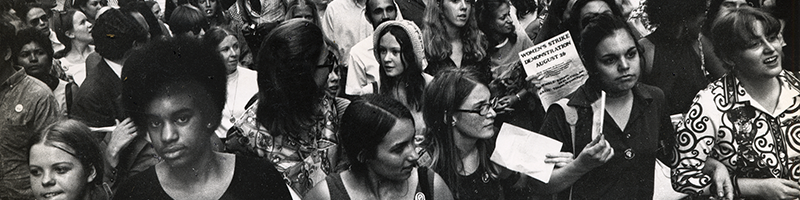
What you'll learn
- Explore some of the important theoretical foundations, empirical findings, research methods, and applications of political psychology
- Apply psychological theories to understand people’s motivations for becoming politically active
- Analyze primary source materials and learn why archival preservation is critical for the visibility of women's stories

- Instructor: Tammy Lockett
Category: ITS
W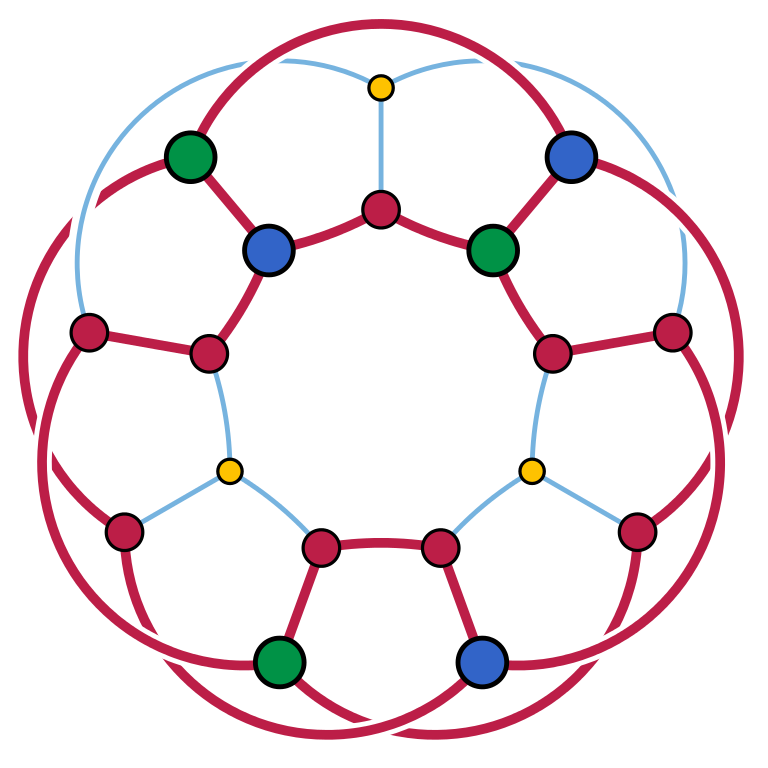 elcome to MTH 153! We're going to be learning about discrete mathematics this
semester, which means that we get to talk about a variety of different
subjects like combinatorics, number theory, and graph theory. We're also
going to be talking about mathematical logic and proof-writing, and
spending some time learning to typeset math using LaTeX code.
elcome to MTH 153! We're going to be learning about discrete mathematics this
semester, which means that we get to talk about a variety of different
subjects like combinatorics, number theory, and graph theory. We're also
going to be talking about mathematical logic and proof-writing, and
spending some time learning to typeset math using LaTeX code.
Looking forward to working with you all!
- Zach
- Instructor: Zachary Winkeler
Category: 2024 Spring Semester
- Instructor: Christophe Golé
Category: 2023 Fall Semester
- Instructor: Christophe Golé
Category: Fall 2018-2019
- Instructor: Candice Price
Category: 2025 Spring Semester
- Instructor: Christophe Golé
Category: 2024 Spring Semester
MUSIC-220: Topics in World Music
(African Popular Music)
Smith College
Spring 2021
Instructor: Bode Omojola, PhD.
(Five College Professor)
Time: 10:15 am ET-12:10 pm ET
Venue: Remote
Office Hours: 12:15 pm ET-1:15 pm ET
Course Description
This course focuses on twentieth-century African popular music. It examines musical genres from different parts of the continent, investigating their relationships to the historical, political, and social dynamics of their respective national and regional origins. Musical idioms like highlife, soukous, kwaito, afrobeat, hiplife, and afrobeats will be studied to assess the significance of popular music as a creative response to social and political developments in colonial and postcolonial Africa. The course also discusses the growth of hip-hop music in selected countries by exploring how indigenous cultural tropes have provided the basis for its local adaptation. The themes explored in this class also include music and identity; music, politics, and resistance; cosmopolitanism, neo-traditional forms, appropriation, and the politics of musical nostalgia.
(African Popular Music)
Smith College
Spring 2021
Instructor: Bode Omojola, PhD.
(Five College Professor)
Time: 10:15 am ET-12:10 pm ET
Venue: Remote
Office Hours: 12:15 pm ET-1:15 pm ET
Course Description
This course focuses on twentieth-century African popular music. It examines musical genres from different parts of the continent, investigating their relationships to the historical, political, and social dynamics of their respective national and regional origins. Musical idioms like highlife, soukous, kwaito, afrobeat, hiplife, and afrobeats will be studied to assess the significance of popular music as a creative response to social and political developments in colonial and postcolonial Africa. The course also discusses the growth of hip-hop music in selected countries by exploring how indigenous cultural tropes have provided the basis for its local adaptation. The themes explored in this class also include music and identity; music, politics, and resistance; cosmopolitanism, neo-traditional forms, appropriation, and the politics of musical nostalgia.
- Instructor: Olabode Omojola
Category: Spring 2020-2021
With this course, students will explore composing for and performing with laptop orchestra, focusing on topics such as sound synthesis, software-based digital instrument design, live audio processing, and gain practical skills in group composing, concert performance, and computer music programming.
Students will be challenged to design and implement their own laptop-mediated musical instruments, interpret graphic and text based scores, program sounds, and perform as a group. Regular in-class rehearsals and performances will culminate in a final concert showcasing the ensemble's work. This course is ideal for students interested in exploring music technology, group improvisation, and studying historical and contemporary approaches to musical composition and performance.
- Instructor: Kelley Sheehan
Category: 2025 Spring Semester
- Instructor: Micaela Baranello
Category: Spring 2015-2016
- Instructor: Ellen Redman
Category: 2026 Spring Semester
- Instructor: Ellen Redman
Category: 2021 Fall Semester
- Instructor: Ellen Redman
Category: 2022 Fall Semester
- Instructor: Ellen Redman
Category: 2022 Spring Semester
- Instructor: Ellen Redman
Category: 2023 Spring Semester
- Instructor: Ellen Redman
Category: 2023 Fall Semester
- Instructor: Ellen Redman
Category: 2024 Spring Semester
- Instructor: Ellen Redman
Category: 2025 Spring Semester
- Instructor: Ellen Redman
Category: 2024 Fall Semester
- Instructor: Ellen Redman
Category: 2025 Fall Semester
Public trust in science has been tested in recent years not because the public stopped caring about knowledge, but because many felt unseen or unheard by those who create it. This course invites students to reimagine neuroscience outreach as an act of rebuilding trust, where connection, transparency, and empathy are as important as accuracy.
Students will gain hands-on experience designing and leading neuroscience-based outreach for youth audiences, with a focus on building authentic, two-way relationships between scientists and communities. Through interactive workshops, reflective writing, and community partnerships, students will learn how to communicate neuroscience in ways that foster curiosity while honoring the lived experiences of others. Throughout the semester, we will examine what makes science communication trustworthy exploring how humility, listening, and representation strengthen public confidence in scientific knowledge. Guest speakers, mentorship sessions, and shadowing opportunities will provide students with diverse perspectives on how scientists can be both educators and allies.
The course culminates in a capstone outreach event where students design and deliver an interactive neuroscience experience for local middle school students, serving not only as science ambassadors but as builders of trust in the next generation of thinkers.
- Instructor: Cagney Coomer
Category: 2026 Spring Semester
- Instructor: Estuardo Robles
Category: 2024 Spring Semester
Category: 2025 Spring Semester
- Instructor: Adam Hall
Category: Spring 2017-2018
- Instructor: Michael Barresi
Category: Spring 2018-2019
- Instructor: Sharon Owino
Category: 2023 Spring Semester

This is an introductory course to philosophy focusing on inductive and deductive reasoning and argumentation. More specifically, it covers when reasoning fails and why scientific, statistical, categorical, and propositional ways of reasoning are successful. Through such focus, we will work towards being critical reasoners by developing, defending and assessing ways of thinking and reasoning. This will have direct impact on how we reason and make informed decisions in our personal, intellectual, and academic pursuits and lives.
- Instructor: Chris Rahlwes
Category: 2025 Spring Semester
Did you know Indian philosophy has been around for at least two thousand years? In this course, we’ll get introduced to some highlights of its history. We’ll ask questions like: What is reality, and how do we fit into it? Is the world we experience an illusion? Are there other minds, and can I know them? Can I even know my own mind? Is there a divine being or beings? How can we know the answer to these questions? How should our answers to these questions guide our lives?
Given the depth and breadth of what we call “Indian philosophy” (philosophy on the subcontinent that includes modern-day India, as well as Afghanistan, Bangladesh, Bhutan, Nepal, Sri Lanka, and Pakistan), there is no way this course can be comprehensive. Therefore, we will focus on representative texts and topics, leaving an option during the last week for the class to choose a new text to investigate together.
As a textually grounded course in philosophy:
- We focus on texts to understand how to engage with Indian philosophy in translation by careful reading.
- We focus on genre to understand the ways Indian thinkers engage in philosophy: what dialectical methods characterize debates among participants, and what are the norms for different kinds of texts?
- We focus on problems to understand major questions that Indian philosophers take up. Some major questions include: What is the relationship between the world and the self? How can we know things? Is there a divine being or beings? How does language work, in ordinary contexts and poetry? These topics are intertwined, as we will see.
- Instructor: Malcolm Keating
Category: 2024 Spring Semester
Phil 233_01: Aesthetics and the Philosophy of Art
Fall 2025
Instructor: Angela Curran (pronouns: she/her)
Office: Wright 222
Office Hours: In person, in Wright 222, Tuesday and Thursday, 11:30-1 pm and other times by appointment.
email: acurran24@smith.edu
Course Meeting Times: Tu and Th 9:25-10:40 am
Course Room: Hatfield 106
Course Syllabus: Aesthetics and the Philosophy of Art
“The experience of art is a manifestation of human freedom, enabling individuals to express their uniqueness and engage with the world in meaningful ways, ” Hannah Arendt
“The function of art [experience] has always been to break through the crust of conventionalized and routine consciousness.” John Dewey
The central goal of the course is to introduce you to some of the puzzles and problems that philosophers have considered when they think about art. After going through the course, you will have learned a new way to think about art. You will also learn about philosophical thinking and see how examining art can teach us more about the nature of philosophy.
We investigate several central questions in aesthetics and the philosophy of art:
1). The Definition of Art: can art be defined? Could anything, including a pile of bricks, be art?
2) The Experience of Art: What is the nature of our experience of art? Is there something unique or valuable about our experience of art that sets it apart from our experience of everyday experiences?
3) Is intention relevant for interpreting a work of art?
4). How can we feel genuine emotions towards fiction when we know the characters are not real?
4) Are art and morality independent?
We will use many examples of artworks of various kinds (paintings, film, literature, music, and so on) as we discuss the ideas in the readings. You are also encouraged to bring in examples of artworks you would like to discuss about the readings. In addition, we will make use of the Smith College Museum of art throughout the semester.
You do not need to have taken philosophy to enjoy and do well in this class. But you do need to commit to learning the tools of philosophy, which we will introduce the first few weeks of the class, especially logical reasoning and evaluating arguments.
- Instructor: Angela Curran
Category: 2025 Fall Semester

This course is meant to introduce students to a range of ethical considerations which one confronts in the business world. The aim is to carefully consider ethical questions, problems, and dilemmas found in the business world, and to develop the conceptual tools to find solutions to them. This course will examine ethically appropriate business conduct in relation to issues of social and distributive justice, corporate responsibility, employee and human rights, globalization, environmental issues, and government intervention. This course will also explore what it means for a business to have a positive societal impact, and ways to achieve that goal.
- Instructor: Michael Carrick
Category: 2025 Fall Semester
What is language? What does it mean for words to have meaning? What is the meaning of words? These are the fundamentalquestions in the philosophy of language. We start with the question: what kind of meaning do linguistic expressions have? Do thesigns we use to communicate concern thoughts we want to express, as seventeenth-century philosopher John Locke thought? Ordo the words we use to communicate concern things in the world, as philosophers in the nineteenth and twentieth centuries suchas John Mill, Gottlieb Frege, Bertrand Russell, and Saul Kripke maintain? We look at what kinds of meaning specific linguisticexpressions have, such as names and definite descriptions, e.g., “The King of France.” We examine syntax questions: how themeaning of sentences depends on the meaning of their parts.
Second, we turn to the question of linguistic meaning in general. We look at the conception of language and meaning proposed byW.V. O. Quine and developed by Donald Davidson.
We examine Quine and Davidson’s views on what it is to make sense of language. We also look at Quine’s famous attack on theanalytic-synthetic distinction—the issue of whether statements are true or false by meaning alone, e.g., “All bachelors areunmarried,” or in virtue of experience, e.g., “It is raining now.”
The third issue we try to understand more profoundly is the role of language in our lives. We look at J. L. Austin’s speech act theory,according to which the fundamental thing we must understand about any language is how a speaker uses it. Then, we look at H.P.Grice’s attempt to explain what speakers mean by the expressions they use to communicate.
The fourth issue we discuss is the evolution of language. Did language evolve from the primate brain? Do non-human animals havea system of communication we could call language?
The fifth issue we discuss is metaphor. What are metaphors? How do we use metaphors to understand our lives?
The sixth issue we discuss concerns the effect of our words on others. We examine the nature of slurs, racial epithets, and silencing speech, among other topics.
- Instructor: Angela Curran
Category: 2025 Fall Semester
- Instructor: Tashi Tsering
Category: Spring 2017-2018
"
" Polonius, in the play Hamlet (Shakespeare).
- Instructor: Gillian Beltz-Mohrmann
- Instructor: Nathanael Fortune
- Instructor: Max Greenberg
- Instructor: Manbir Kaur
- Instructor: Joyce Palmer-Fortune
Category: 2025 Fall Semester
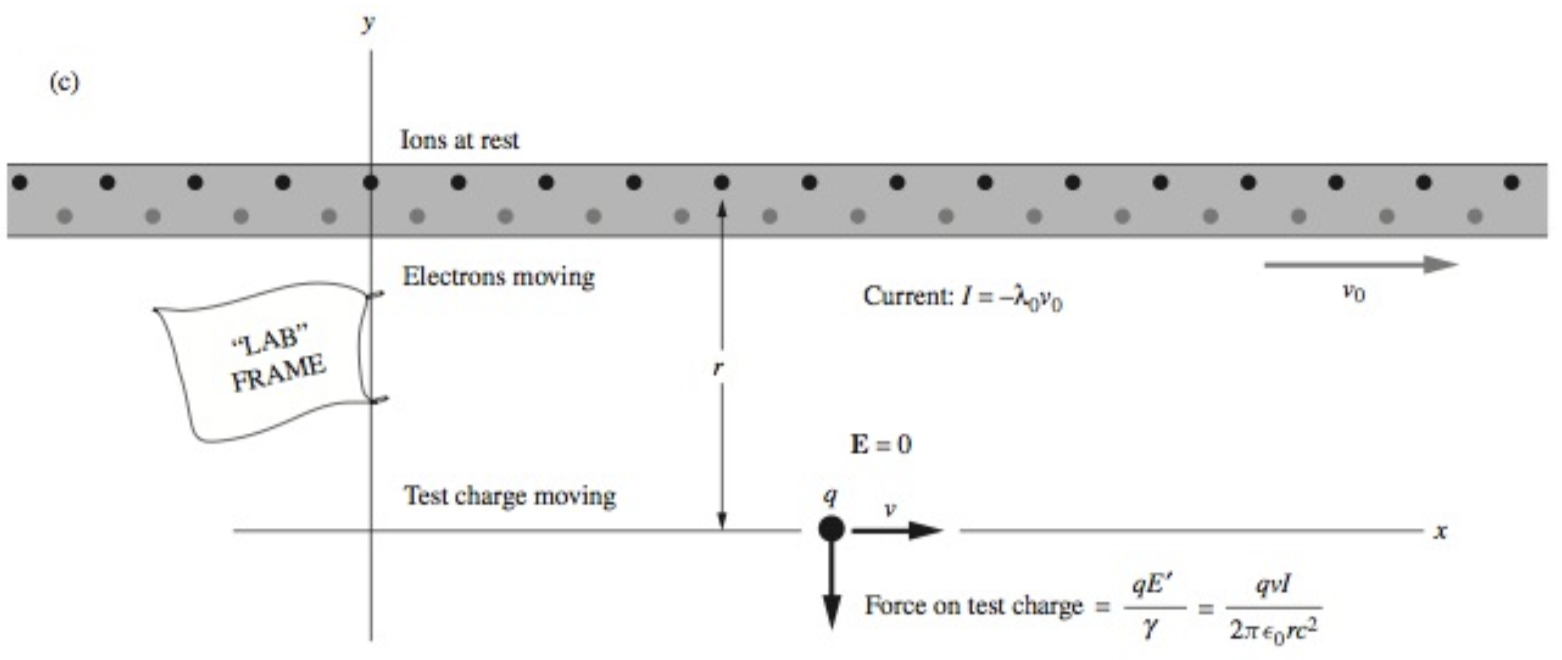
- Instructor: Travis Norsen
Category: 2025 Fall Semester
- Instructor: Travis Norsen
Category: 2025 Spring Semester

Sejam todes bem-vindes a POR 125!
Course Description:
This course is an accelerated introduction to Brazilian Portuguese with the objective of creating a solid foundation in all four language modalities: listening, reading, writing, and speaking. The course will also introduce aspects of the cultures and societies of Brazil, Portugal and Lusophone (Portuguese-speaking) Africa, with presentation and discussion of audio-visual materials and short readings. Classes will be conducted in Portuguese, following a student-centered, communication-oriented approach and concentrating on activities to develop speaking and listening skills.
The accelerated pace of the course relies on students’ proficiency in Spanish.
While one of our objectives is an awareness of the principal differences and similarities between Spanish and Portuguese, do not always expect direct, systematic comparisons (of grammar, vocabulary, pronunciation). Our classroom methodology will focus more on practicing Portuguese, with students intuitively developing an awareness of similarities and distinctions between Spanish and Portuguese.
Course Materials:
Required Textbook: Ponto de Encontro: Portuguese as a World Language, Pearson/Prentice Hall, 2 nd edition, 2012. (E-book or physical book)
A/V Component: Free audio content corresponding with our text (link on Moodle course website)
Yellow notebook (caderninho amarelo) for compositions provided by the instructor in the first week of classes.
- Instructor: Simone Gugliotta
Category: 2025 Spring Semester
This course will examine basic clinical approaches from a psychodynamic, trauma informed, sex positive, harm reduction and anti-oppressive perspective to working with trans and gender non-conforming people. We will use the term trans as an umbrella term that can cover a wide range of sexual and gender identities that may or may not fall outside of a binary understanding of gender performance. We will explore trans affirming and anti-oppressive approaches to mental health, particularly during clinical assessment, diagnosis, treatment planning, and during the evaluation of therapeutic progress.
We will examine the role that prejudice, misogyny, heteronomativity, cisnormativity, transphobia, racism and mental health stigma play in the lives of trans people and their social workers. We will explore central issues for this population such as suicide, and effective ways to address it in treatment. This course draws from psychoanalytic literature, trans and queer theory, and critical race theory as applied to anti-oppressive clinical practice and will be taught from a cis-gendered perspective when working with trans clients. We will have access to trans identified clinicians, academics and community workers supporting this course remotely.
We will use clinical composites that disguise session material as well as drawing on movie characters to bring client concerns to life while maintaining confidentiality in a world where confidentiality is often misaddressed. We will also integrate the voices of trans and gender non-conforming clients/clinicians wherever possible. We will particularly emphasize the safer and more effective use of the clinician’s self (for instance countertransference) to prevent and work through transphobic enactments/injuries that when left unprocessed could lead to treatment derailment/impasse.
We will examine the role that prejudice, misogyny, heteronomativity, cisnormativity, transphobia, racism and mental health stigma play in the lives of trans people and their social workers. We will explore central issues for this population such as suicide, and effective ways to address it in treatment. This course draws from psychoanalytic literature, trans and queer theory, and critical race theory as applied to anti-oppressive clinical practice and will be taught from a cis-gendered perspective when working with trans clients. We will have access to trans identified clinicians, academics and community workers supporting this course remotely.
We will use clinical composites that disguise session material as well as drawing on movie characters to bring client concerns to life while maintaining confidentiality in a world where confidentiality is often misaddressed. We will also integrate the voices of trans and gender non-conforming clients/clinicians wherever possible. We will particularly emphasize the safer and more effective use of the clinician’s self (for instance countertransference) to prevent and work through transphobic enactments/injuries that when left unprocessed could lead to treatment derailment/impasse.
- Instructor: Mischa Peck
- Instructor: Marco Posadas
Category: 2017-2018 Summer Term 1, SSW
Course description
Critical conversations are those in which power dynamics in social context are illuminated, substantively examined in the moment and subsequently reflected upon in order to produce change—personal, systemic, institutional (Kang & O’Neill, 2018). This course will focus on supporting students in developing consciousness of structural power dynamics expressed through interpersonal interactions in dialogue – all with the aim to create change. Students will learn how to facilitate and enhance their authentic participation in discussions using the Critical Conversations (CC) Model in addition to other approaches grounded in humanist and critical pedagogy.
Course Objectives
Centering social justice issues and challenges students will:
1) Develop conceptual and theoretical understanding of the Critical Conversations model in context
2) Implement the Critical Conversations model with both consistency and flexibility
3) Expand their knowledge regarding manifestations of differential structural forces of oppression and opportunity across systems (individual, family, community, organizational, society, world),
4) Examine how structural power dynamics emerge, are enacted, and influence discourse and interpersonal engagement,
5) Cultivate their dialogic skills including,
a. Witnessing one’s level of connectedness through disagreement, tension and conflict;
b. Practicing “calling in” rather than “calling out” to attend to impact and mitigate potential for offensiveness and harm in critical conversations and
c. Applying a stance of curiosity and commitment to explore the intersection between structural forces of oppression (e.g., racism, genderism, ableism, classism, etc.) as enacted within interpersonal relationships. 1) Develop capacity and skills to both participate in and facilitate critical conversations
CSWE Competencies
This course engages students to strengthen and demonstrate skills in the following CSWE competencies (CSWE, 2015):
1
Demonstrate ethical and professional behavior
Use reflection and self-regulation to manage personal values and maintain professionalism in practice situations (p. 7)
2
Engage diversity and difference in practice
Apply and communicate understanding of the importance of diversity and difference in shaping life experiences in practice at the micro, mezzo and macro levels; apply self-awareness and self-regulation to manage the influence of personal biases and values in working with diverse clients and constituencies (p.7)
3
Advance human rights and social , economic and environmental justice
Apply understanding of social, economic, and environmental justice to be able to advocate for human rights at the individual and systems levels. (p.8)
6
Engage with individuals, families, groups, organizations, and communities
Apply knowledge of human behavior and the social environment, person in environment and other multi-theoretical frameworks to engage with clients and constituencies; use empathy, reflection and interpersonal skills to effectively engage diverse clients and constituencies. (p. 9)
Instructional Methods
Dialogic instruction is the primary method applied in this course. The following principles ground the critical conversations model, instructional methods, content, and engagement in learning:
• Mutual responsibility for learning is cultivated and expected
• Dialogic instruction fosters collective engagement – power is shared to enhance individual and collective learning
• Immediate and historical relevance is recognized in context of interactions
• Building community is based upon humanizing not objectifying
• Presuming respect does not necessarily mean agreement
• Cumulative and iterative learning is on-going and can be enhanced with intentional efforts toward expanding critical consciousness
• All dialogue is purposeful
• Dialogue fosters intersubjective generation of knowledge and experience
• Dialogue is, in essence, relational
This will be a highly interactive course. In addition to providing theoretical grounding, selected readings and course materials will be applied in class discussions. Each session will include critical conversations. We will be using multiple methods, that may include and not be limited to fishbowl exercises, tapping in/tapping out, coaching, etc. Be prepared to engage a range of strategies including but not limited to reflection, meditation, and out of classroom individual exercises to advance critical awareness and knowledge.
Participation (30% of final grade)
• Be prepared, on time and participate as fully as possible. This will not only help you get the most from the course, it will also support our collective efforts to cultivate a vibrant and engaged learning environment.
o Be curious
o Do readings
o Participate in dialogue
• You know yourself best. You are invited in this course to pay attention to self and others; to witness yourself in reaction and action. Reflect in the moment and after class – all toward enhancing critical consciousness.
• Follow the group guidelines we develop as a class.
• Be curious and inquisitive. This stance supports exploration, openness, learning and growth.
• Practice being present and attentive. This enhances your capacity to stay engaged – even when a dialogue may be challenging.
Assignments and criteria for evaluation
INTEGRATION RESPONSE -- DUE Session 6 – will be accepted early after session 4 (25% of final grade)
Select one of the critical conversations we had in class. Complete the Critical Conversation Process Evaluation Tool and Integration Response Outline located at the end of syllabus and posted on Moodle.
Small Group Assignment and Individual Reflection (40% of final grade)
In-class small group assignment (practicing co-facilitation of critical conversations using CC Model) SESSIONS 7. 8, and 9
In order to prepare for the in- class small group assignment, in session 3 students will form small groups of 6-8 students in order to plan for sessions 7, 8, and 9 of the course.
Initial Preparation Tasks:
1. Students establish co-facilitation pairs
2. Co-facilitation pairs sign up to facilitate a critical conversation (session 7, 8, or 9)
a. NOTE: Only one co-facilitator pair per class session
b. We may need to also use session 10 depending on number of students enrolled
3. Co-facilitators select a reading, podcast, video, or other relevant material regarding a critical social justice issue to serve as the initial focus for a critical conversation
a. Co-facilitators share the material with Professors O’Neill and Goitia by session 5
4. Co-facilitators are welcome to meet with professors for consultation and we may ask to meet with co-facilitation pairs
Co-facilitation of Critical Conversation (using CC model) – 45 minutes in session 7, 8, or 9
Complete and submit the Critical Conversations Model Process Evaluation Tool – Attached to syllabus and posted on MOODLE
(DUE within one week of co-facilitating the critical conversation)
Learning Needs
The school is committed to ensuring universal access to course material and learning activities. If you require accommodations for a specific learning need please contact the Office of Disability Services at 413-585-2071 (Voice, TTY; TDD).
Writing Center
We encourage all students to take advantage of the Writing Counselors who have developed a program specifically for graduate students in social work. This program is not a remedial service, but rather a support for all writers. We in the SSW believe that all writers can benefit from feedback on their individual writing patterns, no matter what their level of expertise. The Writing Counselors also offer more intensive work on writing issues common to speakers and writers of English as a foreign language and people with learning disabilities. For detailed information on the program, consult the Moodle page “Writing Resources.”
The following language will be inserted in the lower portion of page one in all syllabi by the Office of Academic Support Services (OAS)
Critical conversations are those in which power dynamics in social context are illuminated, substantively examined in the moment and subsequently reflected upon in order to produce change—personal, systemic, institutional (Kang & O’Neill, 2018). This course will focus on supporting students in developing consciousness of structural power dynamics expressed through interpersonal interactions in dialogue – all with the aim to create change. Students will learn how to facilitate and enhance their authentic participation in discussions using the Critical Conversations (CC) Model in addition to other approaches grounded in humanist and critical pedagogy.
Course Objectives
Centering social justice issues and challenges students will:
1) Develop conceptual and theoretical understanding of the Critical Conversations model in context
2) Implement the Critical Conversations model with both consistency and flexibility
3) Expand their knowledge regarding manifestations of differential structural forces of oppression and opportunity across systems (individual, family, community, organizational, society, world),
4) Examine how structural power dynamics emerge, are enacted, and influence discourse and interpersonal engagement,
5) Cultivate their dialogic skills including,
a. Witnessing one’s level of connectedness through disagreement, tension and conflict;
b. Practicing “calling in” rather than “calling out” to attend to impact and mitigate potential for offensiveness and harm in critical conversations and
c. Applying a stance of curiosity and commitment to explore the intersection between structural forces of oppression (e.g., racism, genderism, ableism, classism, etc.) as enacted within interpersonal relationships. 1) Develop capacity and skills to both participate in and facilitate critical conversations
CSWE Competencies
This course engages students to strengthen and demonstrate skills in the following CSWE competencies (CSWE, 2015):
1
Demonstrate ethical and professional behavior
Use reflection and self-regulation to manage personal values and maintain professionalism in practice situations (p. 7)
2
Engage diversity and difference in practice
Apply and communicate understanding of the importance of diversity and difference in shaping life experiences in practice at the micro, mezzo and macro levels; apply self-awareness and self-regulation to manage the influence of personal biases and values in working with diverse clients and constituencies (p.7)
3
Advance human rights and social , economic and environmental justice
Apply understanding of social, economic, and environmental justice to be able to advocate for human rights at the individual and systems levels. (p.8)
6
Engage with individuals, families, groups, organizations, and communities
Apply knowledge of human behavior and the social environment, person in environment and other multi-theoretical frameworks to engage with clients and constituencies; use empathy, reflection and interpersonal skills to effectively engage diverse clients and constituencies. (p. 9)
Instructional Methods
Dialogic instruction is the primary method applied in this course. The following principles ground the critical conversations model, instructional methods, content, and engagement in learning:
• Mutual responsibility for learning is cultivated and expected
• Dialogic instruction fosters collective engagement – power is shared to enhance individual and collective learning
• Immediate and historical relevance is recognized in context of interactions
• Building community is based upon humanizing not objectifying
• Presuming respect does not necessarily mean agreement
• Cumulative and iterative learning is on-going and can be enhanced with intentional efforts toward expanding critical consciousness
• All dialogue is purposeful
• Dialogue fosters intersubjective generation of knowledge and experience
• Dialogue is, in essence, relational
This will be a highly interactive course. In addition to providing theoretical grounding, selected readings and course materials will be applied in class discussions. Each session will include critical conversations. We will be using multiple methods, that may include and not be limited to fishbowl exercises, tapping in/tapping out, coaching, etc. Be prepared to engage a range of strategies including but not limited to reflection, meditation, and out of classroom individual exercises to advance critical awareness and knowledge.
Participation (30% of final grade)
• Be prepared, on time and participate as fully as possible. This will not only help you get the most from the course, it will also support our collective efforts to cultivate a vibrant and engaged learning environment.
o Be curious
o Do readings
o Participate in dialogue
• You know yourself best. You are invited in this course to pay attention to self and others; to witness yourself in reaction and action. Reflect in the moment and after class – all toward enhancing critical consciousness.
• Follow the group guidelines we develop as a class.
• Be curious and inquisitive. This stance supports exploration, openness, learning and growth.
• Practice being present and attentive. This enhances your capacity to stay engaged – even when a dialogue may be challenging.
Assignments and criteria for evaluation
INTEGRATION RESPONSE -- DUE Session 6 – will be accepted early after session 4 (25% of final grade)
Select one of the critical conversations we had in class. Complete the Critical Conversation Process Evaluation Tool and Integration Response Outline located at the end of syllabus and posted on Moodle.
Small Group Assignment and Individual Reflection (40% of final grade)
In-class small group assignment (practicing co-facilitation of critical conversations using CC Model) SESSIONS 7. 8, and 9
In order to prepare for the in- class small group assignment, in session 3 students will form small groups of 6-8 students in order to plan for sessions 7, 8, and 9 of the course.
Initial Preparation Tasks:
1. Students establish co-facilitation pairs
2. Co-facilitation pairs sign up to facilitate a critical conversation (session 7, 8, or 9)
a. NOTE: Only one co-facilitator pair per class session
b. We may need to also use session 10 depending on number of students enrolled
3. Co-facilitators select a reading, podcast, video, or other relevant material regarding a critical social justice issue to serve as the initial focus for a critical conversation
a. Co-facilitators share the material with Professors O’Neill and Goitia by session 5
4. Co-facilitators are welcome to meet with professors for consultation and we may ask to meet with co-facilitation pairs
Co-facilitation of Critical Conversation (using CC model) – 45 minutes in session 7, 8, or 9
Complete and submit the Critical Conversations Model Process Evaluation Tool – Attached to syllabus and posted on MOODLE
(DUE within one week of co-facilitating the critical conversation)
Learning Needs
The school is committed to ensuring universal access to course material and learning activities. If you require accommodations for a specific learning need please contact the Office of Disability Services at 413-585-2071 (Voice, TTY; TDD).
Writing Center
We encourage all students to take advantage of the Writing Counselors who have developed a program specifically for graduate students in social work. This program is not a remedial service, but rather a support for all writers. We in the SSW believe that all writers can benefit from feedback on their individual writing patterns, no matter what their level of expertise. The Writing Counselors also offer more intensive work on writing issues common to speakers and writers of English as a foreign language and people with learning disabilities. For detailed information on the program, consult the Moodle page “Writing Resources.”
The following language will be inserted in the lower portion of page one in all syllabi by the Office of Academic Support Services (OAS)
- Instructor: Denise Goitia
- Instructor: Peggy O'Neill
Category: 2018-2019 Summer Term 1, SSW
Understanding Minds is a course about one of the most exciting empirical areas of contemporary psychology: an area of study overlapping with Philosophy of mind. How do we adjust our behavior and expectations towards other people by "reading" their mental states: of knowledge, belief, emotion, desire, intention? How do children learn to do this? What distinguishes humans from animals? The empirical literature is fraught with difficult questions that reflect the rocky history of psychology trying to wrestle with the "black box" of the mind: what should count as evidence for thinking a certain way? Are the "theories" of the mind that children develop actually universal across cultures? Can neuroscience, or cases of atypical development, shed light on the mechanisms?
All these questions come up in the explosion of empirical and theoretical work on the topic in the last forty years, and in the colloquium we will try to get a map of the terrain while also learning the jargon and understanding the methods of the broad field.
There is no textbook: you will be reading original papers.
- Instructor: Jill de Villiers
Category: 2022 Spring Semester
- Instructor: Jill de Villiers
Category: Fall 2016-2017
- Instructor: Lois Dubin
Category: Spring 2015-2016
- Instructor: Alina Parker
Category: 2023 Spring Semester
- Instructor: Alina Parker
Category: 2025 Spring Semester
- Instructor: Thomas Roberts
Category: Spring 2020-2021
- Instructor: Thomas Roberts
Category: Fall 2017-2018
- Instructor: Thomas Roberts
Category: Fall 2017-2018
- Instructor: Thomas Roberts
Category: 2023 Fall Semester
- Instructor: Thomas Roberts
Category: 2026 Spring Semester
- Instructor: Serguei Glebov
Category: Fall 2019-2020
The purpose of this course is to introduce students to the discipline of sociology—the study of human society. Sociologists use theories and evidence in order to describe, predict, and explain how society works. In effect, sociologists seek the answer to the question, “Why?”
Why do some people go hungry and cold at night while others have four homes? Why does Facebook have targeted ads? Why do men make more money than women? Why are some drugs legal and others not? Why do women’s jeans have small pockets?
Sociologists concern themselves with these questions and many more by systematically investigating the causes and implications of certain social phenomena -- especially as they relate to systems of inequality and stratification, societal trends, group behavior, identity formation, and social context. Sociology can teach us to question taken for granted assumptions about the ways organizations, cultures, institutions, and even entire societies function -- or fail to function. As such, the study of sociology provides tools to help make sense of the social worlds around us by applying our sociological lens.
This course is designed to strengthen your ability to critically ask discuss, as well as engage with, these questions. By grappling with the core concerns of sociology as a discipline, you will learn how to ask sociological questions and apply theoretical frameworks to provide possible explanations of social issues. Viewing the the world sociologically allows us to place ourselves, as individuals, in relation to the complex structures that make up our social reality
Why do some people go hungry and cold at night while others have four homes? Why does Facebook have targeted ads? Why do men make more money than women? Why are some drugs legal and others not? Why do women’s jeans have small pockets?
Sociologists concern themselves with these questions and many more by systematically investigating the causes and implications of certain social phenomena -- especially as they relate to systems of inequality and stratification, societal trends, group behavior, identity formation, and social context. Sociology can teach us to question taken for granted assumptions about the ways organizations, cultures, institutions, and even entire societies function -- or fail to function. As such, the study of sociology provides tools to help make sense of the social worlds around us by applying our sociological lens.
This course is designed to strengthen your ability to critically ask discuss, as well as engage with, these questions. By grappling with the core concerns of sociology as a discipline, you will learn how to ask sociological questions and apply theoretical frameworks to provide possible explanations of social issues. Viewing the the world sociologically allows us to place ourselves, as individuals, in relation to the complex structures that make up our social reality
- Instructor: Maggie Nanney
Category: Spring 2018-2019
Course objectives:
Cultivate your sociological imagination
Understand the ways in which society shapes individual lives, and how individuals shape society
Understand and apply major sociological theories
Develop a basic understanding of how sociologists do research
Identify different types of research methods
Discern which methods are appropriate for which questions
Strengthen your critical thinking and sociological writing skills
Make an argument using sound logic and empirical evidence
Write cohesive, articulate expositions
Conduct small scale sociological research paper using all of the above
- Instructor: Ginetta Candelario
Category: 2024 Fall Semester
According to the U.S. Census Bureau, about 80% of the U.S. population lived in urban areas in 2020. Cities are prime research sites and laboratories to analyze everyday 21st-century American life, as many of Americans’ identities and daily lives are strongly tied to urban spaces and shaped by their economic, social, and cultural power in cities. This course connects macro-level processes, including global forces, politics, and economy to micro-level daily life, such as social interactions among city dwellers in both global cities and small towns.
This course is designed to help students develop both theoretical understanding and empirical analysis. Theoretical discussions of the emergence of modern cities both in Europe and in North America during the industrial revolution by urban theorists Engels, Simmel, Tonnies and Benjamin are emphasized. Students learn how cities were understood not only as a site for production, but also a driving force for modern consumption and colonial expansion by looking at department stores and world fairs in Europe and in the U.S. Then, students move to explore the U.S. context through Chicago School scholars’ ecological perspectives, and discuss how and why these scholars used the city as a laboratory to analyze modern social life in America.
This course particularly focuses on contemporary urban issues in American cities, starting with the post-war era. Why did whites leave cities for suburbia? Who was left behind in cities? What caused urban unrest in the 1960s? What did urban America lose during that time? By taking new urban sociological approaches into account, students will conceptualize the relationships among the state, economy and urban form in order to understand urban America.
Despite the focus on American cities, this course also underscores global and transnational perspectives. From immigrants and refugees who bring their own culture to the presence of global/transnational corporations, most U.S. cities are global entities, and urban lives are intricately tied to globalization and transnational practices. Yet we, as urban dwellers, whether in big cities or in small towns, do not know, and often care not to see, the dark side of global consumption. This course aims to open this discussion about how we connect the micro-level of our social interactions, consumption, and daily lives to macro-levels of the progress, global economic forces, politics and culture. Topics that will be covered include: modernity and modern cities, urbanism as a way of American life, critical urban theory, poverty and ghettos, urban ethnography, gentrification and displacement, urban branding, global cities, immigration and gateways, new destinations, ethnic enclaves, and financial crisis and the right to the city movement.
- Instructor: Jinwon Kim
Category: 2024 Fall Semester

Course Description and Goals
“The academy is not paradise. But learning is a place where paradise can be created. The classroom, with all its limitations, remains a location of possibility. In that field of possibility we have the opportunity to labour for freedom, to demand of ourselves and our comrades, an openness of mind and heart that allows us to face reality even as we collectively imagine ways to move beyond boundaries, to transgress. This is education as the practice of freedom.” (bell hooks in Teaching to Transgress, 1994, p. 207)
Drawing from bell hook’s inspiring quote above, this course introduces you to the vibrant field of Sociology of Gender and Globalization and its unique interdisciplinary perspectives, borrowing insights from Sociology; Women, Gender, Sexuality Studies; Anthropology; Economics, Politics and so on. This 200-level course moves beyond geographical and disciplinary boundaries, to engage with the key dimensions of global restructuring and globalization through the lens of gender, sexuality, race, class, ethnicity, and North-South relations. We will study how various modes of oppression and inequalities intersect in global manufacturing, supply chains, and in the transnational politics of representation and access in global media, religion, culture, war, and dissenting spaces. Questions that we will interrogate throughout the semester include: What is globalization and how and why is it a contested concept? Is globalization a new process? How can globalization be understood as a social, cultural, political, and ecological process and not just as a technological-economic process? How are structures of identity and oppression i.e., gender, race, ethnicity, class, sexuality, nation, religion, ability, and other forms of difference, interwoven with globalization? How do biological, cultural, historical, and political frameworks shape knowledge and processes of globalization? In exploring these questions, the course incorporates sources ranging from social science research, creative non-fiction, films/documentaries, art, media, and popular culture. Topics may include transnational feminisms, gendered labor and the global economy, feminist and queer theory, reproductive politics and globalization, carceral politics, rights-based advocacy, visual cultures.
This course will accomplish its goals by:
- Engaging students in pluralistic perspective-taking and awareness of the relationship among society, self, and others
- Providing opportunities to develop and practice the skills of critical thinking, reasoning, communication, and integration of knowledge and perspectives, including:
● Communicating persuasively and effectively in public speaking and writing
● Working collaboratively and creating safe and kind spaces for each other to teach and learn in
- Students will be expected to be self-reflective and draw from their own identities and global social issues affecting their young adult lives, using theoretical concepts and language from the course. Please remember, using personal experiences to understand academic concepts is valid and important – as the famous feminist saying goes - The Personal is Political! We should strive to use these as examples to illustrate or raise questions about readings and course debates rather than substituting anecdotes for critical thinking.
READINGS
You do not need to purchase any readings/books for this course. All reading materials will be on the course’s Moodle website and all videos will be linked on the syllabus. You would be able to access the videos required for the course for free through YouTube or the Smith Kanopy service (https://www.kanopy.com/en/smith/). The course schedule below lists the readings/videos we will cover each class day during the semester.
- Instructor: Debadatta Chakraborty
Category: 2023 Spring Semester
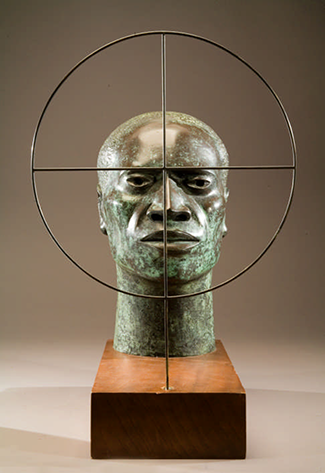
This course introduces students to the historical roots of mass incarceration and how it shapes multiple aspects of life and society. This course focuses on the particular experiences of currently and formerly incarcerated women, with an emphasis on the overrepresentation of Black women, the major social, political, and economic factors that have contributed to the rise of mass incarceration in the United States, the primary ways mass incarceration alters the lives of people and communities, and why eliminating racial oppression cannot be disentangled from eliminating mass incarceration.
- Instructor: Erica Banks
Category: 2022 Fall Semester

The course will introduce clinical social work practice by addressing the fundamental purposes, historical and ongoing debates, functions, and practice methods. Links to clinical social work practice with groups are made in this course in addition to social work theory (including psychological and social theories), issues related to social policy, agency and community contexts, and advocacy work, as well as research (e.g., empirical evidence, evaluation).
This 10-week course is organized by three broad areas of social work practice competence:
- Principles of clinical social work practice
- Clinical competencies in the beginning phase of social work practice
- Introduction to clinical competencies in the middle and ending phases of practice
First, this course will focus on social work values, ethics, and other key principles, in clinical social work practice. Attention will be given to the clinician’s capacity for an intentional and effective use of self as well as understanding and addressing complex and intersecting nature of power and various social locations within a therapeutic process.
Next, the course will address foundational practice competencies required in the beginning phase of practice, namely interviewing skills for relationship building, assessment, case formulation, goal setting, contracting, and treatment planning. Understanding that much of clinical practice was built on Euro-centric, western, colonial epistemologies, instructors will invite students to critically appraise and identify ways to engage clinical skills responsibly from racial and social justice perspectives.
Finally, the last part of this 10-week course will introduce students to the competences relevant to the middle phase of practice, such as common tasks and processes involved with this phase of work, an introduction to several intervention models of working with individuals and families, case management (e.g., working with collaterals, resource development, referral), as well as the ending phase of practice, such as practice monitoring, evaluation, and termination. While several conventional intervention models (e.g., psychodynamic, cognitive-behavioral, trauma work) will be introduced, the course will also engage students in critically examining the utility and limits of these models, with a goal of centering practice decisions on the needs and voices of clients from marginalized communities. A variety of pedagogical methods, including lectures, discussions, the use of media, case-based learning, mindfulness exercises and role-plays, will be used to introduce practice principles, theoretical and empirical literature and competency-based skills. Throughout the course, student learning will be scaffolded, moving from learning aboutpractice to doing practice through various experiential methods, such as mindfulness exercises, case-based discussion and peer-to-peer role plays. Case materials used for discussion and role-plays will reflect individual and family practice in a range of service settings with a focus on the social and structural contexts surrounding marginalized communities.
- Instructor: Kenta Asakura
Category: 2024 Summer 1 SSW
This course introduces students to the role of research and data within social work practice. Students will assess this relationship, both historical and current, through the liberatory lenses of critical theories about race, Indigenous approaches to research and knowledge, and intersectionality. The goal of this course is to critically analyze research theories, methods, and findings in a way that advances the social work profession’s goals of racial and social justice. Students will strengthen their understanding of current research landscapes and approaches to knowledge building, with the aim of achieving self-determination for marginalized clients and communities. Examples throughout the course will be practice-oriented and build an understanding of research justice as a strategic framework for evaluating and recalibrating social work practice at micro, messo, and macro scales.
- Instructor: Rory Crath
- Instructor: Megan Harding
- Instructor: Di Yoong
Category: 2022 Summer 2 SSW
START INFO!!
Helli,
We will begin our seminar Monday 9/11, 7-9EST.
I am hearing that there is confusion about this start date. If you had not realized that we would meet this wk, and have an overlapping commitment, please contact me at mcoco@smith.edu.
I am currently in an area in Massachusetts impacted by recent storms and have unreliable internet and electricity access.
I will be in a better access location tomorrow and will put our zoom info into an announcement. I will also forward it via email.
Looking forward to meeting all of you, and learning with you over the course of our practicum seminar!
Thank you for your patience as I navigate unanticipated disruptions impacting our communications.
Best,
Melissa
- Instructor: Katya Cerar
- Instructor: Melissa Coco
- Instructor: Alexis Evwynne
Category: 2023-2024 Winter SSW
Drawing on frameworks introduced in Introduction to U.S. Social Welfare Policy, this course presents an analytical framework through which to critically examine specific social welfare policies and applies this framework to key social problems and their policy solutions. The impact of policies on clinical social work practice is a key aspect of policy analysis and is considered throughout.
In addition to learning the technical skills of policy analysis, students will also engage social theories and movements that were excluded, intended or not, throughout much of social work education. Our ethical responsibility to advocate for both vulnerable and oppressed populations is key to our historical lens to investigate how historical systems of oppression, particularly towards Black and Indigenous populations, is essential to the understanding gaps in social welfare policy in contemporary American society.
- Instructor: Alberto Guerrero
- Instructor: Clarice Robinson
Category: 2025 Summer 2 SSW
- Instructor: Greer Hamilton
- Instructor: Megan Harding
- Instructor: Hannah Karpman
Category: 2022 Summer 2 SSW

This course is an introduction to the interdisciplinary study of gender. Gender and sexuality, and their interconnectedness with race, ethnicity, citizenship, nationhood, age, and class collectively shape our individual experiences as well as the way we perceive and judge the experience of others. So much of gender and sexuality is attached to the body: what we are born with, the status of that biological body within a given country and/or culture, and the way we present our body within that culture. The primary goal of this course is to provide a forum for students to consider the history of gender as it is reliant on conceptions and constructions of sexuality and race in the U.S. Throughout the course, we will consider contemporary gender politics in light of histories of gender, racial, and sexual formations.
- Instructor: Gina Ocasion
Category: Spring 2020-2021
This interdisciplinary course considers issues of gender, race, sexuality, and class in the context of youth justice. Drawing on gender and sexuality studies, criminal justice and sociological literature, social critiques, policy papers, case law, documentary film, personal narrative, and literature, SWG 211 critically examines the history of the youth justice system in the United States, what it means to be in “the system”; the role of “justice” in the system; and: its major challenges, reformist and abolitionist critiques, and how girls—and young people of all genders--contest its confines, agents of resistance and change.
Our work together will explore the following questions, among others:
What are the lineages of “girls” in the criminal and juvenile legal systems, and how are these histories implicated in the present? What are the goals of these systems, whose interest(s) do they serve, and (how) do these yield gendered and racialized consequences? What role do related systems, processes, and institutions (such as immigration enforcement, foster care, and education) play in youth justice? How have movement, legal, and policy interventions influenced and shaped its trajectories? How do youth of all genders who are subject to the system contest its confines, demonstrating voice, vision, and agency? What other worlds are possible? Is reform in the interests of justice actionable, or is abolition the only way?
- Instructor: Adina Giannelli
Category: 2024 Fall Semester
- Instructor: Lisa Fontes
Category: 2025 Spring Semester
This course explores contemporary economic interactions through a feminist lens. This feminist exploration of the economic structures will allow us to bring to the forefront the historical nature of capitalism as a system that relies on the exploitation of specific racialized and gendered groups. At the same time, the notion of the transnational will take us a step further in this exploration, linking geographies of power at various scales (local, national, regional and global). Through this approach, we will be attentive to the heterogeneity of identities and experiences that take place across global economic structures, while developing a critical understanding of capitalism’s capacity to shape us as gendered and racialized subjects. Throughout the semester we will focus on exploring the division between production and reproduction and we will look into feminist understandings of debt and current economic labor configurations. At the same time, we will pay attention to the different ways through which locally and globally women are resisting, rejecting, and confronting these configurations and developing alternative processes grounded on solidarity and collectivity.
We will assess the alternatives proposed by global social movements, from micro-finance to worker-owned cooperatives to workers associations, to shed light on the cultural fabric of the global financial economy. Assignments include a time-labor mapping of our day; a community-based research project on local and global political movements, a short paper, class-led discussions, final reflection project & collaborative assessment.
- Instructor: Elisabeth Armstrong
Category: 2025 Spring Semester
- Instructor: Richa Nagar
Category: 2026 Spring Semester

On June 24, 2022, the U.S. Supreme Court overturned Roe v. Wade, reversing a half-century-long precedent of constitutional abortion rights. This seminar will explore the history, law and politics of abortion in the U.S. before, during and after Roe. We will examine ideologies, strategies and tactics of the abortion rights movement as well as the anti-abortion movement, focusing in particular on the gender and racial politics of these movements. Topics examined include abortion access, anti-abortion violence, “crisis pregnancy centers,” fetal personhood campaigns, the criminalization of pregnancy, abortion pills, telemedicine abortion and self-managed abortion.
- Instructor: Carrie Baker
Category: 2024 Spring Semester
- Instructor: Tallulah Costa
- Instructor: Richa Nagar
Category: 2024 Fall Semester
- Instructor: Richa Nagar
Category: 2025 Fall Semester

This course will teach you how to use the knowledge and concepts you have learned in your women and gender studies classes to write publicly in a range of formats, including book and film reviews, opinion editorials, and news articles. Over the course of the semester, you will learn about and practice translating feminist scholarship for a popular audience. You will also learn to discern your audience, find your voice, and develop a message. During the semester, we will meet and speak with professional feminist editors and writers who have successfully published in the popular press. We will examine some of the barriers, challenges, rewards and impacts of feminist public writing, and explore some of the political and ethical questions relating to feminist public writing.
- Instructor: Carrie Baker
Category: 2022 Fall Semester
- Instructor: Elisabeth Armstrong
Category: Fall 2016-2017
- Instructor: Tracy Ross
Category: 2017-2018 Summer Term 2, SSW
- Instructor: Tracy Ross
Category: 2018-2019 Summer Term 2, SSW
- Instructor: Tracy Ross
Category: 2018-2019 Summer Term 1, SSW

Welcome! "Introduction to Sound Design" introduces students to the theory and practice of theatrical sound design, with additional relevance to sound design for dance and for film and television. The course cultivates sensitivity towards the expressiveness of sound, and the relationship between time, sound, actors, visuals, and narrative. Through script analysis and design projects, students learn the power of sound and music in enhancing stage presentations, acquire skills in creating sound worlds, and apply those skills to collaboration with the production team. Through hands-on exercises in the lab and in the theaters, students also become familiar with recording, editing, organizing, and playback of sound.
- Instructor: Emily Wilson
Category: 2024 Fall Semester
This self-paced online course is designed for individuals who want to learn how to build a website using WordPress. This course is for beginners and does not require any prior design or coding knowledge.
In this course, you will learn how to create and manage website content such as pages, posts, and media, and if you're a site administrator, how to set up your own WordPress website, and customize the appearance of your website using themes and plugins. By the end of this course, you will have a fully functional WordPress website that you can use for your personal blog, research project, or portfolio.
- Instructor: Travis Grandy
Category: Self-Paced

Journeys in World Literature
From the earliest Chinese poetry to the latest Arabic Internet novels, comparative literature makes available new worlds, and "newly visible" old worlds. To become "world-forming," one must realize one’s belonging to a given world or worlds, as well as one’s finitude. To rethink the relationship between literature and world, each section of this course focuses on a given genre, movement, or theme. Through topics such as “Epic Worlds,” “The Short Story” and “Literature and Medicine,” we consider the creation of worlds through words. (83 words)Dwelling Poetically
To introduce the pleasures of poetry, this course travels through poems on themes of journeying and dwelling, voyage and return, travel and home, wandering, war and immigration. Reading ancient Chinese songs and Greek epic to contemporary docupoetry and rap, we explore key elements of poetic art (voice, metre, tropes, image and suggestion). Students encounter less concrete effects too as they confront ambiguity, develop interpretive imagination, and surmise poetry’s powers and stakes. What is a poem? How and when does poetry affect our worlds? We also consider the art, ethics and politics of translation, and students compose and translate short poems. Credits: 4 {L}- Instructor: Sabina Knight
Category: 2021 Fall Semester
In the era of climate change, global migration, income disparities driven by capitalism, and a pandemic that has disproportionately affected Black, Brown, and low-income people, the future has become an urgent concern. Although media reports can feel apocalyptic, this concern has also inspired new visions of a world liberated from capitalism, police, and injustice. Our course delves into innovative responses to this moment of crisis. Our readings foreground the voices of Black, Indigenous, and LGBTQ+ writers in a wide range of nonfiction genres, including personal essays, manifestos, magazine articles, and academic scholarship.
These readings will serve as a departure point for your own writing. You will write a lot, both formally and informally, working toward greater clarity, confidence, and nuance.
- Instructor: Magdalena Zapedowska
Category: 2023 Fall Semester

Our class will introduce you to restorative responses to climate change. Although climate change affects everyone, it especially harms Black, Indigenous, and low-income people. These groups have also led the efforts to combat climate change by protesting capitalist extraction of resources, building food sovereignty, and leading ecological restoration projects.
Our class centers Indigenous and Black perspectives on climate justice, especially ideas and practices that restore traditional, anticapitalist land and water stewardship, fishing, and farming. In addition to readings, you will gain interdisciplinary experiences through visits to the Smith College Museum of Art, the Botanic Garden, the Boutelle-Day Poetry Center, the Neilson Library’s Special Collections, and the MacLeish Field Station. We will sometimes have class outside, sitting on the grass, standing, and walking. Our course materials and discussions will help you generate ideas to write about.
- Instructor: Magdalena Zapedowska
Category: 2025 Fall Semester